English and
 Español. After purchase, use the language toggle in your course Player to switch between English and Spanish at any time.

 EN
 ES







.webp)

































.webp)














.webp)


























Glossary - Cal/OSHA Chemical Handling Safety Training
Acid
Acid means a substance with a pH of less than 7 that releases hydrogen ions in a chemical reaction. Strong acids used in passivation and cleaning, such as nitric, sulfuric, and hydrochloric acid, are corrosive.
Action level
Action level means a concentration of airborne hexavalent chromium of 2.5 micrograms per cubic meter of air (2.5 µg/m³) calculated as an 8-hour time-weighted average (TWA).
Acute effect
Acute effect means a health effect that appears immediately or soon after a single, short-term exposure to a chemical, such as a chemical burn or respiratory irritation.
Administrative controls
Administrative controls means work practices or procedures that reduce employee exposure, such as limiting the time an employee spends in an exposure area.
Alkali (Base)
Alkali means a substance with a pH greater than 7 that accepts hydrogen ions or releases hydroxide ions in a chemical reaction. Strong alkalis, such as sodium hydroxide and potassium hydroxide in caustic cleaners, are corrosive.
Autoignition temperature
Autoignition temperature means the lowest temperature at which a substance will ignite on its own, without a spark or flame.
B
No terms found
Cal/OSHA
Cal/OSHA means the Division of Occupational Safety and Health of the California Department of Industrial Relations, which enforces the workplace safety and health standards in Title 8 of the California Code of Regulations.
Carcinogen
Carcinogen means a substance that can cause cancer, such as hexavalent chromium compounds.
Chronic effect
Chronic effect means a health effect that develops over months or years of repeated exposure to a chemical.
Combustible liquid
Combustible liquid means any liquid having a flashpoint greater than 199.4°F (93°C).
Container
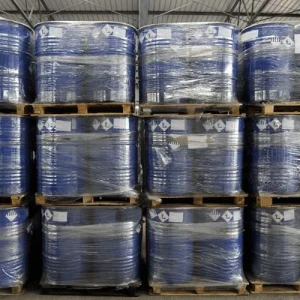
Container means any bag, barrel, bottle, box, can, cylinder, drum, reaction vessel, storage tank, tank truck, or the like that contains a hazardous chemical. Pipes or piping systems are not considered to be containers.
Corrosive
Corrosive means a substance that destroys or causes irreversible damage to living tissue, such as the skin and eyes, or that damages metals on contact.
D
No terms found
Emergency
Emergency means any potential occurrence such as, but not limited to, equipment failure, rupture of containers, or failure of control equipment, which may or does result in a release of a hazardous chemical into the workplace.
Engineering controls
Engineering controls means methods that remove or reduce a hazard at its source, such as local exhaust ventilation, enclosures, or substituting a less hazardous chemical.
Exposure or Exposed
Exposure or exposed means any situation arising from work operation where an employee may ingest, inhale, absorb through the skin or eyes, or otherwise come into contact with a hazardous chemical.
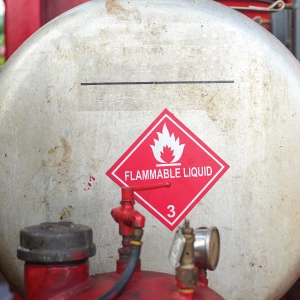
Flammable liquid
Flammable liquid means a liquid having a flashpoint of not more than 199.4°F (93°C).
Flash point
Flash point means the lowest temperature at which a liquid gives off enough vapor to form an ignitable mixture with air near its surface.
Grounding
Grounding means connecting a conductive container or piece of equipment to the earth so that static electricity drains away safely instead of building up and causing a spark.
Halogenated solvent
Halogenated solvent means a solvent that contains chlorine, fluorine, or bromine atoms, such as trichloroethylene. Halogenated solvents are commonly used in vapor degreasers and can form highly toxic gases when heated or exposed to flames.
Hazardous chemical
Hazardous chemical means any chemical which is classified as a physical hazard or a health hazard, a simple asphyxiant, combustible dust, pyrophoric gas, a hazard not otherwise classified, or is included in the List of Hazardous Substances prepared by the Director pursuant to Labor Code section 6382.
Hexavalent chromium [Cr(VI)]
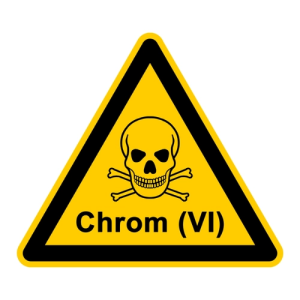
Hexavalent chromium means chromium with a valence of positive six, in any form and in any compound. It is found in sodium dichromate passivation baths and is a known human carcinogen.
Incompatible substances
Incompatible substances means substances which, when mixed, react violently, or evolve toxic vapors or gases, or which in combination become hazardous by reason of toxicity, oxidizing power, flammability, explosibility, or other properties.
Injury and Illness Prevention Program (IIPP)
Injury and Illness Prevention Program means the written workplace safety program that every California employer must establish, implement, and maintain under Title 8, Section 3203.
J
No terms found
K
No terms found
Label
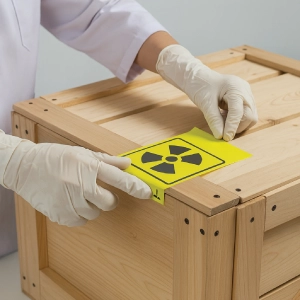
Label means an appropriate group of written, printed, or graphic information elements concerning a hazardous chemical that is affixed to, printed on, or attached to the immediate container of a hazardous chemical, or to the outside packaging.
Lower Explosive Limit (LEL)
Lower Explosive Limit means the lowest concentration of a vapor or gas in air that will burn if an ignition source is present. Concentrations below the LEL are too lean to burn.
M
No terms found
Nitrogen oxides (NOx)
Nitrogen oxides means toxic gases released when nitric acid reacts with metals or when nitrates or nitric acid are involved in a fire. They may appear as reddish-brown fumes, and lung damage from inhaling them can be delayed for several hours.
Open-surface tank operation
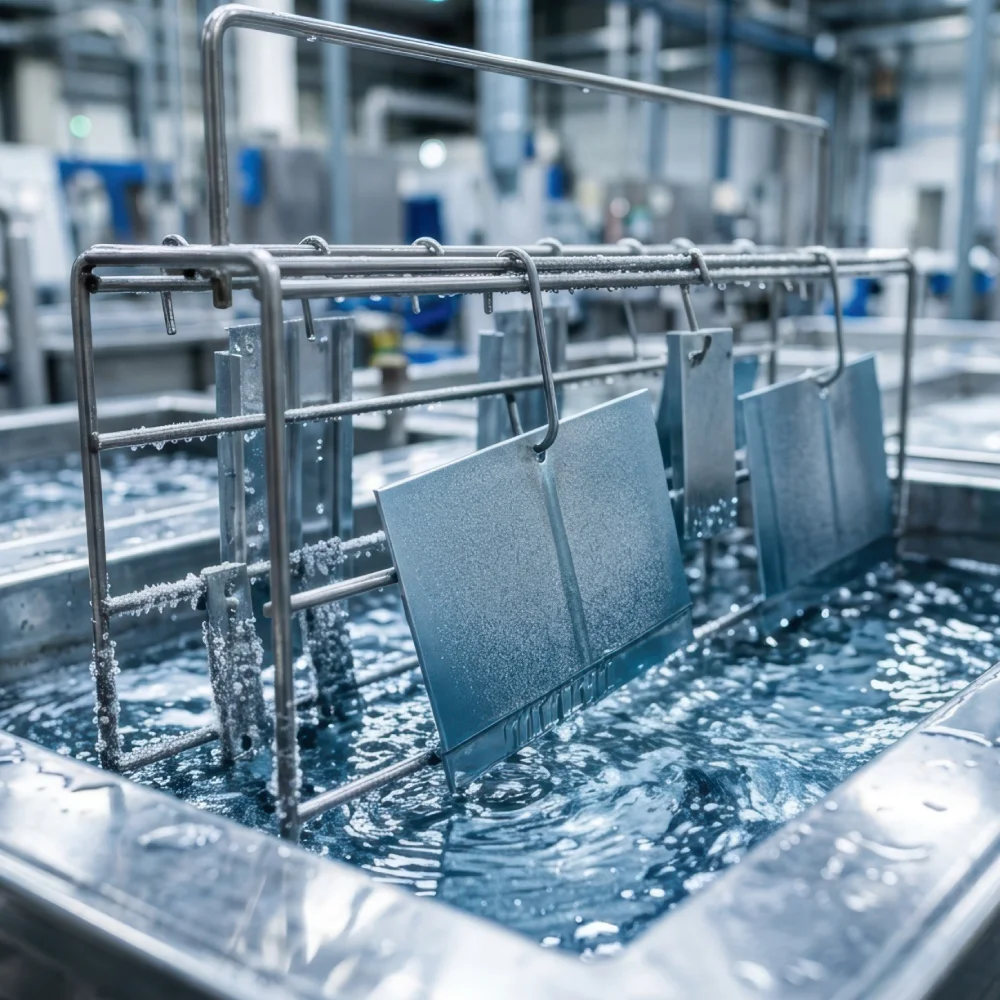
Open-surface tank operation means any operation involving the immersion of materials in liquids, or in the vapors of such liquids, for the purpose of cleaning or altering the surface character of the materials.
Oxidizer
Oxidizer means a chemical, other than a blasting agent or explosive, that initiates or promotes combustion in other materials, thereby causing a fire either by itself or by releasing oxygen or other gases. Concentrated nitric acid is an oxidizer.
Passivation
Passivation means a chemical treatment, usually with nitric or citric acid, that removes free iron and other surface contamination from stainless steel and allows a protective chromium oxide layer to form.
Permissible exposure limit (PEL)
Permissible exposure limit means the maximum airborne concentration of a substance to which an employee may be exposed, as established in Title 8, Section 5155 or in a substance-specific standard.
Personal Protective Equipment (PPE)
Personal protective equipment means equipment worn to minimize exposure to hazards, such as chemical splash goggles, face shields, chemical-resistant gloves, aprons, boots, and respirators.
Pickling
Pickling means a process in which strong acids are used to remove scale, heat tint, and oxides from metal parts.
Pictogram
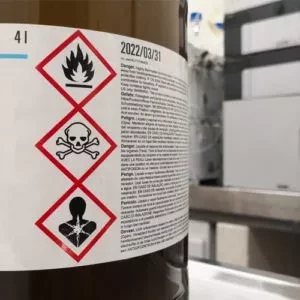
Pictogram means a composition that may include a symbol plus other graphic elements, such as a border, background pattern, or color, that is intended to convey specific information about the hazards of a chemical.
Proposition 65
Proposition 65 means the California Safe Drinking Water and Toxic Enforcement Act of 1986, which requires warnings before people are exposed to chemicals known to the State of California to cause cancer or reproductive harm.
Q
No terms found
Regulated area
Regulated area means an area, demarcated by the employer, where an employee’s exposure to airborne concentrations of hexavalent chromium exceeds, or can reasonably be expected to exceed, the permissible exposure limit.
Route of entry
Route of entry means the way a chemical enters the body: inhalation, skin or eye contact and absorption, ingestion, or injection.
Safety data sheet (SDS)
Safety data sheet means written or printed material concerning a hazardous chemical that is prepared in accordance with Title 8, Section 5194(g). It is organized into 16 sections that describe the chemical’s hazards, safe handling, protective measures, and emergency procedures.
Secondary containment
Secondary containment means a second barrier, such as a tray, dike, or berm, that holds spills or leaks from a primary container or tank and keeps incompatible substances apart.
Signal word
Signal word means a word used to indicate the relative level of severity of a hazard and alert the reader to a potential hazard on the label. The signal words used are “danger” for the more severe hazards and “warning” for the less severe hazards.
Solvent
Solvent means a liquid used to dissolve other substances. In metal finishing, solvents are used to remove oil, grease, and other soils from parts.
Time-weighted average (TWA)
Time-weighted average means the average concentration of an airborne contaminant to which an employee is exposed over an 8-hour work shift.
Title 8
Title 8 means Title 8 of the California Code of Regulations, which contains the workplace safety and health standards enforced by Cal/OSHA.
Upper Explosive Limit (UEL)
Upper Explosive Limit means the highest concentration of a vapor or gas in air that will burn. Above the UEL, there is not enough oxygen to sustain a fire.
Vapor degreasing
Vapor degreasing means a cleaning process in which parts are suspended in the heated vapor of a solvent, usually a halogenated solvent, which condenses on the parts and dissolves oil and grease.
W
No terms found
X
No terms found
Y
No terms found
Z
No terms found