 EN
EN ES
ES







































































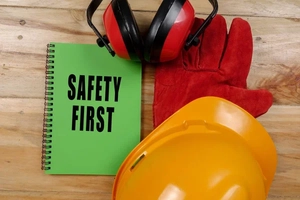








































OSHA Noise Exposure and Hearing Conservation Training
- In accordance with Federal OSHA Regulations 29 CFR 1910.95
- Designed with special consideration of California Code of Regulation (CCR) Title 8, Section 5095
- Available in:
 English |
  Español
 - Learn at your own pace and on your own schedule
- Receive your certificate instantly upon completion
- Select from SCORM-compliant, online streaming, virtual instructor-led, or in-person learning formats
0.1
Bulk Buying
| Employee | Per Seat |
|---|---|
| 2-10 | $29.69 |
| 11-20 | $29.39 |
| 21-50 | $29.09 |
| 51-100 | $28.49 |
| 101-250 | $27.89 |
| 251-500 | $27.59 |
| 501-1000 | $26.99 |
Course Facts


Training Duration

Learning Type

Course Access Validity

Device Support


Certificate Validity
OSHA Noise Exposure and Hearing Conservation Training Course Syllabus
This OSHA Noise Exposure and Hearing Conservation Training consists of 2 lessons. Students are required to take each lesson in sequential order as listed below.
Introduction
Lesson 1: Occupational Noise Exposure
- Noise and Hearing
- Hearing Protection
- Types of Hearing Loss
- Recognizing the Signs of Hearing Loss
- Decibels and Noise Exposure
- Permissible Noise Exposures
- Hearing Conservation Program
- Purpose of the Hearing Conservation Program
- Employer Responsibility
- Noise Exposure Monitoring
- Sampling Strategy Requirements
- Noise Measurement Requirements
- When Monitoring Must Be Repeated
- Importance of Ongoing Monitoring
- Hearing Tests
- Audiometric Testing Program
- Annual Audiogram Requirement
- Protecting Your Hearing: The Hierarchy of Controls
- Training Program
- Access to Information and Training Materials
- Recordkeeping
- Audiometric Test Records
- Access to Records
- Additional Tools for Noise Screening
Lesson 2: Personal Protective Equipment for Hearing Conservation
- When Are Hearing Protectors Needed?
- Hearing Protectors – The Last Line of Defense
- Types of Hearing Protection
- Single-Use Earplugs
- Pre-Molded Earplugs
- Canal Caps
- Earmuffs
- An Important Note on Hearing Protection
- Hearing Protector Fit Testing (HPFT)
- What Is Attenuation?
- Hearing Protector Attenuation
- Re-evaluation of Hearing Protectors
Final Examination
Frequently Asked Questions
This course meets and exceeds the compliance requirements outlined in OSHA 29 CFR 1910.95 and California Code of Regulation (CCR) Title 8, Section 5095 standards for occupational noise exposure.
The Centers for Disease Control and Prevention reports that millions of workers are exposed to hazardous noise each year, and too many already experience hearing loss or tinnitus. Those numbers are not just data; they represent real people whose quality of life has been permanently affected.
When you participate in this OSHA Noise Exposure and Hearing Conservation Training, you are taking a proactive step toward reducing those numbers. You are learning to recognize hazardous noise levels, properly select and use hearing protection, understand audiometric test results, and respond to early warning signs such as Standard Threshold Shifts.
- Aligned with OSHA standards 29 CFR 1910.95, ensuring your program meets regulatory training and compliance obligations.
- Goes beyond theory by teaching employees how to calculate NRRs, recognize Standard Threshold Shifts (STSs), and properly select and fit hearing protection in actual workplace conditions.
- Provides supervisors, safety professionals, and employees with clear guidance on implementing and maintaining an effective Hearing Conservation Program.
- Emphasizes early detection, proper attenuation evaluation, and corrective actions to prevent noise-induced hearing loss from becoming irreversible.
This OSHA Noise Exposure and Hearing Conservation Training is designed for employees working with occupational noise exposure levels at or above 85 dBA, 8-hour Time-Weighted Average. OSHA considers noise levels at or above 85 dBA hazardous and requires a Hearing Conservation Program when exposures exceed this level.
There are no prerequisites for this course.
OSHA regulations recommend employees take this course as an annual refresher.
Certificate of Completion: Immediately after passing the final exam, you can download, save, or print your certificate in PDF format.
Validity: The course certificate is valid for one year.
Renewal: Simply take this course in 12 months to maintain compliance and stay current on noise exposure and hearing conservation best practices at work sites.
Choose Your Ideal Training Format:



Scorm Package
$29.99/Person


Virtual Instructor-Led
$199.00/Person

In-Person Group
$750.00/Person
It’s practical, straightforward, and highly relevant for working in maintenance environments.
This training helped us strengthen our Hearing Conservation Program. The real-world examples made it easy for employees to understand why consistent hearing protection matters.
This is one of the most comprehensive OSHA noise training courses I’ve used. It balances regulatory requirements with practical application, making it valuable for organizations of any size.
Excellent! After the training, we observed immediate improvement in the use of proper hearing protectors.



The ROI of Online Safety Training
Discover the value of our efficient alternative to live training, and calculate your return on investment.
ROI Calculator
Recommended Courses