 EN
EN ES
ES






























































OSHA Respiratory Protection Safety Training
- In accordance with Federal OSHA Regulations 29 CFR 1910.134
- Designed with special consideration of Title 8, Section 5144 of the California Code of Regulations
- Available in:
 English |
  Español
 - Learn at your own pace and on your own schedule
- Receive your certificate instantly upon completion
- Select from SCORM-compliant, online streaming, virtual instructor-led, or in-person learning formats
0.2
Bulk Buying
| Employee | Per Seat |
|---|---|
| 2-10 | $39.59 |
| 11-20 | $39.19 |
| 21-50 | $38.79 |
| 51-100 | $37.99 |
| 101-250 | $37.19 |
| 251-500 | $36.79 |
| 501-1000 | $35.99 |
Course Facts


Training Duration

Learning Type

Course Access Validity

Device Support


Certificate Validity
OSHA Respiratory Protection Safety Training Course Syllabus
This OSHA Respiratory Protection Safety Training consists of 5 lessons. Students are required to take each lesson in sequential order as listed below.
Introduction
Lesson 1: Introduction to Respiratory Protection
- Respiratory Protection
- Respiratory Protection Program
- Cal/OSHA Regulations for Respiratory Protection
- Hierarchy of Controls
- What is a Respirator?
- Types of Respirators
- Physical and Chemical Properties of APRs and ASRs
- Positive Pressure Respirators
- Pressure Demand Respirators
- Continuous Flow Respirators
- Negative Pressure Respirators
- Tight-Fitting Respirators
- Loose-Fitting Respirators
- Entry and Escape or Escape Only Respirators
- Open Circuit or Closed Circuit Respirators
Lesson 2: Types of Respirators
- Air-Purifying Respirators (APRs)
- Particulate-Removing APRs
- Gas and Vapor Removing APRs
- Combination Cartridge/Filter APRs
- A Final Note on APRs
- Air-Supplying Respirators (ASRs)
- Self-Contained Breathing Apparatus (SCBA)
- SCBA Cylinders
- Closed-Circuit Rebreather
- Supplied-Air Respirators (SARs)
- SCBAs vs. SARs
- Combination SCBA/SARs
- Respiratory Protection for IDLH Environments
- Types of Air-Purifying Respirators
- Types of Air-Supplying Respirators
Lesson 3: Respirator Selection Factors
- Selecting Respirators
- Criteria for Respirator Selection
- The Work Environment
- Concentration of Contaminants
- Permissible Exposure Limit (PEL)
- Types of Job Duties
- Duration
- Work Stress
- Functional Capabilities and Limitations
- Assigned Protection Factor (APF)
- Assigned Protection Factor (APF): An Example
- Maximum Use Concentration (MUC)
- Limitations of Respirator Use
- IDLH Atmosphere and Respirator Use
- Oxygen Deficient Atmosphere
Lesson 4: Respirator Fit Testing
- Medical Evaluation
- Who Can Perform a Medical Evaluation?
- Information for the PLHCP
- Medical Conditions and Respirator Use
- Recommendation by the PLHCP
- Fit Testing
- Fit Testing Requirements
- Testing and Hair
- Types of Fit Testing
- Qualitative Fit Testing
- Fit Factor
- Quantitative Fit Testing
- Acceptable Fit Testing Methods
- Test Exercises
- Respirator Fit Testing
- Inspecting, Donning, and Doffing Half-Face Air
- Purifying Respirators
Lesson 5: Training and Maintenance
- Employee Training
- Employee Retraining
- Additional Training
- Respirator Maintenance Program
- Respirator Maintenance Program Requirements
- Cleaning Procedures
- Storage Procedures
- Inspection Procedures
- Emergency and Non-emergency Respirators
- End-of-Service-Life Indicator (ESLI)
- Repair Procedures
- Repair Maintenance and Care
Final Examination
Frequently Asked Questions
This training course is developed in compliance with the Federal OSHA Respiratory Protection Standard, 29 CFR 1910.134, and Title 8, Section 5144 of the California Code of Regulations.
OSHA’s Respiratory Protection Standard, 29 CFR 1910.134, is now ranked 4th among the Top 10 OSHA violations in 2024, up from 7th in 2023. This underscores the ongoing importance of respiratory safety in the workplace. Occupational exposure to airborne hazards such as dust, fumes, gases, and vapors continues to pose serious health risks. Respiratory-related incidents can lead to chronic illnesses, reduced productivity, and even life-threatening conditions if proper protection is not used.
With OSHA enforcement and workplace standards becoming increasingly stringent, understanding respiratory protection is no longer optional, it is an integral part of any safety program. This course gives employees practical, hands-on knowledge to prevent respiratory illnesses, comply with federal regulations, and create a safer, healthier work environment
Respiratory hazards go beyond viruses; they include dust, fumes, gases, and chemicals that can cause long-term health problems if unprotected.
- Explains respiratory hazards in real workplace situations so workers understand the risks they face on the job.
- Covers OSHA Respiratory Protection requirements under 29 CFR 1910.134.
- Supports employers in building and maintaining an effective Respiratory Protection Program.
- Improves worker confidence when using respirators in hazardous environments.
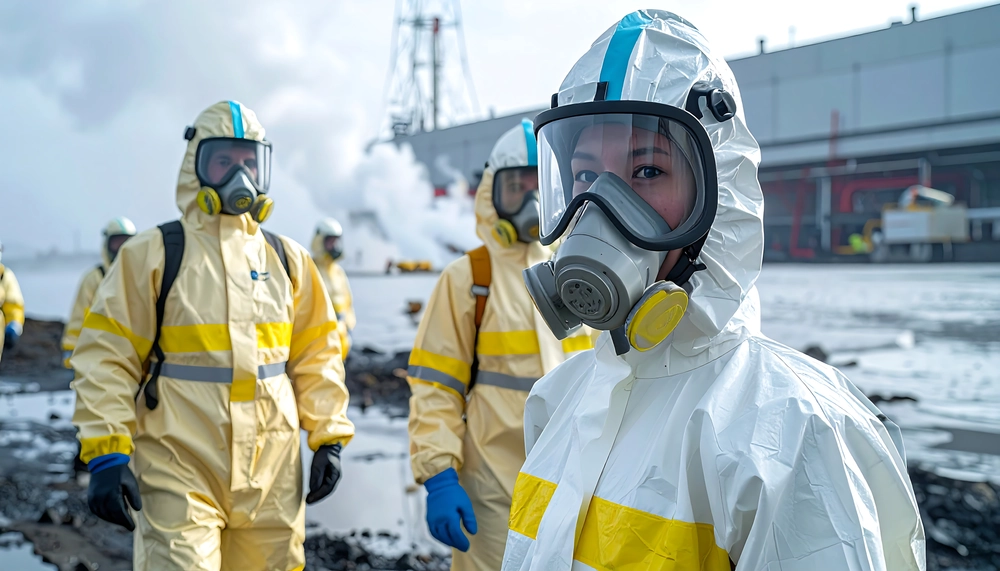
- Ideal for manufacturing, maintenance, HAZMAT, and other high-risk work environments.
- Employees who are required to wear respirators as part of their job duties.
- Workers exposed to airborne hazards such as dust, fumes, gases, vapors, or mists.
- Industrial and manufacturing workers working in environments with respiratory hazards.
- Hazardous materials (HAZMAT) and hazardous waste workers.
- Maintenance and repair personnel who may encounter airborne contaminants.
- Supervisors and safety managers are responsible for implementing respiratory protection programs.
- Emergency response personnel who may enter hazardous atmospheres.
- Any employee required to comply with respiratory protection requirements under OSHA regulations.
There are no prerequisites for this course.
Yes. OSHA mandates a medical evaluation to ensure employees can safely use respirators without health risks.
No. Respirators are often fitted to the individual; sharing can reduce protection and increase the risk of contamination.
Absolutely. Even escape-only respirators require training to ensure workers can use them under stress.
OSHA regulations recommend employees take this course as an annual refresher.
Certificate of Completion: Immediately after passing the final exam, you can download, save, or print your certificate in PDF format.
Validity: The course certificate is valid for one year.
Renewal: Simply take this course in 12 months to maintain compliance and stay current on respiratory protection best practices at work sites.
Choose Your Ideal Training Format:



Scorm Package


Virtual Instructor-Led
$199.00/Person (minimum 10)

In-Person Group
$750.00/Person (minimum 10)
I appreciated the detailed sections on APF, MUC, and fit testing. Very informative and directly applicable to our work environment.
The course goes beyond theory, covering inspections, cleaning, and emergency respirator procedures. Highly recommended for all safety professionals.
Comprehensive, engaging, and highly practical!



The ROI of Online Safety Training
Discover the value of our efficient alternative to live training and calculate your return on investment. ROI Calculator
Recommended Courses