 EN
EN ES
ES




































































































































OSHA Fall Protection Safety Training
- In accordance with Federal OSHA Standards 29 CFR 1926 Subpart M
- Available in:
 English |
  Español
 - Access your course anytime, anywhere, and on any device
- Convenient self-directed mobile learning experience
- Obtain and download your completion certificate right away
- Audio narration for seamless, on-the-go study
- Choose from SCORM, online on-demand, virtual instructor-led, or in-person training options
0.3
Bulk Buying
| Employee | Per Seat |
|---|---|
| 2-10 | $59.39 |
| 11-20 | $58.79 |
| 21-50 | $58.19 |
| 51-100 | $56.99 |
| 101-250 | $55.79 |
Course Facts


Training Duration

Learning Type

Course Access Validity

Device Support


Certificate Validity
OSHA Fall Protection Safety Training Course Syllabus
This OSHA Fall Protection Safety Training course consists of 11 lessons across two modules. Students are required to take each lesson in sequential order as listed below.
Introduction
Module 1: Fall Protection Systems
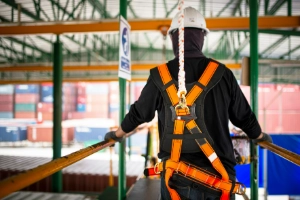
An overview of the various types of available fall protection systems and their use. Along with a detailed explanation of the personal fall arrest system (PFAS) as a means of controlling (or stopping) a worker falling from an elevated level, such as when working on a scaffold or on a roof. Lessons will also explain the role of anchorage in a PFAS and the considerations for its selection and use. As well discuss the different types of connectors used in a PFAS, and describe the role of a deceleration device in minimizing the impact of a fall.
- Lesson 1: Introduction to Fall Protection
- Lesson 2: Personal Fall Arrest System
- Lesson 3: PFAS - Lanyards and Lifelines
- Lesson 4: Full-Body Harness
- Lesson 5: Safety Considerations of PFAS
Module 2: Ladders, Stairways, and Aerial Lifts
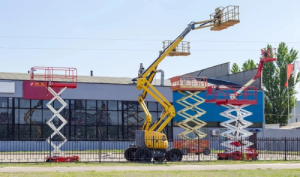
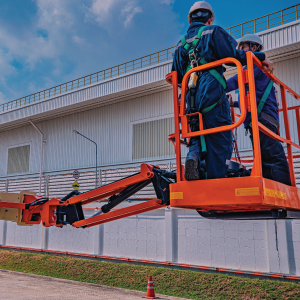
Learners will be educated on regulatory requirements relating to ladder and stairway safety, as well as the procedures for the safe operation of aerial lifts. Lessons will summarize OSHA regulations relating to ladders and stairways, list the four main types of ladders and the five recognized duty ratings for ladders, briefly explain the general guidelines for setting up a ladder and the proper storage guidelines for ladders, examine the importance of ladder inspections before use and summarize the basic principles of ladder safety, and explain the hazards associated with aerial lifts and safe work practices to be implemented.
- Lesson 6: Introduction to Ladder Safety
- Lesson 7: Setting-Up A Ladder
- Lesson 8: Regulatory Requirements – Ladders
- Lesson 9: Regulatory Requirements – Stairways
- Lesson 10: Ladder Maintenance and Safety Procedures
- Lesson 11: Aerial Lifts
Final Examination
Frequently Asked Questions
According to OSHA’s Fall Protection Standard for the Construction Industry (29 CFR 1926 Subpart M), any time work is carried out at a height of 6 feet or more, employers must provide adequate fall protection systems, and workers must be trained to use these systems safely and effectively.
Proper fall protection training can go a long way toward safeguarding workers' health and safety and protecting them when working at heights. Fall protection training can be categorized into four levels: awareness, authorized user, competent person, and qualified person. According to OSHA, employers are responsible for providing workers exposed to fall hazards with appropriate fall protection training. This fall protection training educates workers to recognize fall hazards and how to minimize them.
- Managers, supervisors, and workers who must work on overhead platforms, elevated workstations, or over dangerous equipment or machinery as part of their job duties.
- Workers who work at heights doing roofing work, leading-edge work, painting, or bricklaying on high walls, or working on walkways and excavations.
There is no specific requirement under OSHA that requires refresher training for this course. However, many employers and safety professionals still prefer to conduct periodic refresher training, particularly in workplaces where employees work at heights. Although it is not legally required, refresher training is strongly recommended as an industry best practice, especially in active facilities.
Certificate of Completion: Immediately after passing the final exam, you can download, save, or print your certificate in PDF format.
Validity: The course certificate is valid for 12 months.
Renewal: Take this course within 12 months to maintain compliance and stay current on best practices for fall safety.
Choose Your Ideal Training Format:



Scorm Package


Virtual Instructor-Led
$199.00/Person (minimum 10)

In-Person Group
$750.00/Person (minimum 10)
Excellent training with a strong focus on OSHA standards!
This course helped me better understand fall hazard identification and control measures. Very well organized and informative.
I learned how to properly inspect harnesses and use anchor points correctly. The training was practical and easy to follow.
Very helpful course. It emphasized safe work practices at heights and reinforced the importance of using the right fall protection equipment.



The ROI of Online Safety Training
Discover the value of our efficient alternative to live training, and calculate your return on investment.
ROI Calculator
Recommended Courses