 EN
EN ES
ES











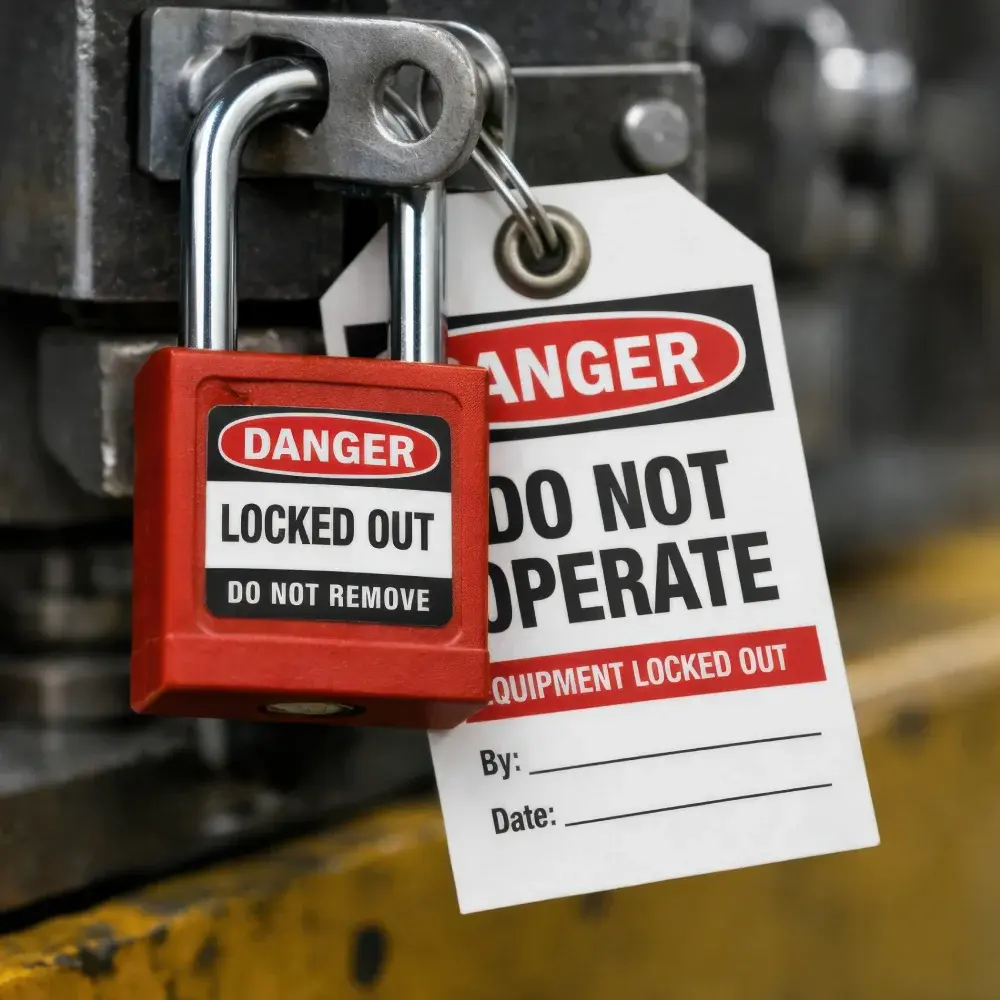







































































































































OSHA-ANSI Lockout/Tagout (LOTO) Certificate Training
- In accordance with Federal OSHA Regulations 29 CFR 1910.147, ANSI/ASSP Z244.1-2024, and 2024 NFPA 70E Standard
- Special consideration of NFPA 70E-2024
- Available in:
 English |
  Español
 - Learn at your own pace and on your own schedule
- Receive your certificate instantly upon completion
- Select from SCORM-compliant, online streaming, virtual instructor-led, or in-person learning formats
0.3
Bulk Buying
| Employee | Per Seat |
|---|---|
| 2-10 | $128.69 |
| 11-20 | $127.39 |
| 21-50 | $126.09 |
| 51-100 | $123.49 |
| 101-250 | $120.89 |
| 251-500 | $119.59 |
| 501-1000 | $116.99 |
Course Facts


Training Duration

Learning Type

Course Access Validity

Device Support


Certificate Validity
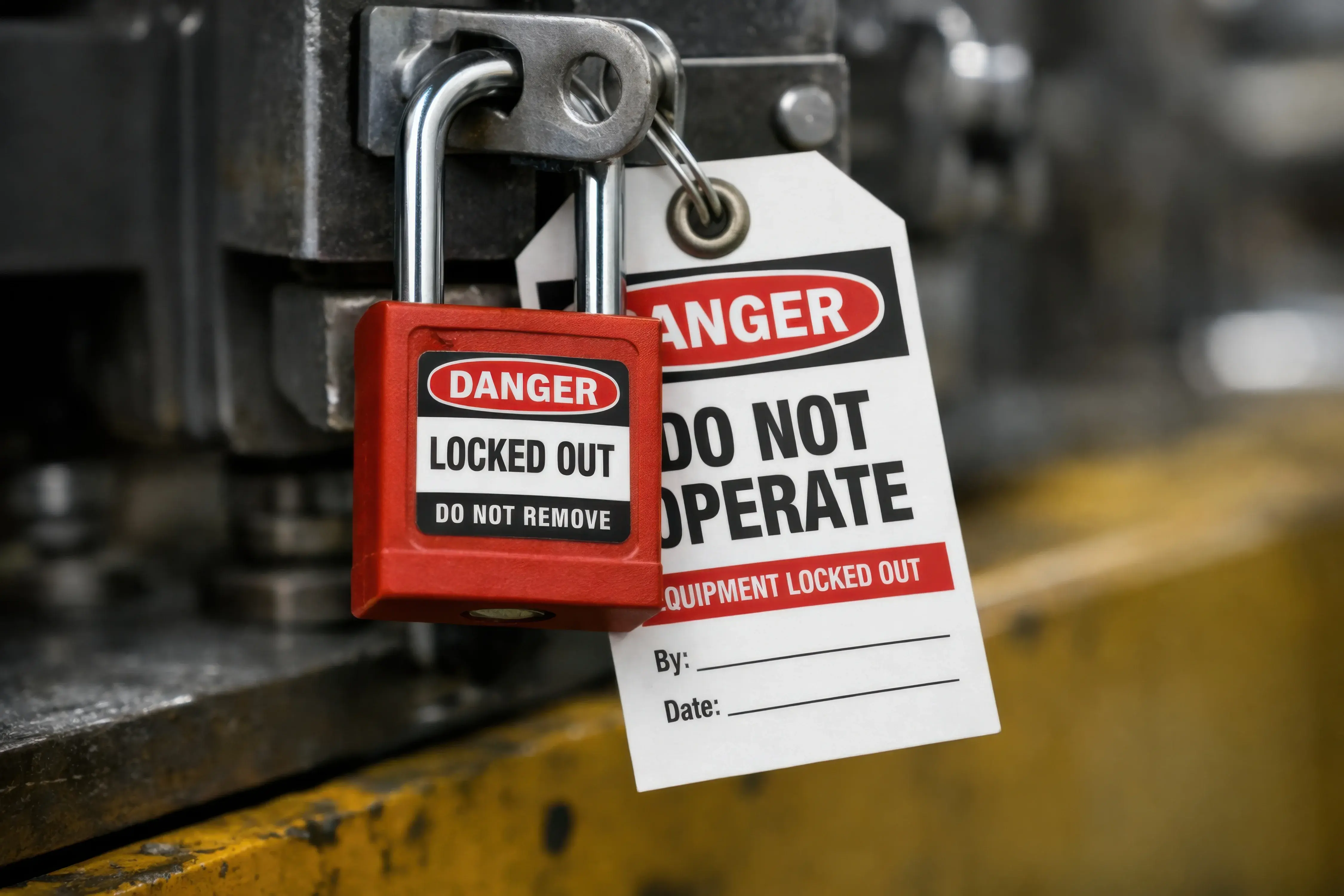
OSHA-ANSI Lockout/Tagout (LOTO) Certificate Training Course Syllabus
This OSHA-ANSI Lockout/Tagout (LOTO) Certificate Training consists of 6 lessons . Students are required to take each lesson in sequential order as listed below.
Introduction
Lesson 1: Overview of OSHA Regulations for LOTO Safety
- What is Energy?
- What Makes Energy Hazardous?
- OSHA Standards for Control of Hazardous Energy
- Application of the Lockout/Tagout Standard
- Scope of the Lockout/Tagout Standard
- A Few Other Exceptions
- Energy Control Procedures
- Energy Control Procedures: Exception
- Lockout Tagout Procedures
- NFPA 70E Requirements for LOTO Procedures
- What is Lockout?
- What is Tagout?
- What is an Energy Isolating Device?
- Energy Isolating Device: Capable of Being Locked Out
- What if an Energy Isolating Device Cannot Be Locked Out?
- Requirements for Lockout/Tagout Devices
- Employee Training Program
- Training for Authorized Employees
- Training for Affected Employees
- Training for Other Employees
Lesson 2: Controlling Hazardous Energy During Service and Maintenance
- Controlling Hazardous Energy
- Step 1: Identify Energy Sources and Energy Isolating Devices
- Step 2: De-Energize Equipment
- Step 3: Secure Energy Isolating Devices
- Step 4: Restrain and Relieve Stored Energy
- Step 5: Verify Isolation of Equipment
- An Important Note on Electrical Testing
- Energy Control Procedures
- Temporary Removal of Lockout or Tagout Devices
- Requirements for Contractors
- Group Lockout or Tagout
- Why Use the Group Lockout or Tagout Procedures?
- Shift Changes
- Periodic Inspections
- Annual Review Certification
Lesson 3: Overview of ANSI and ASSP Z244.1-2024 Standards Standards
- ANSI/ASSP Z244.1-2024: Control of Hazardous Energy
- Introduction to ANSI/ASSP Z244.1-2024
- Past Versions of the Standard
- Key Changes in ANSI/ASSP Z244.1-2024
- Responsibilities for an ANSI/ASSP Z244.1 Lockout System
- Hazardous Energy Control Program
- Lockout as a Method of Hazardous Energy Control
- Tagout as a Method of Hazardous Energy Control
- Position of Alternative Methods in the 2024 Standard
- Sample Lockout/Tagout Procedure
- Lockout/Tagout Best Practices
Lesson 4: Hazardous Energy Control Program
- Hazardous Energy Control Program
- Written Hazardous Energy Control Program
- Development of Procedures
- Procedure Management
- Training and Communication
- Training Program
- Protective Hardware Requirements for Hazardous Energy Control
- Lock and Tags for Hazardous Energy Control
- Warnings and Placards
- Special Tools or Devices
- Outside Service or Contractor Persons and Temporary Personnel
- Group Energy Control
- Complex Group Energy Control
- Shift or Personnel Changes in Hazardous Energy Control
- Program Review
- Program Monitoring
Lesson 5: Design of Machines, Equipment, Processes for the Control of Hazardous Energy
- Component Isolation
- Energy-Isolating Devices
- Energy-Isolating Device Requirements
- Managing Stored and Residual Energy Hazards
- Common Sources of Stored or Residual Energy
- Controlling Run-Down, Coasting, and Residual Motion Risks
- Restraint Devices and Tamper Resistance
- Energy Isolation and Hazard Control in Mobile Applications
- How to Safely Manage these Risks
- Safe Approach and Transport of Mobile Equipment for Maintenance
- Acceptable Methods for Moving Equipment
- Energy Isolation Challenges in Piping Systems
- Additional Risk Reduction Measures for Piping Systems
- Line Breaking and Controlled Execution of Hazardous Energy Tasks
Lesson 6: Alternative Methods of Hazard Energy Control
- Position of Alternative Methods in the 2024 Standard
- Risk Assessment Process
- Hazard Control Hierarchy
- Risk Reduction Measures
- Evaluating Alternative Methods
- Feasibility or Justification Analysis
- Risk Assessment
- Industry Best Practices
- Functional Safety
- Fault Annunciation
- Exclusivity or Individual Control
- Tamper Resistance
- Program to Support
- Procedures in Place
- Periodic Check and Test
- Review by a Qualified Person
- Reliability and Effectiveness of Alternative Methods
Final Examination
Frequently Asked Questions
The course meets and exceeds the compliance requirements of the OSHA Standard for the Control of Hazardous Energy (Lockout/Tagout), Title 29 Code of Federal Regulations (CFR) Part 1910.147. It also incorporates the requirements set out in ANSI/ASSP Z244.1-2024 for the control of hazardous energy and discusses the guidance and best practices outlined in NFPA 70E (2024).
Lockout-Tagout (LOTO) refers to specific practices and procedures to protect employees from unexpected activation or startup of dangerous machines and equipment. The LOTO procedures also protect employees from the release of hazardous energy during service and maintenance activities.
- Limiting the number of industrial accidents
- Control of insurance and compensation fees
- Better use of machines: reduced downtime and increased productivity
- Strengthening employee capacity
- Optimize the reputation
- Comply with legislation and regulations
Our OSHA-ANSI Lockout Tagout (LOTO) Certificate Training:
- Designed to meet Title 29 Code of Federal Regulations (CFR) Part 1910.147 and ANSI/ASSP Z244.1-2024 Control of Hazardous Energy requirements and NFPA 70E, ensuring both employees and employers stay compliant and avoid costly violations.
- Teaches proven methods to control hazardous energy, helping reduce the risk of electrocution, amputations, and other serious workplace accidents.
- Uses real-world examples, step-by-step procedures, and engaging visuals to make even complex requirements easy to understand and apply on the job.
- Addresses responsibilities of authorized, affected, and other employees, making it suitable for a wide range of industries and workplaces.
This course is suitable for employees engaged in servicing and maintenance of equipment and machinery. Craft workers, machine operators, electricians, and laborers are among the workers who service equipment and machinery and therefore face the greatest risk of injury. To ensure the health and well-being of employees, hazardous energy must be controlled by preventing its transmission from the source to the equipment it powers up.
Yes, the OSHA Lockout/Tagout (LOTO) training is specifically designed for authorized employees. Authorized employees are those who are allowed to apply, use, or remove energy control devices (locks and tags) to isolate and control hazardous energy sources during servicing and maintenance activities.
OSHA LOTO Training Requirements for Authorized Employees:
- Who is considered an authorized employee?
- Any employee who is involved in servicing or maintaining machines or equipment that have the potential for hazardous energy release.
- This includes electricians, mechanics, millwrights, machine operators, and other workers who may need to perform service or maintenance tasks.
- What are the training requirements for authorized employees?
- Authorized employees must receive training in the recognition of all potentially hazardous energy sources (electrical, mechanical, hydraulic, pneumatic, chemical, etc.) in the workplace.
- They must also be trained on the type and magnitude of energy available in the workplace and the methods and means necessary for energy isolation and control.
- This training must include hands-on practice with the specific energy control procedures that will be used in their job.
- The training must be conducted in a language that the employees understand.
- How often must authorized employees be retrained?
- Authorized employees must be retrained at least annually, or more frequently when there is a change in the energy control procedures or the employee's job duties.
They must also be retrained whenever they are observed not following the energy control procedures correctly.
There are no prerequisites for this course.
OSHA regulations recommend employees take this course as an annual refresher.
Certificate of Completion: Immediately after passing the final exam, you can download, save, or print your certificate in PDF format.
Validity: The course certificate is valid for one year.
Renewal: Simply take this course in 12 months to maintain compliance and stay current on lockout/tagout best practices at work sites.
Choose Your Ideal Training Format:



Scorm Package


Virtual Instructor-Led
$199.99/Seat (minimum 10 seats)

In-Person Group
$750.99/Seat (minimum 10 seats)
Real-world scenarios, clear instructions, and the certificate at the end carry actual weight with employers. Highly recommend to anyone working around hazardous energy.
As someone responsible for workplace compliance, I needed a course that actually aligned with ANSI 244.1. This delivered exactly that.
Comprehensive, professional, and practical. The course covers everything from energy isolation procedures to group lockout and beyond. I've already recommended it to three colleagues in our department.
Great balance between theory and application. Access to ANSI Z244.1 in such detail was a big plus for me!



The ROI of Online Safety Training
Discover the value of our efficient alternative to live training, and calculate your return on investment.
ROI Calculator
Recommended Courses