 EN
EN ES
ES























































































































































OSHA Warehouse Safety Training
- In accordance with Federal OSHA Regulations 29 CFR 1910 for General Industry and OSHA’s General Duty Clause
- Tailored for supervisors and employees working in warehouse environments
- Comprehensive course content to identify and address workplace hazards found in warehouses
- Available in:
 English |
  Español
 - Access course materials from any mobile device.
- Learning formats available: online streaming, virtual instructor-led, in-person or SCORM-compatible
1.4
Bulk Buying
| Employee | Per Seat |
|---|---|
| 2-10 | $132.65 |
| 11-20 | $131.31 |
| 21-50 | $129.97 |
| 51-100 | $127.29 |
| 101-250 | $124.61 |
| 251-500 | $123.27 |
| 501-1000 | $120.59 |
Course Facts


Training Duration

Learning Type

Course Access Validity

Device Support


Certificate Validity

OSHA Warehouse Safety Training Course Syllabus
This OSHA Warehouse Safety Management Training consists of 36 lessons divided into 11 modules. Students are required to take each lesson in sequential order as listed below.
Introduction
Module 1: Introduction to Warehouse Safety and OSHA Compliance
This module establishes the foundation for safe warehouse operations by introducing the principles of workplace safety and OSHA compliance. Learners will understand why safety is essential, the common causes of warehouse incidents, and the shared responsibilities of employers and employees in creating a safe working environment. It also explains the regulatory framework that governs warehouse safety programs.
- Lesson 1: Introduction to Warehouse Safety
- Lesson 2: OSHA Requirements and Employer Responsibilities
Module 2: Warehouse Hazards, Risk Assessment, and Safety Signage
This module focuses on recognizing workplace hazards before they lead to incidents. Participants will learn how to identify risks, conduct basic hazard assessments, apply the hierarchy of controls, and interpret safety signs, labels, and floor markings. Environmental hazards such as heat and cold stress are also covered.
- Lesson 3: Common Warehouse Hazards, Identification Techniques, and Job Hazard Analysis (JHA)
- Lesson 4: Heat and Cold Stress Safety
- Lesson 5: Risk Assessment and Hierarchy of Controls
- Lesson 6: Safety Signs, Labels, and Floor Markings
Module 3: Walking-Working Surfaces, Housekeeping, and Fall Prevention
This module examines the hazards associated with walking-working surfaces and emphasizes the importance of housekeeping in preventing injuries. Learners will explore slip, trip, and fall prevention strategies, pedestrian traffic management, stairway safety, and proper ladder use to reduce fall-related incidents.
- Lesson 7: Slips, Trips, and Falls
- Lesson 8: Housekeeping
- Lesson 9: Warehouse Traffic Management and Pedestrian Safety
- Lesson 10: Stairways, Platforms, and Mezzanines
- Lesson 11: Ladder Safety
- Lesson 12: Ladder Setup, Maintenance, and Safety Procedures
Module 4: Powered Industrial Trucks and Mobile Equipment Safety
This module provides comprehensive instruction on the safe operation of powered industrial trucks and other mobile equipment used in warehouse operations. Topics include equipment inspections, load stability, safe operating practices, accident prevention, and the unique hazards associated with specialized equipment such as pallet jacks, reach trucks, order pickers, and scissor lifts.
- Lesson 13: Powered Industrial Trucks
- Lesson 14: Pre-Use Inspections
- Lesson 15: Stability Triangle and Load Capacity
- Lesson 16: Safe Equipment Operation and Accident Prevention
- Lesson 17: Pallet Jacks and Reach Trucks
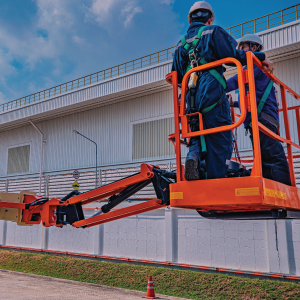
- Lesson 18: Order Pickers and Scissor Lift Safety
Module 5: Material Handling, Ergonomics, and Conveyor Safety
This module teaches safe manual and mechanical material handling techniques designed to reduce workplace injuries and improve efficiency. Participants will learn proper lifting methods, ergonomic principles, the use of mechanical lifting devices, and safe work practices around conveyor systems and their associated hazards.
- Lesson 19: Material Handling and Proper Lifting Techniques
- Lesson 20: Ergonomic Risk Factors
- Lesson 21: Mechanical Lifting Devices
- Lesson 22: Conveyor Hazards
Module 6: Storage Systems, Racking, and Falling Object Prevention
This module focuses on the safe storage of materials and the prevention of struck-by incidents caused by falling objects or unstable loads. Learners will understand rack capacities, pallet inspections, proper stacking techniques, and safe practices for vertical storage systems to maintain structural integrity and workplace safety.
- Lesson 23: Safe Storage Principles
- Lesson 24: Falling Object Prevention
- Lesson 25: Material Stacking Practices and Vertical Storage Safety
Module 7: Personal Protective Equipment and Chemical Safety
This module explains the critical role of personal protective equipment and hazard communication in protecting workers from workplace hazards and chemical exposures. Participants will learn PPE selection and maintenance, Hazard Communication requirements, Safety Data Sheets, and proper chemical storage and segregation practices.
- Lesson 26: Personal Protective Equipment (PPE)
- Lesson 27: Hazard Communication
- Lesson 28: Safety Data Sheets, Chemical Storage, and Segregation
Module 8: Loading Dock, Trailer, and Shipping Safety
This module addresses one of the highest-risk areas in warehouse operations, the loading dock. It covers common dock hazards, dock plates and levelers, trailer restraint systems, wheel chocks, vehicle departure prevention procedures, fall hazards, and effective communication between drivers and warehouse personnel.
- Lesson 29: Common Dock Hazards, Dock Plates, and Dock Levelers
- Lesson 30: Trailer Restraints and Wheel Chocks
- Lesson 31: Vehicle Departure Prevention
Module 9: Fire Safety, Emergency Action Plans, and Incident Response
This module prepares workers to respond effectively during workplace emergencies. Participants will learn about warehouse fire hazards, fire extinguisher use, emergency evacuation procedures, alarm systems, medical emergencies, and the appropriate response to chemical spills and leak incidents.
- Lesson 32: Fire Safety in Warehouses
- Lesson 33: Emergency Action Plans and Incident Response
Module 10: Lockout/Tagout and Maintenance Safety
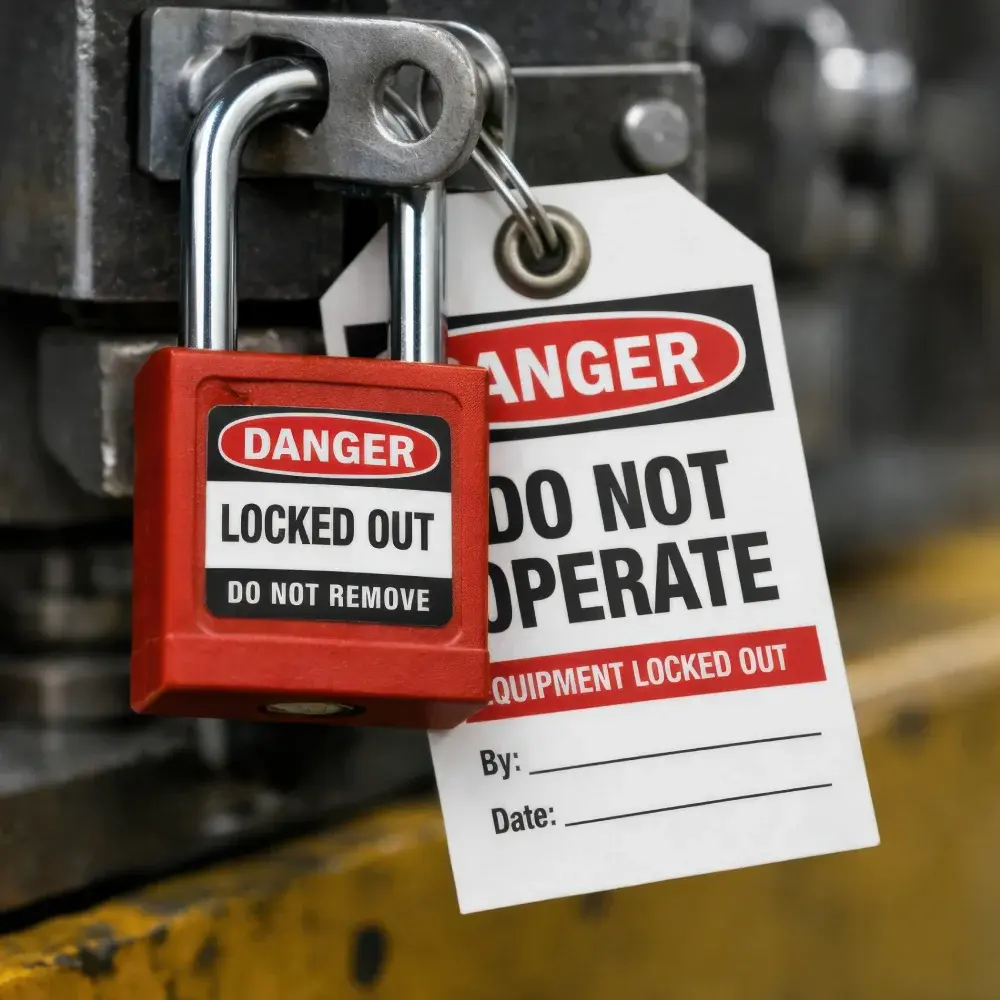
This module introduces hazardous energy control procedures used during maintenance and servicing activities. Learners will understand lockout/tagout requirements, hazardous energy sources, maintenance hazards, and the importance of machine guarding in preventing serious injuries caused by unexpected equipment startup or moving parts.
- Lesson 34: Hazardous Energy Sources and Lockout/Tagout Procedures
- Lesson 35: Machine Guarding Basics
Module 11: Incident Reporting and Investigation
This concluding module emphasizes the importance of reporting incidents and near misses as part of a proactive safety culture. Participants will learn the fundamentals of incident investigation, OSHA recordkeeping, supervisor responsibilities, root cause analysis, and implementing corrective actions to prevent future occurrences.
- Lesson 36: Incident Reporting and Supervisor Responsibilities
Final Examination
Frequently Asked Questions
This OSHA Warehouse Training is created focusing on Federal OSHA Regulations 29 CFR 1910 for General Industry and OSHA’s General Duty Clause.
This warehouse safety training is important because it builds the habits, hazard-recognition skills, and regulatory knowledge that workers need before an emergency, not during one. Proper training reduces recordable incidents, cuts workers' compensation costs, and, most critically, keeps people from going home injured.
- Comprehensive curriculum covering all major warehouse hazards and OSHA requirements.
- Developed using OSHA standards and recognized industry best practices.
- Focuses on hazard recognition, risk reduction, and injury prevention.
- Includes real-world warehouse scenarios and practical safety applications.
- Promotes a proactive safety culture through incident reporting and continuous improvement.
- Suitable for both new employees and experienced warehouse personnel requiring refresher training.
- Helps organizations improve regulatory compliance and reduce workplace incidents.
- Supports employers in building a safer, more productive, and more efficient workplace.
This course is designed for anyone who works in or around warehouse and distribution operations, including:
- Warehouse associates and material handlers
- Forklift and powered industrial truck operators
- Shipping and receiving personnel
- Loading dock employees
- Order pickers and inventory control staff
- Warehouse supervisors and team leaders
- Operations and distribution managers
- Maintenance personnel working in warehouse environments
- Temporary and seasonal warehouse workers
- Safety professionals and coordinators
- Employers seeking OSHA-compliant warehouse safety training
- Anyone responsible for maintaining a safe warehouse workplace
There are no prerequisites for this course.
Yes. Annual refresher training is recommended to help employees stay current with warehouse safety requirements. Refresher training also reinforces employee awareness and preparedness in the event of a workplace fire emergency.
Certificate of Completion: Immediately after passing the final exam, you can download, save, or print your certificate in PDF format.
Validity: The course certificate is valid for 1 year.
Renewal: Simply take this course in 12 months to maintain compliance and stay current on warehouse safety practices.
Choose Your Ideal Training Format:



Scorm Package


Virtual Instructor-Led
$299.00/Seat

In-Person Group
$750.00/Seat
I am responsible for overseeing warehouse productivity and safety, and this course covers it all. Easy to follow lessons and simplifies all OSHA requirements. Time well spent!
Great job explaining warehouse hazards and safe work practices!
Enrolled to improve our safety efforts at our warehouse and this course delivered exactly that! Thank you.
The fundamentals every warehouse employee should understand, from hazard prevention to safe work procedures. The training was professional, easy to navigate, and applicable to warehouses of any size.



The ROI of Online Safety Training
Discover the value of our efficient alternative to live training, and calculate your return on investment.
ROI Calculator
Recommended Courses