 EN
EN ES
ES




























































































































OSHA Powered Mobile Equipment Safety Training
- In accordance with Federal OSHA Regulations 29 CFR 1910.178, 29 CFR 1926.602, 29 CFR 1910.67, 29 CFR 1926.451, and 29 CFR 1926.453.
- Available in:
 English |
  Español
 - Learn at your own pace and on your own schedule
- Receive your certificate instantly upon completion
- Select from SCORM-compliant, online streaming, virtual instructor-led, or in-person learning formats
0.6
Bulk Buying
| Employee | Per Seat |
|---|---|
| 2-10 | $138.59 |
| 11-20 | $137.19 |
| 21-50 | $135.79 |
| 51-100 | $132.99 |
| 101-250 | $130.19 |
| 251-500 | $128.79 |
| 501-1000 | $125.99 |
Course Facts


Training Duration

Learning Type

Course Access Validity

Device Support


Certificate Validity
OSHA Powered Mobile Equipment Safety Training Course Syllabus
This OSHA Powered Mobile Equipment Safety Training consists of 18 lessons divided into 5 modules. Students are required to take each lesson in sequential order as listed below.
Introduction
Module 1: Powered Industrial Trucks and OSHA
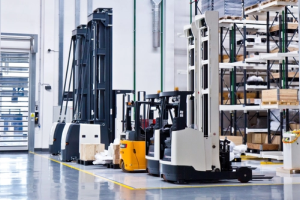
Covers the fundamentals of powered industrial trucks, including types, fuel systems, and operating environments. Explains key OSHA standards and the risks of non-compliance. Introduces data plates and truck specifications essential for safe operation.
- Lesson 1: Powered Industrial Trucks- The Basics
- Lesson 2: OSHA Standards and Non-Compliance Hazards
- Lesson 3: Truck Classes, Fuel Types, and Hazardous Locations
- Lesson 4: Data Plate and Specifications
Module 2: Forklift Safety Inspections
Focuses on thorough pre-operation and operational inspections to ensure equipment safety. Covers proper maintenance practices, including fueling and battery charging. Emphasizes identifying hazards before and during operation.
- Lesson 5: Pre-Operation Inspection
- Lesson 6: Operational Inspection and Maintenance
- Lesson 7: Fueling Forklifts and Charging Batteries
Module 3: Safe Loading of Materials on Trucks
Teaches the principles of load stability and proper lifting techniques. Covers safe positioning of materials and the prevention of tip-over incidents. Includes best practices for loading dock operations to ensure workplace safety.
- Lesson 8: Stability Principle and Incident Prevention
- Lesson 9: Lifting and Positioning Loads
- Lesson 10: Loading Dock Operations
Module 4: Working with Pallet Jacks
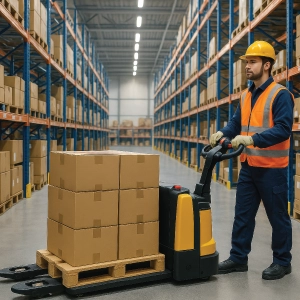
Introduces pallet jack operations and common workplace hazards. Covers anatomy, pre-use inspections, and essential safety practices. Emphasizes safe handling techniques to prevent injuries and equipment damage.
- Lesson 11: Introduction to Pallet Jacks
- Lesson 12: Common Hazards
- Lesson 13: Anatomy and Pre-Operational Inspections
- Lesson 14: Safe Work Practices
Module 5: Aerial - Scissor and Boom Lift
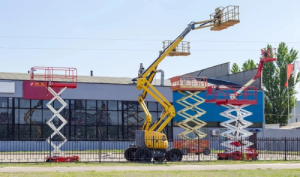
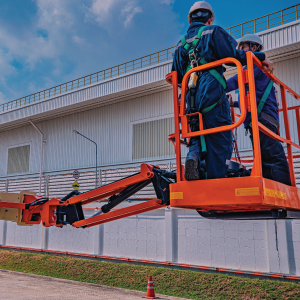
Provides an overview of Mobile Elevated Work Platforms (MEWPs) and their applications. Covers safety procedures before, during, and after use. Focuses on preventing falls, tip-overs, and electrical hazards while operating lifts.
- Lesson 15: Mobile Elevated Work Platforms Overview
- Lesson 16: Safety Procedures Before Use
- Lesson 17: Safety Precautions During Use
- Lesson 18: Safety Procedures After Use
Final Examination
Frequently Asked Questions
OSHA doesn’t provide a strict, one-size-fits-all definition for large-scale machinery. Generally, it refers to heavy-duty equipment used on worksites for tasks such as digging, lifting, and transporting materials. This usually includes machines such as excavators, loaders, and dump trucks, which are covered in this training course.
In most cases, you don’t need a driver’s license to operate heavy equipment like backhoes or skid steers on a worksite. However, if you’re driving larger vehicles on public roads, a commercial driver’s license (CDL) may be required. Specifically, anyone operating a commercial vehicle with a Gross Vehicle Weight Rating (GVWR) of 26,001 pounds or more must hold a CDL Class B and the necessary safety certification.
Our training covers the following OSHA standards:
- Powered Industrial Trucks under OSHA General Industry Standard, 29 CFR 1910.178, which applies to all trucks, including forklifts and pallet jacks.
- OSHA’s Construction Industry Standard for Material Handling Equipment, 29 CFR 1926.602.
- Vehicle-Mounted Elevating and Rotating Work Platforms under OSHA’s General Industry Standard 29 CFR 1910.67.
- OSHA’s Construction Industry Standards 29 CFR 1926.451 for scissor lifts; and 29 CFR 1926.453 for aerial lifts.
- The General Duty Clause is also applicable because it requires employers to provide workplaces free of recognized hazards, including those involving trucks.
Vehicles used for earth-moving and over-the-road hauling are excluded.
Powered mobile equipment accidents account for a notable percentage of workplace fatalities and serious injuries, and improved operator training alone is estimated to prevent hundreds of injuries and dozens of deaths annually by reducing unsafe practices and errors. Comprehensive safety training equips operators to identify hazards, perform proper inspections, handle loads safely, and operate equipment in accordance with regulatory standards, thereby significantly reducing risks for operators and coworkers alike.
- Covers all relevant OSHA standards - 29 CFR 1910.178, 1910.67, 1926.453, 1926.451, 1926.454, with completion certificate for regulatory compliance.
- Training is customized to reflect the actual conditions and challenges of your worksite, including uneven terrain, overhead hazards, and electrical exposure.
- Focused modules on preventing tip-overs, falls, catapulting, and electrocution, using real case studies from construction, warehousing, and maintenance incidents.
- Anyone who operates powered mobile equipment, including forklifts, scissor lifts, boom lifts, and other MEWPs.
- Individuals responsible for overseeing mobile equipment use, ensuring safety compliance, and evaluating operator performance.
- Workers new to a site or equipment type must take training before operating equipment.
- Operators returning to equipment after a period of non-use, or when new hazards, equipment, or procedures are introduced.
- Individuals tasked with conducting inspections, hazard assessments, or emergency response involving powered mobile equipment.
OSHA regulations recommend employees take this course as an annual refresher.
Certificate of Completion: Immediately after passing the final exam, you can download, save, or print your certificate in PDF format.
Validity: The course certificate is valid for three years.
Renewal: Simply complete this course within 36 months to maintain compliance and stay current on best practices for powered mobile equipment safety on work sites.
Choose Your Ideal Training Format:



Scorm Package


Virtual Instructor-Led
$249.00/Person

In-Person Group
$750.00/Person
Highly informative. The modules on aerial lifts and scissor lifts were particularly beneficial for our site operations.
This course highlighted hazards I wasn’t fully aware of. Now I can confidently ensure safety in my team’s daily operations.
This course, it equips participants with the knowledge to comply with OSHA standards and reduce risks effectively.
I learned practical tips that reduce the risk of tip-overs, falls, and other common accidents.



The ROI of Online Safety Training
Discover the value of our efficient alternative to live training and calculate your return on investment.
ROI Calculator
Recommended Courses