EN
EN ES
ES










































































































OSHA Incipient Firefighting Training
- In accordance with Federal OSHA Regulations 29 CFR 1910.157 and 29 CFR 1910.38
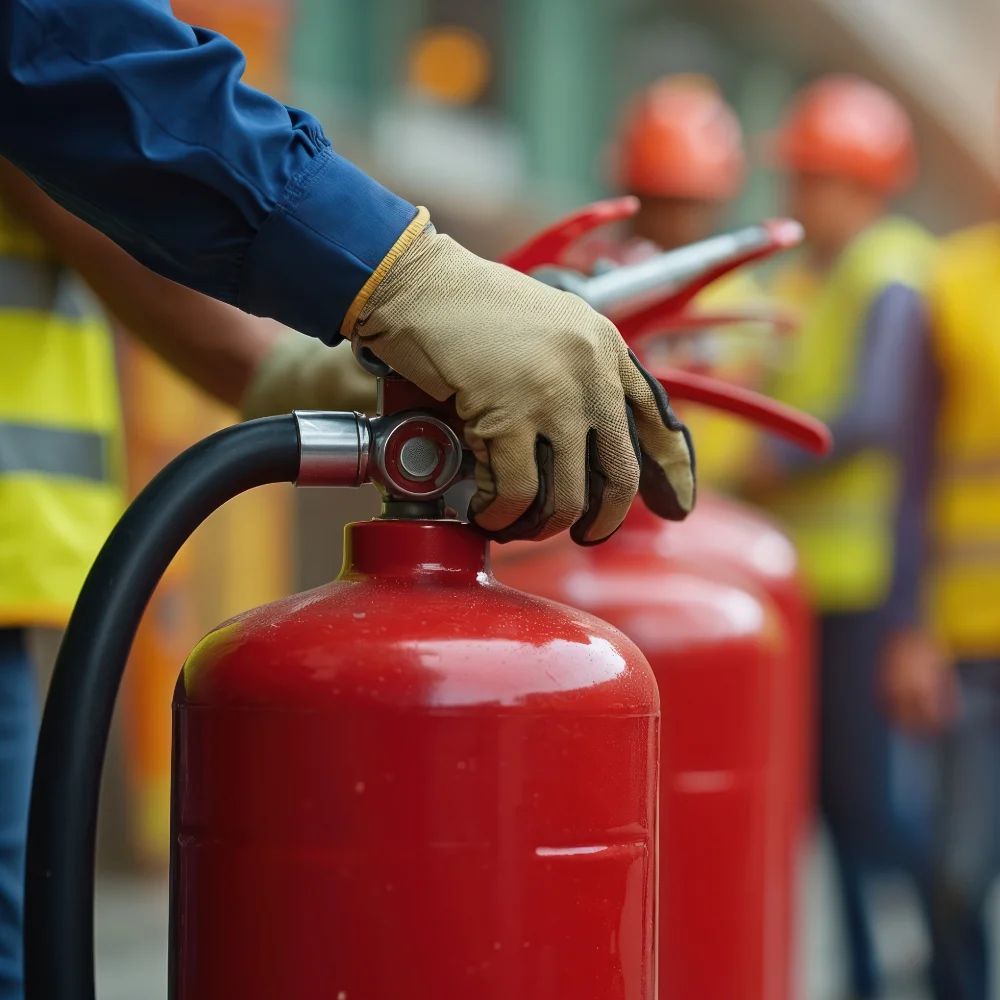
- This training is meant for incipient-stage fires that can be contained in its initial stages with the correct portable fire extinguisher
- Available in:
 English |
  Español
 - Learn at your own pace and on your own schedule
- Receive your certificate instantly upon completion
- Select from SCORM-compliant, online streaming, virtual instructor-led, or in-person learning formats
0.2
Bulk Buying
| Employee | Per Seat |
|---|---|
| 2-10 | $49.49 |
| 11-20 | $48.99 |
| 21-50 | $48.49 |
| 51-100 | $47.49 |
| 101-250 | $46.49 |
| 251-500 | $45.99 |
| 501-1000 | $44.99 |
Course Facts


Training Duration

Learning Type

Course Access Validity

Device Support


Certificate Validity

OSHA Incipient Firefighting Training Course Syllabus
This OSHA Incipient Firefighting Training consists of 4 lessons. Students must complete each lesson in the order listed below.
Introduction
Lesson 1: Fire Safety – An Overview
Introduces the basic science behind every fire, including the fire tetrahedron (fuel, oxygen, heat, and chemical chain reaction) and how heat transfers through conduction, convection, and radiation. Covers the four stages of fire, incipient, growth, fully developed, and decay, with a focus on recognizing an incipient-stage fire, since that recognition is the foundation for everything.
Lesson 2: Fire Prevention
Focuses on stopping a fire before it starts by controlling the conditions that lead to one. Covers fire prevention plans, housekeeping practices, safe storage and handling of flammable and combustible materials, and identifying and controlling ignition sources such as hot work, space heaters, and electrical equipment.
Lesson 3: Fire Protection
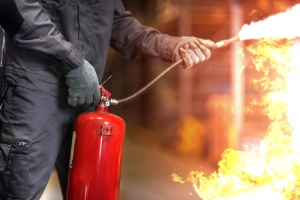
The core of the course, covering how to respond once a fire has started. Walks through selecting, installing, and using portable fire extinguishers (including the P.A.S.S. technique), the fight-or-flee decision checklist, standpipe and fixed extinguishing systems, employee training requirements under 1910.157(g), and a brief introduction to incipient stage fire brigades.
Lesson 4: Emergency Action Plans
Covers what happens when a fire moves beyond what a portable extinguisher can handle. Addresses the elements of a written Emergency Action Plan, exit route requirements, designation of refuge areas, shelter-in-place procedures, and the training and practice drills employees need to respond effectively during a real evacuation.
Final Examination
Frequently Asked Questions
This training is developed around 29 CFR 1910.157 — Portable Fire Extinguishers, OSHA's primary standard governing employee education and training on portable fire extinguisher use.
This training is further supported by 29 CFR 1910.38.
Yes, construction industry fire regulations mirror the general industry standards this course is built on, so the guidance applies equally on a construction site.
Fire safety training isn’t just a best practice; it’s a core requirement for protecting workers, assets, and day-to-day operations in industrial environments. Effective training helps employees understand risks, respond quickly to emergencies, and reduce the severity of fire-related incidents.
Below are some of the most important reasons fire safety training is essential for industrial workers:
- Protecting Lives and Reducing Injuries
- Preventing Property Damage and Business Disruption
- Meeting OSHA, NFPA, and Local Fire Code Requirements
- Fire safety requirements
- Supporting Productivity and Operational Continuity
- Based on OSHA 29 CFR 1910.157, covering everything from extinguisher selection to the annual retraining mandate.
- Teaches judgment, not just theory, with a practical fight-or-flee checklist and clear "when not to fight a fire" criteria, so employees know when to grab an extinguisher and when to walk away.
- Covers the P.A.S.S. technique in full — Pull, Aim, Squeeze, Sweep.
- Goes further with a dedicated section on incipient-stage fire brigades, including where that authority ends, and full 1910.156 fire brigade requirements begin.
- References relevant NFPA standards, such as NFPA 10, wherever they inform practice alongside OSHA requirements.
This training is for employees who may encounter a small workplace fire and need to respond safely. It is particularly relevant for:
- Employees working in offices and commercial facilities
- Manufacturing and industrial workers
- Warehouse and distribution personnel
- Construction and maintenance workers
- Facilities and building maintenance personnel
- Hotels, restaurants, and hospitality employees
- Healthcare and institutional employees
- Laboratory and research personnel
- Supervisors and managers responsible for workplace emergency procedures
- Employees designated to use portable fire extinguishers
- Members of workplace emergency response or evacuation teams
No. This course exists precisely because that's the wrong instinct. Fighting a fire is only appropriate when it's still in the incipient stage — small, confined to its point of origin, and controllable with a single extinguisher. Anything beyond that, and the right move is to evacuate.
Yes, OSHA requires hands-on training before an employee first uses one, not just a walkthrough, because muscle memory under stress is different from watching someone else do it once. Make sure you provide hands-on training for your employees through live-fire training props.
No. Employers can authorize only certain employees to use extinguishers and require everyone else to evacuate, and if they do, they're exempt from some of the extinguisher distribution requirements that otherwise apply.
OSHA Incipient Firefighting Training standards do not specify a set frequency for training renewal, unlike some other OSHA regulations. However, industry best practices suggest providing incipient-stage firefighting training at least once a year.
Certificate of Completion: Immediately after passing the final exam, you can download, save, or print your certificate in PDF format.
Validity: The course certificate is valid for one year.
Renewal: Simply take this course within 12 months to maintain compliance and stay current on incipient-stage firefighting practices at facilities or sites.
Choose Your Ideal Training Format:



Scorm Package
$49.99/Seat


Virtual Instructor-Led
$199.00/Seat (minimum 10 seats)

In-Person Group
$750.00/Seat (minimum 10 seats)
Very practical and easy to follow! I liked how the course combined OSHA requirements with practical fire response information.
The training clearly explained the hazards associated with incipient-stage firefighting. I now have a much better understanding of when to use an extinguisher and when to evacuate.
I found the explanations of fire extinguishers, fire classes, and the PASS technique very useful. The course was straightforward without being overly complicated.
Great course for anyone who may have to respond to a small workplace fire. The material on fire behavior and extinguisher limitations was particularly valuable!



The ROI of Online Safety Training
Discover the value of our efficient alternative to live training and calculate your return on investment.
ROI Calculator
Recommended Courses