English and
 Español. After purchase, use the language toggle in your course Player to switch between English and Spanish at any time.
 EN
EN ES
ES





















































Glossary - OSHA Incipient Firefighting Training
Alternate Equivalent Protection
A temporary safeguard, such as posting a fire watch or providing a ready hose system, that an employer must provide when portable fire extinguishers are removed from service for maintenance or recharging.
Automatic Fire Detection Equipment
Electronic sensors that detect smoke, heat, or flame from a developing fire and alert building occupants and emergency personnel before extensive damage occurs.
Bonding
Attaching a wire between two containers to equalize their electrical potential and dissipate static electricity when transferring flammable or combustible liquids between them.
Chemical Chain Reaction
The self-sustaining reaction between fuel, oxygen, and heat that produces more heat and burns more fuel until one of the four fire tetrahedron components is removed.
Class A Fire
A fire fueled by ordinary combustible materials such as wood, cloth, paper, rubber, and many plastics.
Class B Fire
A fire fueled by flammable or combustible liquids and gases, such as petroleum greases, tars, oils, oil-based paints, solvents, lacquers, and alcohols.
Class C Fire
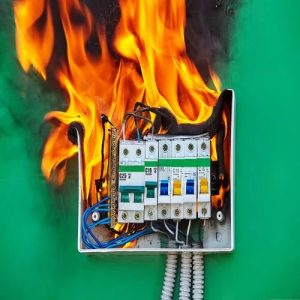
A fire involving energized electrical equipment.
Class D Fire
A fire involving combustible metals, such as magnesium, titanium, zirconium, sodium, lithium, and potassium.
Class I Standpipe System
A 2½″ (6.3 cm) hose connection intended for use by fire departments and those trained in handling heavy fire streams.
Class II Standpipe System
A 1½″ (3.8 cm) hose system that provides a means for the control or extinguishment of incipient stage fires.
Class III Standpipe System
A combined system of hoses, with both 1½″ and 2½″ outlets, for use by employees trained in hose operations and capable of furnishing effective water discharge during more advanced stages of fire.
Class K Fire
A fire in cooking appliances that involves combustible cooking media, such as vegetable or animal oils and fats.
Combustion
An exothermic (heat-producing) chemical reaction between fuel and oxygen.
Conduction
Heat transfer through direct contact between materials.
Convection
Heat transfer through a circulating medium (liquid or gas) moving from an area of higher temperature to an area of lower temperature.
Decay Stage
The stage of a fire in which the fuel or oxygen supply is depleted, and the fire begins to die out, though hazards such as re-ignition or backdraft can still be present.
Emergency Action Plan (EAP)
A written document that organizes employer and employee actions in the event of a workplace emergency, including evacuation, reporting, and accounting procedures.
Emergency Response Plan
A plan required in addition to an EAP for employers who train employees to fight fires beyond the incipient stage or to respond to a larger-scale incident, such as an in-house fire brigade.
Exit
The portion of an exit route that is generally separated from other areas to provide a protected way of travel to the exit discharge.
Exit Access
The portion of an exit route that leads to an exit.
Exit Discharge
The part of an exit route that leads directly outside, or to a street, walkway, refuge area, public way, or open space with access to the outside.
Exit Route
A continuous and unobstructed path of exit travel from any point within a workplace to a place of safety, including refuge areas.
Fire Brigade
An organized group of employees trained and equipped for interior structural firefighting, regulated separately under 29 CFR 1910.156.
Fire Prevention
Procedures used to prevent the initiation of fire by controlling the variables that lead to a fire.
Fire Prevention Plan
A written plan, addressed in 29 CFR 1910.39, that identifies fire hazards in the workplace and lays out the strategies used to control them.
Fire Protection
Procedures used to control a fire after ignition by separating the elements that lead to a fire.
Fire Tetrahedron
The four elements needed to initiate and sustain a fire: fuel, oxygen, heat, and chemical chain reaction.
Fire Triangle
The three original components of fire identified by the NFPA — fuel, heat, and oxygen — later expanded into the fire tetrahedron.
Fire Watch
An employee posted to monitor a work area for fire hazards, such as during hot work operations, when combustible materials cannot be removed or fully shielded.
Fixed Extinguishing System
A system that extinguishes a developing fire by automatically filling the protected area with a gas or chemical extinguishing agent.
Flash Point
The minimum temperature at which a liquid gives off vapor in sufficient concentration to form an ignitable mixture with air near its surface.
Fuel (Reducing Agent)
A material that readily burns in a normal atmosphere; found in solid, liquid, and gaseous forms.
Fully Developed Stage
The stage of a fire in which all available fuel in the area is burning and heat output is at its peak.
Growth Stage
The stage of a fire in which it spreads beyond its point of origin and heat and smoke increase rapidly.
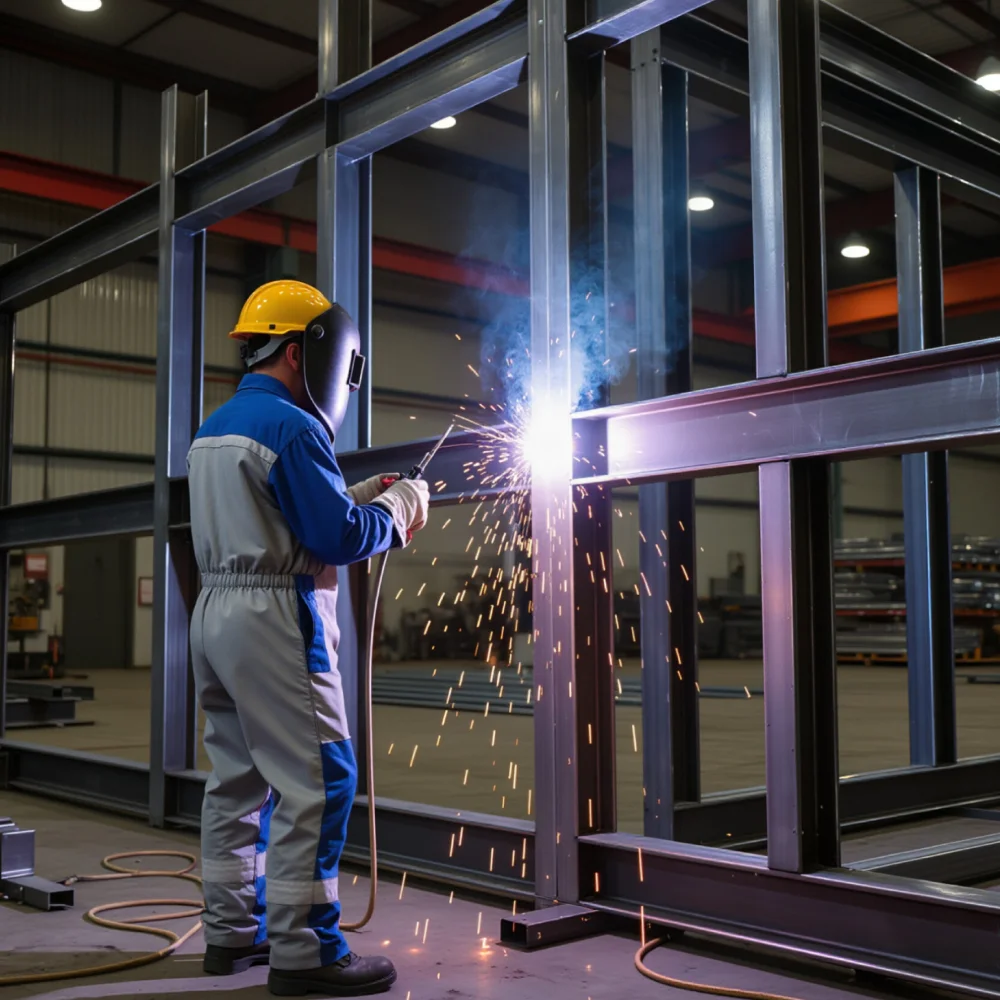
Hot Work
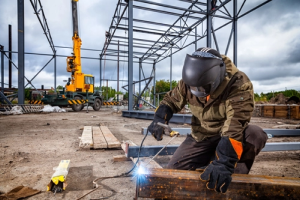
Riveting, welding, flame cutting, or other fire- or spark-producing operation.
Hot Work Permit
A document issued after a worksite inspection that authorizes hot work operations and the safe work practices employees must follow while performing them.
Housekeeping
Controlling the accumulation of flammable and combustible waste materials in the workplace to prevent fires, explosions, and the spread of toxic smoke.
Hydrostatic Testing
A pressure test performed on portable fire extinguisher shells or cylinders at set intervals, by trained individuals with appropriate equipment, to confirm they remain safe to use.
Ignition Source
Any source of heat — such as open flames, sparks, welding, smoking materials, hot plates, space heaters, boilers, or furnaces — capable of igniting a fire.
Incipient Stage
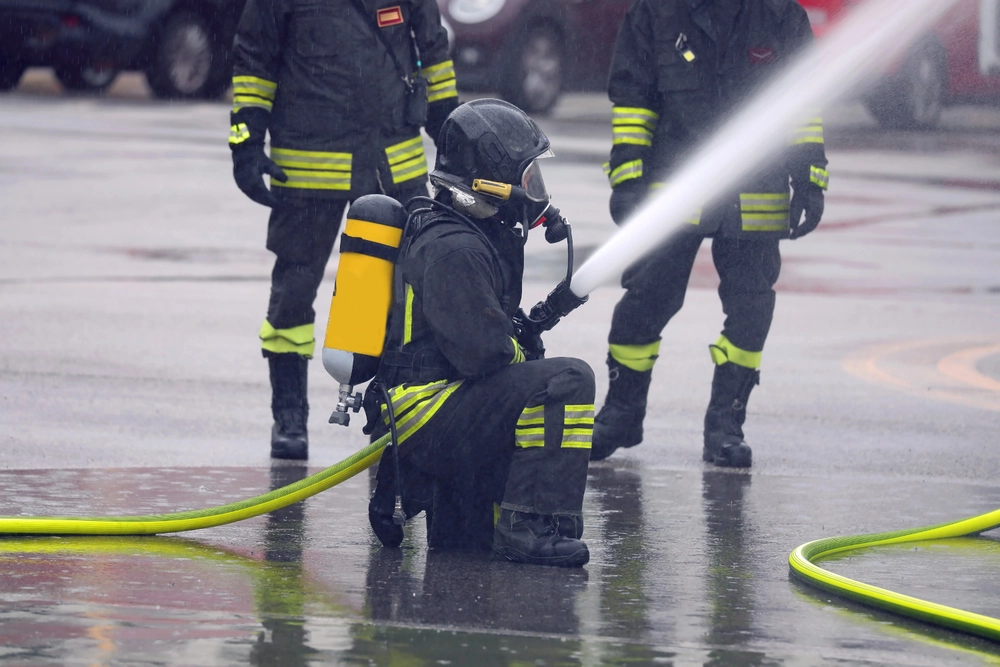
The initial stage of a fire, in which it is small, confined to its point of origin, and can be controlled with a single portable fire extinguisher or small hose.
Incipient Stage Fire Brigade
An informal, internally designated group of employees trained and authorized to use portable extinguishers on incipient-stage fires only — distinct from a full structural fire brigade under 29 CFR 1910.156.
J
No terms found
K
No terms found
L
No terms found
M
No terms found
N
No terms found
Overcurrent Protection Device
A device, such as a circuit breaker or fuse, that automatically opens a circuit when it detects current in excess of the equipment's or wiring's rating, preventing overheating and fire.
Oxidizing Agent (Oxygen)
The oxygen component of the fire tetrahedron; the atmosphere contains approximately 21% oxygen by volume.
P.A.S.S. Technique
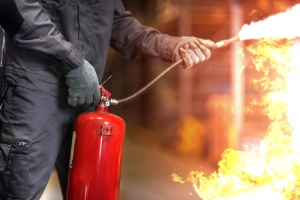
The standard method for operating a portable fire extinguisher: Pull the pin, Aim at the base of the fire, Squeeze the handle, and Sweep side to side.
Portable Fire Extinguisher
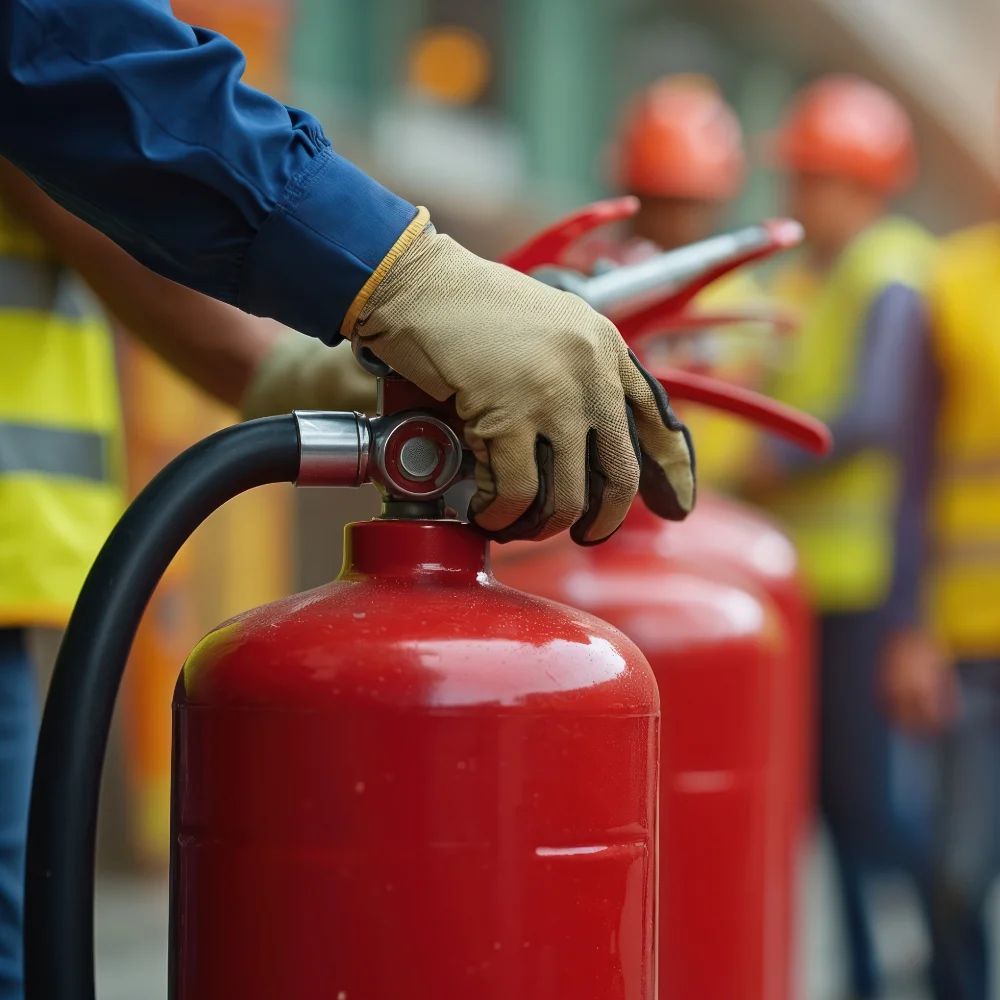
A hand-held device that dispenses an extinguishing agent to cool burning fuel, remove oxygen, or interrupt the chemical reaction of a small fire.
Q
No terms found
Refuge Area
A designated safe area, interior or exterior, where employees gather during an evacuation.
Shelter-in-Place
Selecting an interior room or rooms with no or few windows and taking refuge there instead of evacuating.
Small Hose System
A system of hose, ⅝″ to 1½″ in diameter, for employee use in controlling and extinguishing incipient-stage fires.
Smothering
Placing a barrier between a flame and the atmosphere to inhibit the fire's oxygen supply.
Standpipe System
A system of piping and hose connections, installed instead of or alongside portable fire extinguishers, for employee or fire department use in fighting a fire.
Total Flooding System
A fixed extinguishing system that floods an entire protected area with an extinguishing agent, typically used where agent concentrations could exceed safe exposure levels.
Travel Distance
The maximum distance an employee should have to travel to reach a portable fire extinguisher, set by OSHA according to the class of fire hazard present.
U
No terms found
V
No terms found
W
No terms found
X
No terms found
Y
No terms found
Z
No terms found