English and
 Español. After purchase, use the language toggle in your course Player to switch between English and Spanish at any time.

 EN
EN ES
ES






































































Glossary - OSHA Air Monitoring and Gas Detection Training
Area Monitor
A portable or fixed multi-gas detector placed at a job site (rather than worn on the body) to continuously sample and alarm on atmospheric conditions across a work zone.
Aspirated Detector
A gas detector that uses a pump to actively draw air samples to the sensor, allowing testing of remote or inaccessible spaces before entry.
Auto-Ignition Temperature
The lowest temperature at which a substance will spontaneously ignite in air without an external ignition source such as a spark or flame.
Bump Test
A quick functional check in which a gas detector is exposed to a known concentration of test gas to confirm the sensors and alarms respond correctly; does not adjust calibration.
Calibration
The process of adjusting a gas detector's sensor readings against a known reference gas concentration to ensure measurement accuracy.
Calibration Drift
A gradual change in a sensor's response over time or use, causing readings to deviate from true gas concentrations until corrected by calibration.
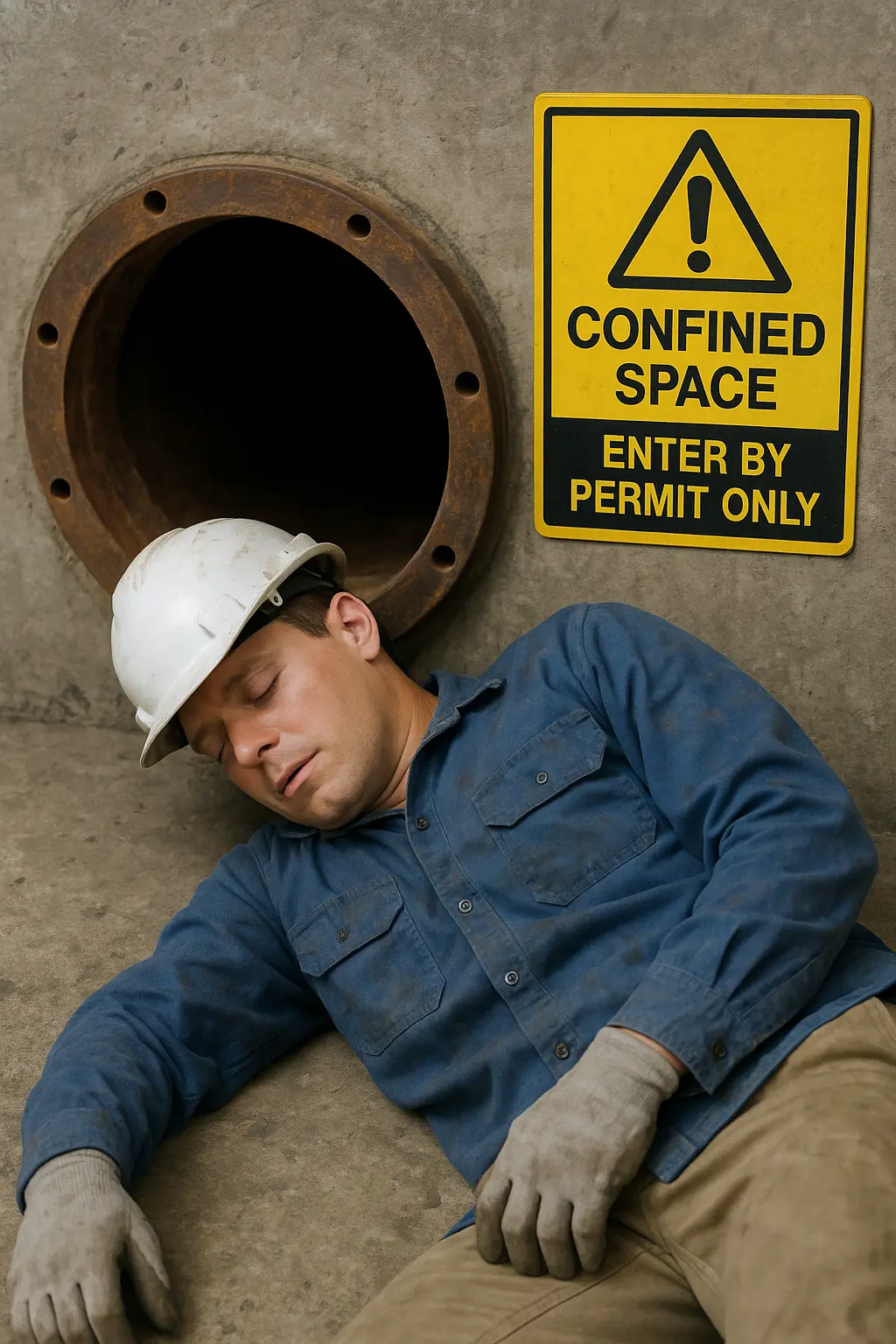
Confined Space
A space large enough for a worker to enter and perform work, with limited or restricted means of entry or exit, that is not designed for continuous occupancy.
Cross-Sensitivity
A sensor's tendency to respond to a gas other than the one it is designed to detect, which can produce a false or inaccurate reading.
Detector Tube
A single-use glass tube containing a chemical reagent that changes color in the presence of a specific gas, used for spot-checking gas concentrations.
Diffusion Detector
A gas detector that relies on the natural movement of air into the sensor rather than a pump, typically used for personal, worn monitoring.
Evaluation Testing
Initial atmospheric testing performed before entry into a confined space to determine whether hazardous conditions exist and what controls are required.
Explosibility Sensor
A sensor, typically a catalytic bead or infrared type, that measures the concentration of flammable gas or vapor as a percentage of the Lower Explosive Limit.
Flash Point
The lowest temperature at which a liquid gives off enough vapor to form an ignitable mixture with air near its surface.
Four-Gas Meter
A portable gas detector configured to simultaneously monitor four common atmospheric hazards, typically oxygen, combustible gas (LEL), carbon monoxide, and hydrogen sulfide.
G
No terms found
Hazardous Location Classification
A system (defined under NFPA 70/NEC) that categorizes areas by the type, likelihood, and concentration of flammable or combustible materials present, used to determine safe equipment ratings.
Hot Work
Any work activity involving open flame, welding, cutting, grinding, or other spark- or heat-producing processes capable of igniting a flammable atmosphere.
Hydrogen Sulfide (H₂S)
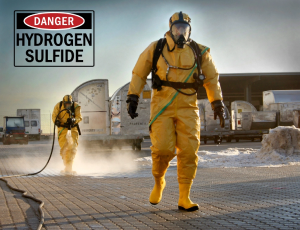
A colorless, flammable, and highly toxic gas with a rotten-egg odor at low concentrations that can rapidly deaden the sense of smell at higher, more dangerous concentrations.
Immediately Dangerous to Life or Health (IDLH)
An atmospheric concentration of a hazardous substance that poses an immediate threat to life, causes irreversible health effects, or impairs a person's ability to escape.
Infrared (IR) Analyzer
A gas sensor that measures gas concentration by detecting the absorption of infrared light at wavelengths specific to the target gas, commonly used for combustible gas and CO2 detection.
J
No terms found
K
No terms found
Layered Atmosphere
A condition in which gases of different densities settle into distinct layers within a space, causing atmospheric hazards to vary significantly by height or depth.
Lower Explosive Limit (LEL)
The minimum concentration of a flammable gas or vapor in air below which the mixture will not ignite.
M
No terms found
Non-Permit Confined Space
A confined space that does not contain, or have the potential to contain, atmospheric or physical hazards capable of causing death or serious harm.
Oxygen-Deficient Atmosphere
An atmosphere with an oxygen concentration below 19.5 percent by volume, which can impair judgment and physical ability and, at very low levels, cause loss of consciousness or death.
Oxygen-Enriched Atmosphere
An atmosphere with an oxygen concentration above 23.5 percent by volume, which significantly increases the risk and severity of fire.
Permissible Exposure Limit (PEL)
The maximum concentration of a substance in workplace air, established by OSHA, to which a worker may be exposed over a specified time period.
Permit-Required Confined Space
A confined space that contains or has the potential to contain a serious atmospheric or physical hazard, requiring a written permit system before entry.
Photoionization Detector (PID)
A gas sensor that uses ultraviolet light to ionize gas molecules and measure volatile organic compound concentrations, but which cannot detect methane, oxygen, or general explosion risk.
Pumped Detector
See Aspirated Detector.
Q
No terms found
Representative Sampling
The practice of testing multiple locations and levels within a space so that results accurately reflect the full range of atmospheric conditions present.
Re-Entry Testing
Atmospheric testing performed each time workers re-enter a space after having left it, to confirm conditions have not changed since the last test.
Sensor Response Time
The amount of time a gas sensor takes to detect and display an accurate reading after exposure to a gas, a key factor in how quickly hazards are identified.
Sensory Deception
A phenomenon in which a worker's sense of smell or other senses fail to reliably warn of a hazardous atmosphere, either because a gas is odorless or because the sense of smell has been deadened by exposure.
Simultaneous Operations (SIMOPS)
Two or more work activities occurring at the same time in the same or adjacent area, which can create combined or changing atmospheric hazards not present when the tasks are performed separately.
Stratification
The tendency of a gas to settle at a particular level within a space based on its density relative to air, forming pockets of hazardous concentration.
Sudden Release
An unplanned, rapid escape of gas into a work atmosphere, which can quickly create an immediately dangerous condition with little warning.
Threshold Limit Value (TLV)
An occupational exposure guideline, published by the ACGIH, indicating the airborne concentration of a substance to which nearly all workers can be repeatedly exposed without adverse effect.
Time-Weighted Average (TWA)
An average exposure concentration calculated over a specified work period, typically eight hours, used to evaluate compliance with exposure limits.
Upper Explosive Limit (UEL)
The maximum concentration of a flammable gas or vapor in air above which the mixture is too rich in fuel to ignite.
Verification Testing
Follow-up atmospheric testing conducted after initial evaluation testing, and periodically during entry, to confirm the space remains safe for continued occupancy.
Video Exposure Monitoring (VEM)
A monitoring method that pairs real-time gas detector data with video footage of a worker's task, allowing exposure levels to be reviewed alongside the specific activity that produced them.
W
No terms found
X
No terms found
Y
No terms found
Z
No terms found