English and
 Español. After purchase, use the language toggle in your course Player to switch between English and Spanish at any time.

 EN
EN ES
ES




















































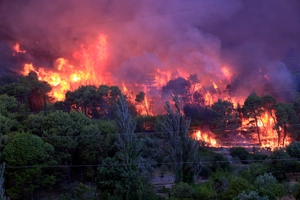
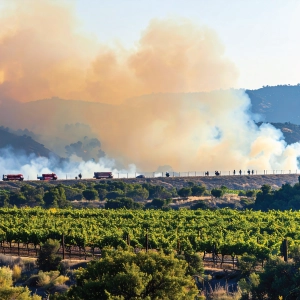




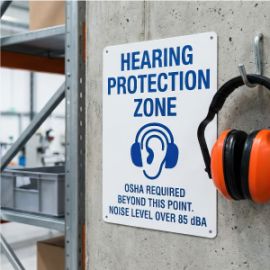

























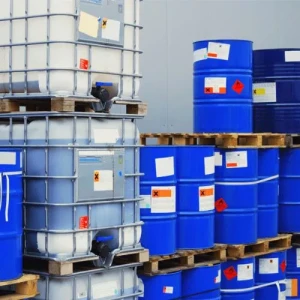
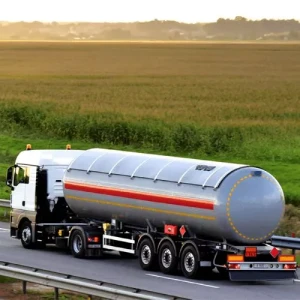





Glossary- OSHA 4-Hour HAZWOPER First Responder Awareness Level Training
Access Control
Measures taken to restrict entry to a hazmat or CBR incident scene to authorized personnel only, typically managed through a perimeter and personnel log.
Alpha Particle
A low-penetrating form of radiation emitted by certain radioactive materials; stopped by skin or paper but hazardous if inhaled or ingested.
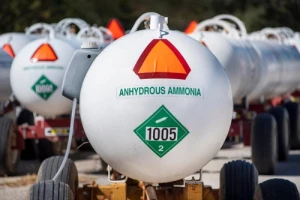
Anhydrous Ammonia
A compressed, liquefied gas (UN1005) that is a toxic inhalation hazard (TIH); widely used in agriculture and refrigeration and transported by pipeline and tanker.
Awareness Level
The lowest level of hazmat response training, as defined by OSHA 29 CFR 1910.120, focused on recognizing a hazmat release, isolating the scene, and notifying the appropriate authorities without taking offensive action.
Beta Particle
A moderately penetrating form of radiation; it can penetrate skin and is hazardous if inhaled or ingested. Stopped by plastic, glass, or light metal shielding.
Biological Agent
A living organism (bacteria, virus) or toxin derived from one that can cause illness or death. Biological agents often have delayed symptom onset and may not produce a visible release at the scene.
Blood Agent
A chemical agent (e.g., hydrogen cyanide) that interferes with cells' ability to use oxygen, causing rapid incapacitation and death at high concentrations.
Blue Pages
The alphabetical index in the ERG lists hazardous materials by proper shipping name and cross-references each to a Guide number.
CAMEO
Computer-Aided Management of Emergency Operations: a suite of software tools used by emergency responders for chemical hazard assessment and incident planning.
CBR
Chemical, Biological, Radiological — the three categories of agents used in terrorist or criminal attacks. Sometimes extended to CBRN to include Nuclear.
CFATS
Chemical Facility Anti-Terrorism Standards (6 CFR Part 27); DHS regulations requiring facilities with threshold quantities of chemicals of interest to implement site security plans.
Chain of Custody
The documented, unbroken sequence of control and transfer of evidence from collection through analysis is critical at any suspected intentional CBR incident.
Chemical Agent
A toxic substance used as a weapon, including nerve agents, blister agents, blood agents, and choking agents. Some chemical agents also exist as industrial chemicals regulated under DOT.
CHEMTREC
Chemical Transportation Emergency Center: a 24-hour emergency resource (1-800-424-9300) operated by the American Chemistry Council that provides chemical hazard information to emergency responders.
Choking Agent
A chemical agent (e.g., chlorine, phosgene) that damages the respiratory tract, leading to pulmonary edema and respiratory failure.
Civil Support Team (CST)
A 22-person National Guard unit present in every state, specifically trained and equipped to support first responders at WMD/CBR incidents with advanced detection, identification, and communications capability.
Cold Zone
The outermost zone at a hazmat incident is considered safe from contamination; it is the location for command, staging, and support operations.
Corrosive
A hazardous material capable of destroying or irreversibly damaging living tissue or metal on contact. Regulated under DOT Hazard Class 8.
Decontamination (Decon)
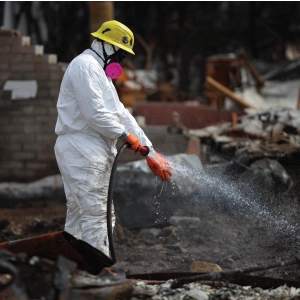
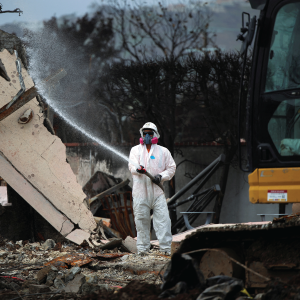
The process of removing or neutralizing hazardous materials from persons, equipment, or the environment to stop ongoing exposure and prevent the spread of contamination.
Dirty Bomb
Informal term for a Radiological Dispersal Device (RDD); a conventional explosive combined with radioactive material designed to disperse contamination rather than cause nuclear detonation.
DOT
United States Department of Transportation is the federal agency responsible for regulating the transportation of hazardous materials, including the publication of the ERG.
Emergency Response Guidebook (ERG)
A joint DOT/Transport Canada/SCT publication updated every four years, providing initial response guidance for hazmat transportation incidents. Organized into Yellow (numerical), Blue (alphabetical), Orange (guides), and Green (TIH distances) sections.
EPCRA
Emergency Planning and Community Right-to-Know Act; federal law establishing requirements for emergency planning and public reporting of hazardous chemicals, including LEPC and SERC notification requirements.
Evacuation
A protective action directing people to leave a hazard area and move to a safe location; typically preferred when there is sufficient time and safe routes exist before a hazard arrives.
Excavation Damage
The leading cause of pipeline failures occurs when digging equipment contacts a buried pipeline without prior notification through the national 811 Call Before You Dig system.
Exposure Route
The pathway by which a hazardous substance enters the body: inhalation, skin or eye contact, or ingestion.
Flammable Range
The range of vapor concentrations in air (between the Lower Explosive Limit and Upper Explosive Limit) within which ignition can occur. Natural gas has a flammable range of approximately 5–15% in air.
Fusion Center
A state or regional intelligence hub that collects, analyzes, and shares threat information between law enforcement and emergency management agencies; a key reporting channel for suspicious activity involving hazardous materials.
Gamma Radiation
High-energy, deeply penetrating electromagnetic radiation emitted by certain radioactive materials requires dense shielding such as lead or concrete for protection.
Green Pages
The section of the ERG containing the Table of Initial Isolation and Protective Action Distances for toxic inhalation hazard (TIH) materials, with separate day and night values.
Guide Number
A three-digit number in the ERG (typically 111–173) that directs the user to the appropriate Orange Guide page for a hazardous material; identified through the Yellow or Blue Pages index.
HAZWOPER
Hazardous Waste Operations and Emergency Response; OSHA standard (29 CFR 1910.120) establishing training, PPE, and operational requirements for employees involved in hazardous materials emergency response.
Hazmat
Abbreviation for hazardous materials: substances capable of posing an unreasonable risk to health, safety, or the environment during transportation or storage.
Hot Zone
The innermost zone at a hazmat incident, where the primary contamination or hazard exists. Entry requires appropriate PPE and is restricted to qualified response personnel.
ICS
Incident Command System: a standardized management framework used at emergency incidents to coordinate personnel, resources, and communications under a unified command structure.
Initial Isolation Distance
The minimum radius in all directions around a hazmat release within which all persons should be considered at risk and excluded from the area, regardless of wind direction.
Insider Threat
A person with legitimate access to a facility, vehicle, or shipment who uses that access to cause harm, facilitate theft, or support criminal or terrorist activity.
Isolation Perimeter
A controlled boundary is established around a hazmat or CBR incident to prevent unauthorized access, limit exposure, and facilitate organized response operations.
J
No terms found
K
No terms found
LEPC
Local Emergency Planning Committee: a community body established under EPCRA responsible for developing local emergency response plans for hazardous chemical incidents.
Mercaptan
A sulfur-containing odorant added to odorless natural gas by distribution companies to produce a recognizable rotten-egg or sulfur smell, enabling detection of leaks at very low concentrations.
MSDS/SDS
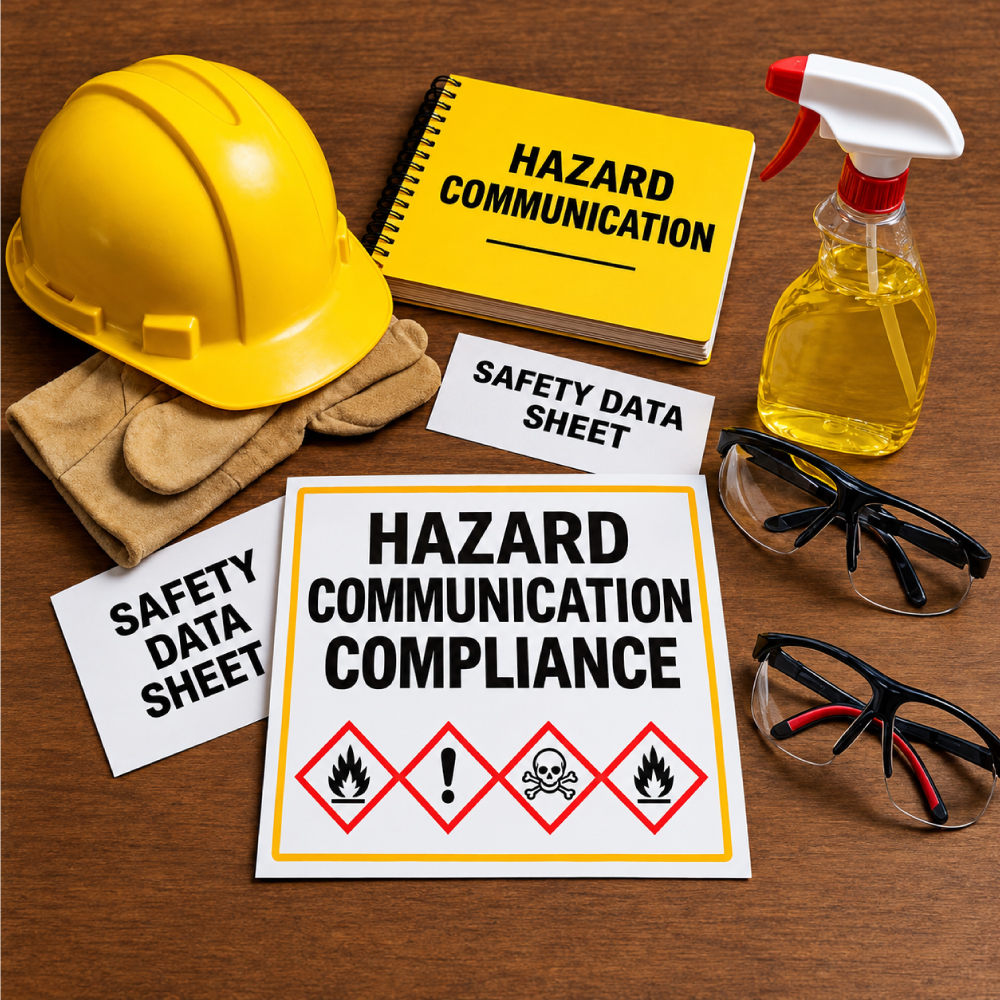
Material Safety Data Sheet / Safety Data Sheet: a document providing detailed information about a specific chemical, including hazards, safe handling, PPE requirements, and emergency response — required under OSHA's Hazard Communication Standard (29 CFR 1910.1200).
NA Number
North America identification number: a four-digit code used in the United States and Canada for hazardous materials that do not have a corresponding UN number.
National Response Center (NRC)
A 24-hour federal reporting center (1-800-424-8802) that receives notifications of significant hazardous material releases, oil spills, and pipeline incidents as required under federal regulations.
Nerve Agent
A class of chemical warfare agents (e.g., sarin, VX) that inhibits the enzyme acetylcholinesterase, causing loss of nervous system control and potentially fatal respiratory failure.
NFPA 472
National Fire Protection Association standard establishing professional competencies for emergency responders to hazardous materials and weapons of mass destruction incidents, including Awareness, Operations, and Technician levels.
NPMS
National Pipeline Mapping System, a publicly accessible database maintained by PHMSA (npms.phmsa.dot.gov) showing the location of pipeline infrastructure across the United States.
Orange Pages
The core response guidance section of the ERG, organized by Guide number, provides hazard information, public safety guidance, and emergency response actions for fire, spill, and leak scenarios.
Operations Level
The second tier of hazmat response training (above Awareness), authorizing personnel to take defensive actions to protect nearby persons, the environment, and property from a hazmat release.
PHMSA
Pipeline and Hazardous Materials Safety Administration, the DOT agency responsible for regulating pipeline safety and hazardous materials transportation, and publisher of the ERG.
PIH
Poison Inhalation Hazard: an older designation for materials now classified as toxic inhalation hazard (TIH) under current DOT/ERG terminology.
Pipeline Marker
An above-ground sign is required under 49 CFR Parts 192 and 195 at road crossings, fences, and waterways identifying the pipeline product type, operator name, and 24-hour emergency contact number.
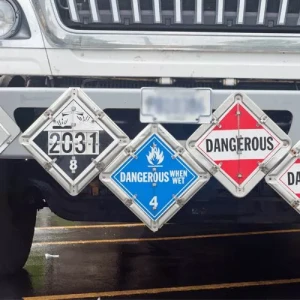
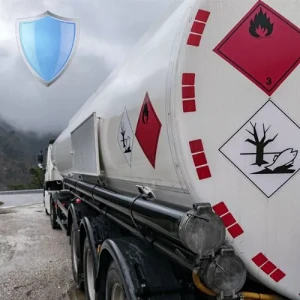
Placard
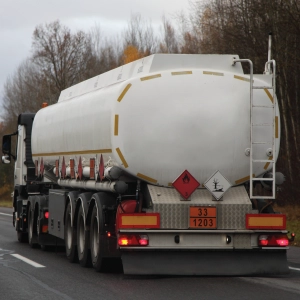
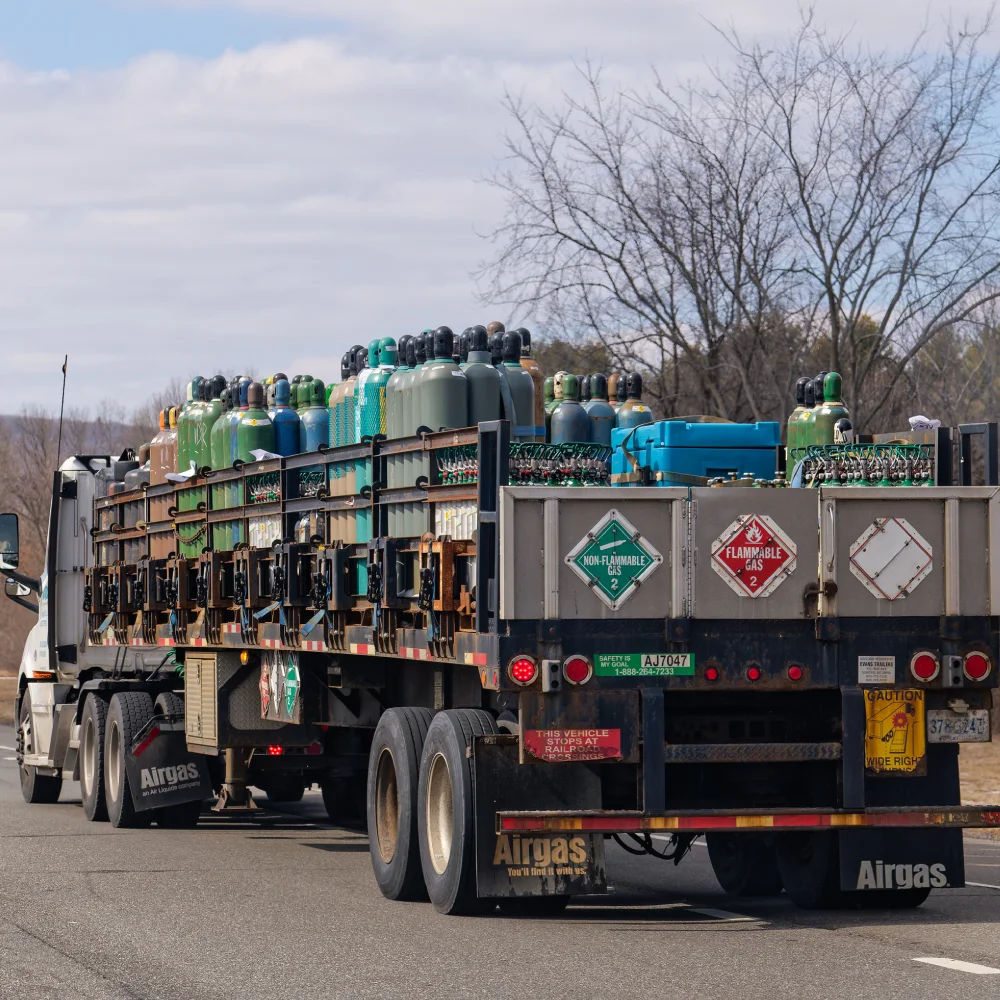
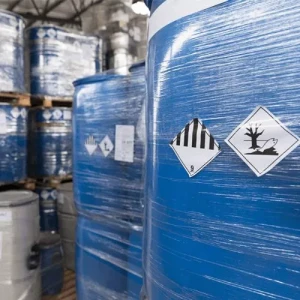
A diamond-shaped sign displayed on vehicles, rail cars, and containers transporting hazardous materials, showing the DOT hazard class and, in many cases, the four-digit UN/NA identification number.
PPE
Personal Protective Equipment: clothing and equipment worn to protect against hazardous material exposure, ranging from standard work clothing (Level D) to fully encapsulating chemical-resistant suits with SCBA (Level A).
Proper Shipping Name
The regulatory term for a hazardous material as defined in 49 CFR 172.101 and required on shipping papers; the name used in the ERG Blue Pages index.
Protective Action Distance
The downwind distance in the ERG Green Pages within which protective actions (evacuation or shelter-in-place) should be considered for TIH material releases, provided separately for day and night conditions.
Q
No terms found
RDD
Radiological Dispersal Device: a device combining conventional explosives with radioactive material to disperse contamination over an area, also known as a dirty bomb.
Recognize-Withdraw-Report
The foundational Awareness-level response doctrine for suspected CBR incidents: recognize the indicators, withdraw to a safe upwind distance, and report to activate the specialized response chain.
SCADA
Supervisory Control and Data Acquisition: a computer control system used to remotely monitor and operate pipeline valves, pumps, and safety systems; a potential target for cyberattacks with physical consequences.
SCBA
Self-Contained Breathing Apparatus: a respirator that provides clean air from a portable tank, required when working in atmospheres that are immediately dangerous to life and health (IDLH).
SERC
State Emergency Response Commission: a state body responsible for coordinating emergency planning activities under EPCRA, overseeing LEPCs, and receiving hazardous substance release notifications.
Shelter-in-Place
A protective action directing people to remain indoors with windows, doors, and ventilation sealed to reduce exposure to an outdoor hazmat or CBR release; typically used when evacuation cannot be safely completed before the hazard arrives.
Shipping Papers
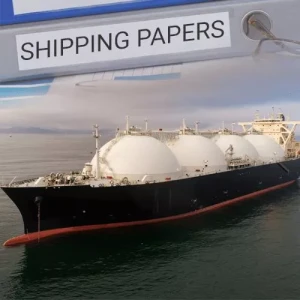
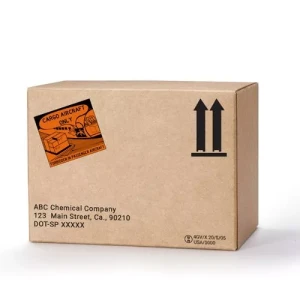
Documents required to accompany hazardous material shipments (bill of lading for highway, waybill for rail, dangerous cargo manifest for water), identifying the material, quantity, and emergency contact information.
Technician Level
The highest standard operational level of hazmat response training authorizes personnel to work in the hot zone, make direct contact with hazardous materials, and perform offensive response actions.
TIH
Toxic Inhalation Hazard: a material that is toxic by inhalation and can create a hazardous vapor cloud capable of causing serious harm at concentrations well beyond the immediate spill area. TIH materials are highlighted in the ERG index and require consultation with Green Pages.
Toxic Industrial Chemical (TIC)
A hazardous industrial chemical that can be used or misused as a chemical weapon due to its toxic properties and widespread availability in commerce (e.g., chlorine, anhydrous ammonia, phosgene).
UN Number
United Nations identification number: a four-digit code assigned internationally to specific hazardous materials for use in transportation labeling, placarding, and emergency response, listed in the ERG Yellow Pages.
Unified Command
An ICS structure is used when multiple agencies share incident management responsibility; it is used at major hazmat incidents where fire, law enforcement, EMS, and federal agencies (FBI, FEMA) operate together.
Vapor Cloud
A visible or invisible mass of hazardous vapor dispersed in the atmosphere following a liquid or gas release; it can travel significant distances and ignite or cause toxic exposure far from the release point.
Vapor Density
The weight of a gas or vapor relative to air (air = 1.0); vapors with density greater than 1 sink to low areas such as basements, storm drains, and depressions, creating concentrated pockets of hazardous material.
Warm Zone
The transition area between the hot zone and cold zone at a hazmat incident, where decontamination operations are conducted. Entry requires appropriate PPE.
WMD
Weapon of Mass Destruction: a device or substance designed to cause death or injury to large numbers of people; includes chemical, biological, radiological, nuclear, and explosive weapons. Suspected WMD incidents trigger FBI jurisdiction under 18 U.S.C. § 2332a.
X
No terms found
Yellow Pages
The numerical index in the ERG lists hazardous materials by UN/NA identification number in ascending order, cross-references each to a Guide number, and flags TIH materials.
Zoning
The division of a hazmat or CBR incident scene into hot, warm, and cold zones based on proximity to the hazard is used to control access, manage PPE requirements, and organize response operations.