English and
 Español. After purchase, use the language toggle in your course Player to switch between English and Spanish at any time.

 EN
EN ES
ES























































































Glossary - NORM Worker Training
Absorbed Dose
The amount of energy deposited by radiation in a unit mass of material, measured in gray (Gy) or rad.
Absorption (Through Wounds)
An internal exposure pathway in which radioactive material enters the body directly through a cut, abrasion, or other break in the skin.
Activity Concentration
The amount of radioactivity per unit mass or volume of a material, typically expressed in becquerels per gram (Bq/g) or becquerels per litre (Bq/L).
Airborne Radioactivity Area
Under 29 CFR 1910.1096(e)(4), an area where airborne radioactive material concentrations exceed a specified limit, or 25% of that limit averaged over the occupied hours in a week, triggering a posting requirement.
ALARA (As Low As Reasonably Achievable)
The principle that radiation exposure should be kept as low as reasonably achievable, considering economic and social factors, even when doses are already within regulatory limits.
Alpha Particle
A relatively large, positively charged particle emitted from the nucleus of certain radioactive atoms; it has very low penetrating power but can be a serious hazard if inhaled or ingested.
Assigned Protection Factor (APF)
The level of respiratory protection that a properly functioning, correctly fitted respirator class is expected to provide to a population of trained users, expressed as a ratio of outside to inside contaminant concentration.
Acute Radiation Syndrome (ARS)
A deterministic effect resulting from a high, whole-body radiation dose received over a short period, producing symptoms such as nausea, fatigue, and reduced blood cell counts.
Air-Purifying Respirator (APR)
A respirator that removes contaminants from the air by passing it through a filter, cartridge, or canister before it is inhaled.
Air-Supplying Respirator (ASR)
A respirator that supplies breathable air from a source independent of the surrounding atmosphere, such as an SCBA or SAR, rather than filtering ambient air.
Becquerel (Bq)
The SI unit of radioactivity, equal to one radioactive decay (disintegration) per second.
Beta Particle
A high-speed electron or positron emitted from the nucleus of certain radioactive atoms; more penetrating than an alpha particle but less penetrating than gamma radiation.
Carrier (Transport)
In the transport of NORM, the party responsible for carriage of the consignment, including proper stowage, interim storage, and radiation protection during transit.
Clearance
The removal of material or equipment from regulatory control entirely, once it has been verified to meet the applicable clearance criteria.
Competent Authority
The government body legally authorized to regulate radiation safety within a country, including licensing, inspection, and enforcement.
Consignor
The person or organization sending a radioactive material package, responsible for correct packaging, labelling, and accurate documentation.
Controlled Area
An area subject to specific rules for radiation protection purposes, requiring measures to control normal exposures and prevent or limit the likelihood and magnitude of potential exposures.
Curie (Ci)
A traditional (non-SI) unit of radioactivity, equal to 3.7 x 10^10 disintegrations per second; largely superseded by the becquerel.
Decay Chain (Decay Series)
The sequence of radioactive decays a parent radionuclide undergoes, through a series of daughter radionuclides, until a stable (non-radioactive) nuclide is reached.
Deterministic Effect
A biological effect of radiation that has a dose threshold below which it does not occur, and whose severity increases with dose above that threshold, such as skin erythema or cataracts.
Dose Constraint
A prospective, source-related restriction on the dose an individual may receive from a specific source, used as a planning tool to support optimization.
Dose Equivalent
Absorbed dose adjusted for the relative biological effectiveness of the type of radiation involved, measured in sievert (Sv) or rem.
Dosimeter
A device worn by a worker to measure and record the radiation dose the wearer receives over time.
Effective Dose
A calculated dose quantity that accounts for both the radiosensitivity of different tissues and the type of radiation involved, allowing doses from different exposure situations to be compared on a common scale.
End-of-Service-Life Indicator (ESLI)
A feature on some respirator cartridges (typically organic vapor or gas cartridges) that signals when the cartridge is approaching saturation and needs to be changed.
Exemption
Removal of a practice or source from some or all aspects of regulatory control, because the associated risk is judged to be negligible.
Existing Exposure Situation
A category of exposure situation, under IAEA GSR Part 3, that already exists when a decision on control needs to be taken, such as exposure from a legacy NORM site; managed using a reference level rather than a dose limit.
External Exposure
Exposure to radiation from a source located outside the body.
Furnace Dust
Fine particulate captured from furnace off-gas during metal or mineral processing, which can carry elevated concentrations of volatile radionuclides such as lead-210 and polonium-210.
Gamma Radiation
Highly penetrating electromagnetic radiation emitted from the nucleus of certain radioactive atoms, requiring dense shielding materials such as lead or concrete to reduce exposure.
Graded Approach
The principle that regulatory requirements should be proportionate to the magnitude of the potential radiological risk, so that low-risk practices carry a lighter regulatory burden than high-risk practices.
Gray (Gy)
The SI unit of absorbed dose, equal to one joule of energy deposited per kilogram of matter.
Half-Life
The time required for half of the atoms in a quantity of a radionuclide to decay.
HEPA Filter
A high-efficiency particulate air filter capable of capturing at least 99.97% of airborne particles of a specified size, commonly used for NORM particulate filtration.
Hierarchy of Controls
A ranked framework for controlling hazards, generally prioritizing elimination and engineering controls over administrative controls and personal protective equipment.
IAEA GSR Part 3
IAEA General Safety Requirements Part 3, Radiation Protection and Safety of Radiation Sources: International Basic Safety Standards, which establishes the international framework for exemption, clearance, and occupational and public protection requirements, including for NORM.
IAEA GSG-7
IAEA Safety Guide No. GSG-7, Occupational Radiation Protection, which provides detailed recommendations for implementing GSR Part 3 requirements on occupational exposure, including the graded approach.
IAEA GSG-15
IAEA Safety Guide No. GSG-15, Remediation Strategy and Process for Areas Affected by Past Activities or Events, the current guidance on remediating legacy NORM sites.
IAEA SSR-6
IAEA Specific Safety Requirements No. SSR-6, Regulations for the Safe Transport of Radioactive Material, commonly called the Transport Regulations.
IDLH (Immediately Dangerous to Life or Health)
An atmospheric concentration of a hazard high enough to pose an immediate threat to life, impair the ability to escape, or cause irreversible health effects; IDLH conditions require air-supplying respiratory protection.
Ingestion
An internal exposure pathway in which radioactive material is swallowed, often as a result of poor hygiene practices.
Inhalation
An internal exposure pathway in which radioactive material is breathed into the respiratory tract, generally the pathway of greatest concern in NORM operations.
Internal Exposure
Exposure to radiation from a source located inside the body, following inhalation, ingestion, or absorption through a wound.
Ionizing Radiation
Radiation with enough energy to remove tightly bound electrons from atoms, creating ions; includes alpha, beta, gamma, X-ray, and neutron radiation.
J
No terms found
K
No terms found
Legacy Site
An area affected by past activities involving NORM, often abandoned or of uncertain ownership, that can present an exposure pathway today even though no current operator or license exists.
Licensing
A form of regulatory authorization involving a site- or activity-specific safety case, tailored conditions, and formal approval before operating, generally applied to higher-risk practices under the graded approach.
Linear No-Threshold (LNT) Model
A dose-response model, used for stochastic effects, assuming risk increases linearly with dose and that no dose is completely risk-free; the basis for most current occupational and public dose limits.
Local Exhaust Ventilation (LEV)
A ventilation approach that captures a contaminant close to the point it is generated, using a hood or enclosure, before it can disperse into the general work area.
Low Specific Activity (LSA) Material
Radioactive material which, by its nature, has a limited specific activity, or for which limits on estimated average specific activity apply; classified as LSA-I, LSA-II, or LSA-III for transport purposes.
Maximum Use Concentration (MUC)
The highest airborne concentration of a hazardous substance from which a respirator is expected to protect the wearer, calculated as the Assigned Protection Factor multiplied by the applicable exposure limit.
Neutron Radiation
Radiation consisting of neutrons, uncharged particles capable of penetrating most materials and requiring hydrogen-rich shielding, such as water or concrete, for effective attenuation.
NORM (Naturally Occurring Radioactive Material)
Radioactive elements, principally from the uranium-238 and thorium-232 decay series and potassium-40, that occur naturally in the earth's crust and can become concentrated by industrial processes.
Notification
A form of regulatory authorization involving informing the competent authority that an activity is taking place and meeting basic, generic conditions, generally applied to lower-risk practices under the graded approach.
Nuclear Fission
The splitting of a heavy atomic nucleus into two lighter nuclei, releasing energy; distinct from the radioactive decay processes that generate most NORM.
Occupational Health and Safety Management Plan (OHSMP)
An integrated management plan addressing all identified workplace hazards, radiological and non-radiological, within a single compliance framework.
OSHA 29 CFR 1910.1096
OSHA's Ionizing Radiation standard for general industry, establishing U.S. occupational dose limits, survey, monitoring, signage, instruction, recordkeeping, and incident-reporting requirements.
OSHA 29 CFR 1926.53
OSHA's Ionizing Radiation standard for construction work, applying the general industry ionizing radiation requirements to construction activities.
Oxygen-Deficient Atmosphere
An atmosphere with an oxygen concentration below the level needed to safely sustain normal activity, generally requiring air-supplying respiratory protection rather than an air-purifying respirator.
P100 Filter
A NIOSH-certified particulate filter rated for 99.97% filtration efficiency and rated oil-proof, generally the appropriate filter class for NORM particulate exposure.
Personal Protective Equipment (PPE)
Equipment worn to minimize a worker's exposure to a hazard, such as respirators, protective clothing, and gloves, selected based on the specific hazards of the task.
Personal Radiation Detector (PRD)
A small, wearable instrument that alerts the wearer to the presence of elevated radiation levels.
Phosphogypsum
A gypsum byproduct generated in large volumes during phosphoric acid production, carrying moderately elevated radium-226 concentrations.
Physician or Other Licensed Health Care Professional (PLHCP)
A qualified medical professional responsible for evaluating a worker's fitness to wear a respirator.
Planned Exposure Situation
A category of exposure situation, under IAEA GSR Part 3, involving the deliberate introduction and operation of a source, controlled through dose limits established before operations begin.
Powered Air-Purifying Respirator (PAPR)
An air-purifying respirator that uses a battery-powered blower to draw air through a filter, providing a higher assigned protection factor and reduced breathing resistance compared to a non-powered APR.
Produced Water
Water brought to the surface during oil and gas production, which can carry a wide range of NORM activity concentrations, principally radium-226.
Qualified Expert
An individual recognized as having the appropriate training and experience to provide advice on radiation protection matters within a facility's Radiation Protection Program.
Rad
A traditional (non-SI) unit of absorbed dose, equal to 0.01 gray; largely superseded by the gray.
Radiation Portal Monitor (RPM)
A fixed radiation detection system, often installed at a facility gate or checkpoint, used to screen vehicles, equipment, or material for radioactive content.
Radiation Protection Program (RPP)
A facility's organized, documented system for managing radiation safety, including monitoring, training, area classification, and audit and review.
Radioisotope Identification Device (RIID)
A survey instrument capable of identifying specific radionuclides present in a source, in addition to measuring radiation levels.
Radionuclide
An atom with an unstable nucleus that undergoes radioactive decay, emitting radiation in the process.
Radiosensitivity
The relative susceptibility of cells, tissues, or organs to damage from ionizing radiation; generally higher for rapidly dividing, less differentiated cells.
Red Mud
The alkaline residue generated by digesting bauxite in sodium hydroxide during aluminium production, carrying low but present levels of NORM.
Reference Level
In an existing exposure situation, the dose or risk level above which it is judged inappropriate to allow exposures to occur, used to guide optimization of protective actions.
Registration
A form of regulatory authorization involving generic, pre-defined conditions for a moderate, well-understood level of risk, sitting between notification and licensing under the graded approach.
Rem
A traditional (non-SI) unit of dose equivalent, equal to 0.01 sievert; largely superseded by the sievert.
Residue (NORM Residue)
Material remaining from a process that comprises, or is contaminated by, NORM; a residue may be recycled or used as a by-product, or it may become NORM waste if no further use is foreseen.
Scale
A NORM-bearing deposit, most often containing radium-226, that forms on the interior surfaces of pipes, valves, pumps, and vessels as water chemistry changes during processes such as oil and gas production.
Secular Equilibrium
A condition in a decay chain where each radionuclide in the chain decays at the same rate it is produced, so all members of the chain have equal activity.
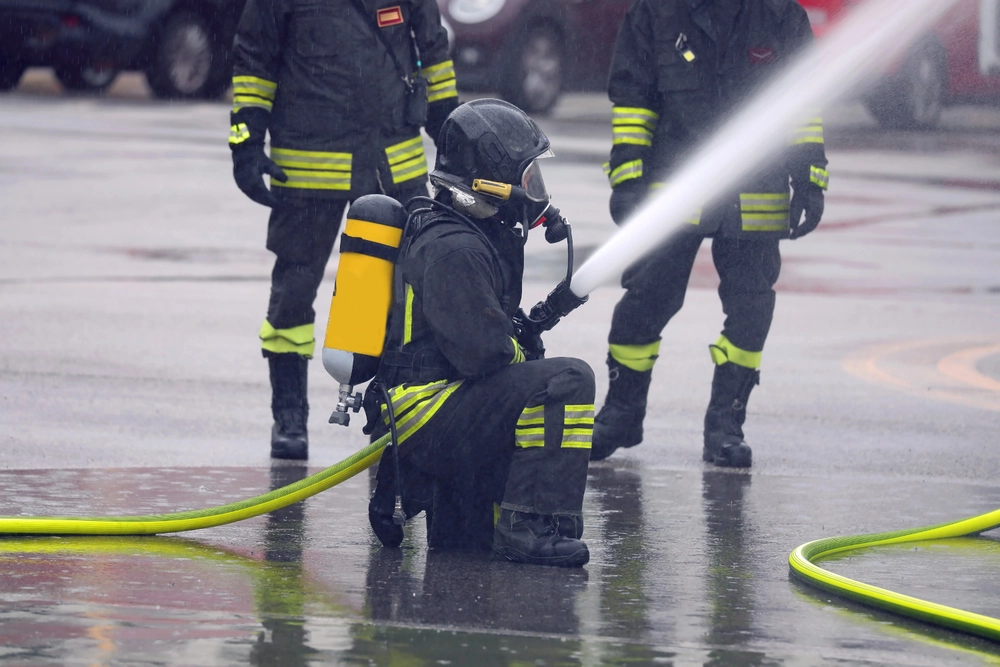
Self-Contained Breathing Apparatus (SCBA)
An air-supplying respirator in which the wearer carries their own compressed air supply, used for IDLH or oxygen-deficient atmospheres.
Sievert (Sv)
The SI unit of dose equivalent and effective dose, incorporating adjustments for radiation type and tissue sensitivity.
Slag
A solid by-product of smelting processes that can carry elevated NORM activity concentrations depending on the ore and process involved.
Sludge
A semi-solid NORM-bearing residue, such as material generated during water treatment or oil and gas production, typically requiring different management than a dry solid residue.
Stochastic Effect
A biological effect of radiation, such as cancer, assumed to have no dose threshold, whose probability (but not severity) increases with dose.
Supervised Area
An area not designated as a controlled area but where occupational exposure conditions are kept under review, even though specific protective measures are not normally needed.
Supplied-Air Respirator (SAR)
An air-supplying respirator connected by a hose to a remote air source, rather than a wearer-carried air cylinder.
Surface Contaminated Object (SCO)
A solid object which is not itself radioactive but which has radioactive material distributed on its surfaces; classified as SCO-I or SCO-II for transport purposes.
Tailings
The residual material remaining after the valuable fraction of an ore has been extracted through mining and mineral processing, which can carry elevated NORM activity concentrations.
TENORM (Technologically Enhanced NORM)
NORM whose radionuclide concentrations or exposure potential have been increased above natural background levels by human activity, such as processing or industrial use.
Transport Index (TI)
A number assigned to a radioactive material package for transport, calculated as the maximum dose rate at one metre from the package, in mSv/h, multiplied by 100.
UMTRCA (Uranium Mill Tailings Radiation Control Act)
U.S. legislation establishing a dedicated regulatory framework for uranium and thorium mill tailings, implemented through EPA standards at 40 CFR Part 192 and NRC/Agreement State licensing at 10 CFR Part 40.
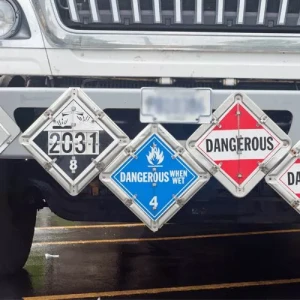
UN Number
A four-digit number assigned to a dangerous good, including classes of radioactive material, for identification during transport.
Ventilation (General/Dilution)
A ventilation strategy that reduces contaminant concentration by exchanging or diluting the air in a space as a whole, as distinct from local exhaust ventilation.
Waste (NORM Waste)
NORM for which no further use is foreseen; a subset of NORM residue that has not been, and will not be, recycled or reused.
Waste Rock
Rock removed during mining to access ore, generated in large quantities and potentially carrying a significant radionuclide content depending on the deposit.
X-Rays
Penetrating electromagnetic radiation similar to gamma radiation but typically produced by electron transitions or machine sources rather than nuclear decay.
Y
No terms found
Z
No terms found