English and
 Español. After purchase, use the language toggle in your course Player to switch between English and Spanish at any time.
 EN
EN ES
ES


















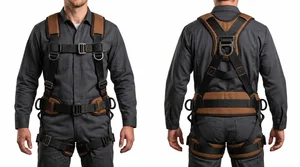


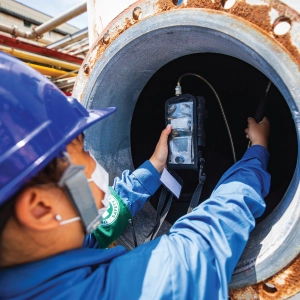












Glossary - course name test
Accepted/Acceptable
A term denoting when a written procedure, practice, method, program, engineering design, or employee qualification criteria submittal, which, after a cursory review by the KO or COR, is determined to generally conform to safety and health or contractual requirements. Acceptance or acceptability in no way relieves the submitting entity from ensuring employees a safe and healthful work environment or complying with all contractual requirements and good engineering practices.
Access/Haul Road
A temporary road constructed for the principal purpose of movement of construction materials, construction machinery, and/or access to a construction site.
Accident
Any unplanned event or series of events that results in death, injury, or illness to personnel, or damage to or loss of equipment or property. Within the context of this manual, accident is synonymous with mishap.
Accident Prevention Plan (APP)
A SOH plan that documents site-specific policies, responsibilities, and plan and program requirements.
Acclimatize
The process or result of becoming accustomed to a new climate or to new conditions.
Active Fall Protection System
A personal fall protection system that requires Authorized Persons (that is, End-Users) to wear or use personal fall protection equipment and that requires fall protection training. Active fall protection systems can include any travel restraint or personal fall arrest systems (PFAS).
Actual Cubic Feet Per Minute (acfm)
The actual volume of gas supplied to a diver, bell, etc., at ambient pressure.
Affected Person
A person whose position requires them to operate or use a system that is under lockout or tagout or whose position requires them to work in an area where a system that is under lockout or tagout is being serviced or maintained.
Air Curtain Incinerator
An incinerator that operates by forcefully projecting a curtain of air across an open chamber or pit in which burning occurs.
Air Mission
An approved flight, or series of flights, for a clearly defined task, purpose, and end-state.
Air Mission Approval Authority (AMAA)
Individual approved by the APM and delegated authority by the Commander/Director to accept risk and approve missions.
Air Receiver
A tank used for the storage of air discharged from the compressor; used to help eliminate pressure pulsations in the discharge line.
Aircrew Training Program Manager (ATPM)
Individual designated in writing by the Commander/Director, with concurrence from the Aviation Program Manager (APM), who has delegated authority to implement and manage the Small Uncrewed Aircraft System (SUAS) program.
Air-Purifying Respirator
A respirator where ambient air is passed through an air-purifying element by either inhalation or with a blower.
Anchorage
A secure connecting point or terminating component of a personal fall protection system that can safely withstand the forces exerted by the activation of fall protection and rescue equipment. The anchorage is a secured structure (for example, beam, girder, column, floor). Anchorage is either engineered or improvised.
Anchorage Connector
A component or subsystem by which fall protection or rescue equipment is secured or attached to the anchorage. This includes any device designed to suspend human loads and capable of withstanding forces generated by a fall (for example, steel cable sling, tie-off adapter (that is, anchor strap), load-rated hoist ring designed for construction applications, tripod, davit arm).
Anchored Bridging
Steel joist bridging that is connected to a bridging terminus point.
Arborist
A professional in the practice of arboriculture, which is the cultivation, management, and study of individual trees, shrubs, vines, and other perennial plants. Arborists generally focus on the health and safety of individual plants and trees. Arborists typically climb trees using ropes and have special training in this type of climbing.
Arc
A controlled electrical discharge between the electrode and the work piece that is formed and sustained by a gas that has been heated to such a temperature that it can conduct electric current.
Arc Flash
Light and heat produced from an unintended electric arc fault with sufficient electrical energy to cause substantial damage or injury. An arc flash results from either a phase to ground or a phase-to-phase fault caused by such occurrences as accidental contact with electrical systems, buildup of conductive dust, corrosion, dropped tools, or improper work procedures.
Arc Flash Boundary
When an arc flash hazard exists, an approach limit at a distance from a prospective arc source within which a person could receive a second-degree burn if an electrical arc flash were to occur.
Arc Flash Hazard
A dangerous condition associated with the possible release of energy caused by an electric arc. An arc flash hazard may exist when energized electrical conductors or circuit parts are exposed or when they are within equipment in a guarded or enclosed condition, provided a person is interacting with the equipment in such a manner that could cause an electric arc. Under normal operating conditions, enclosed energized equipment that has been properly installed and maintained is not likely to pose an arc flash hazard.
Arc Rating
A value of the incident energy (IE) necessary to pass through any given material, or multiple layers of materials, to cause, with 50% probability, breakopen or onset of a second-degree skin burn injury. This value is measured in calories/cm². The necessary arc rating for an article of clothing is determined by performing an arc flash analysis or a risk assessment. Arc rating is reported as the lower value of either the ATPV or the energy breakopen threshold (EBT).
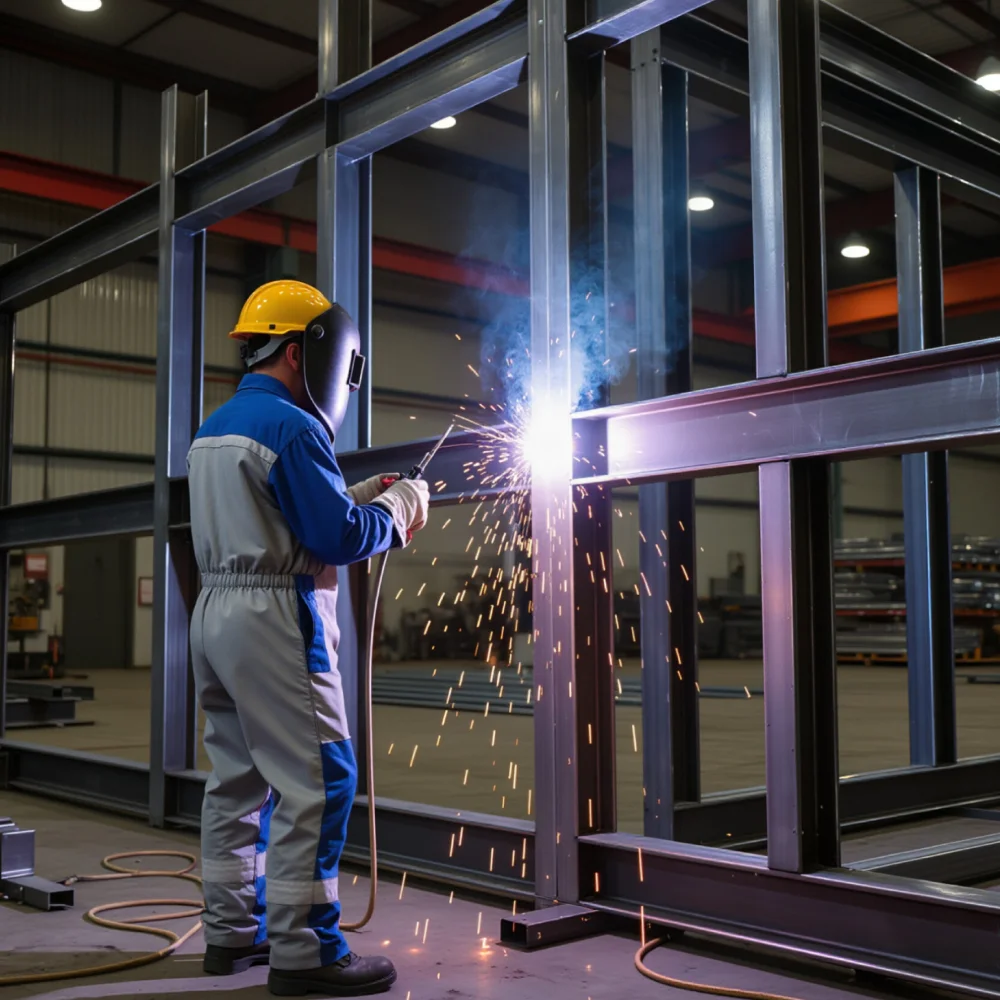
Arc Welding
A welding process that joins work pieces by heating them with an arc.
Articulating Boom Crane (also known as, knuckle boom crane)
A crane with two or more boom sections that pivot (articulate) by hydraulic cylinders. The boom may have a telescoping section. The crane can be stationary or mounted on a vehicle, track, or locomotive and is used to lift, swing, and lower loads.
Asbestos-Containing Material (ACM)
Any material containing more than 1% of asbestos.
Attendant
An authorized individual who has the explosives or the use of explosives within their field of vision and with the ability to respond appropriately.
Authority Having Jurisdiction (AHJ)
A government office, group, or individual designated in writing as responsible for enforcing the requirements of this chapter.
Authorized Entrant (underground construction)
An individual who has completed the requisite training (see para 26-3.a), is wearing appropriate PPE, and has been given permission by the employer to perform duties underground.
Battery (Secondary Lithium Metal)
A single cell or multi-cell battery that contains lithium salt in a liquid or polymer-based electrolyte that is designed to be recharged and may or may not contain an integrated electrical controller. Typically, they are encased in cylindrical, prismatic, or polymer pouch soft cases. Laptop, cell phone, drone, cordless tool batteries all fall in this category.
Barber Chair
A circumstance where a tree trunk splits vertically while it is being cut down.
Barricade
A physical obstruction (for example, tape, screens, cones) intended to warn of and limit access to a hazardous area.
Barrier
A physical obstruction that is intended to prevent contact with energized lines or equipment.
Battery (Primary Lithium Metal)
A single cell or multi-cell battery that contains lithium metal and is not designed to be recharged. Typically, they are metal encased in cylindrical, prismatic, or coin shaped cells.
Benching
A method of protecting employees from cave-ins by cutting the sides of the excavation in the arrangement of one or more horizontal levels, usually with vertical or near-vertical walls between steps.
Blast Area
The area of a blast within the influence of flying rock and ejecta, gases, and concussion that may cause injury to persons or property.
Blast Site
The area where explosive material is handled during the loading of blastholes, including 50 feet (15.2m) in all directions from the perimeter formed by loaded holes. A minimum of 30 feet (9.1 m) may replace the 50 feet (15.2m) requirement if the perimeter of loaded holes is marked and separated from non-blast site areas by a barrier. The 50 feet (15.2 m) or 30 feet (9.1 m) distance requirements, as applicable, apply in all directions along the full depth of the blasthole. In underground mines, at least 15 feet (4.6 m) of a solid rib, pillar, or broken rock can be substituted for the 50 feet (15.2 m) distance.
Blaster
A qualified individual who assists with the design, loading, and firing of explosives.
Blaster-in-Charge
The blaster who is in charge of and responsible for the design, loading, and firing of explosives at a specific jobsite.
Blaster-in-Charge
The blaster who is in charge of and responsible for the design, loading, and firing of explosives at a specific jobsite.
Bolted Diagonal Bridging
Diagonal bridging that is bolted to a steel joist or joists.
Bond
An electrical connection from one conductive element to another to minimize potential differences or providing suitable conductivity for fault current or for mitigation of leakage current and electrolytic action.
Bonding
The permanent joining of metallic parts to form an electrically conductive path that will ensure electrical continuity and capacity to safely conduct any expected current.
Bonding Jumper
A reliable conductor to ensure the required electrical conductivity between metal parts required to be electrically connected.
Boom
A member hinged to the superstructure of cranes and derricks and used for supporting hoisting tackle.
Boom Angle
The angle of the boom relative to horizontal.
Boom Angle Indicator
A device that measures the angle of the boom relative to the horizontal.
Boom Stop
A device used to limit the angle of the boom from moving above a certain maximum angle and toppling over backward.
Boom Stop
A device used to limit the angle of the boom from moving above a certain maximum angle and toppling over backward.
Bottom Time
The total elapsed time, measured in minutes, from the time when the diver leaves the surface in descent to the time the diver begins ascent.
Bracket Grounding
A protective grounding method, typically used with electric power transmission and distribution activities, which involves installing grounds at two locations, one on each side of the work location, typically some distance apart and away from the work location. Bracket grounding application requires detailed engineering analysis and must be based on an evaluation of the potential hazards to the workers, work site conditions, type of construction, and the nature of the work to be done.
Bracket Grounding
A protective grounding method, typically used with electric power transmission and distribution activities, which involves installing grounds at two locations, one on each side of the work location, typically some distance apart and away from the work location.
Bucking
The act of sawing a felled tree or limbs into smaller sections.
Cable
A conductor with insulation, or a stranded conductor with or without insulation and other coverings (for example, single-conductor cable), or a combination of conductors insulated from one another (for example, multiple-conductor cable).
Caisson
A wood, steel, concrete, or reinforced concrete, air and watertight chamber in which it is possible to work under air pressure greater than atmospheric pressure to excavate material below water level.
Canister/Cartridge
A container with a filter, sorbent, or catalyst, or combination of these items, which removes specific contaminants from the air passed through the container.
Carrier
The specific track of a climbing ladder PFAS consisting of a flexible or rigid member upon which the carrier sleeve travels. The carrier is secured to the climbing ladder or structure by carrier mounting brackets. The carrier may be continuous or may contain joints or splices.
Certificate of Authorization (COA)
An authorization issued by the Air Traffic Organization to a public operator for a specific uncrewed aircraft (UA) activity.
Certified Anchorage
An anchorage for personal fall arrest, positioning, restraint, or rescue systems that a QP for Fall Protection certifies to be capable of supporting the potential fall forces that could be encountered during a fall or that meet the criteria for a certified anchorage.
Clearance Requirement
The distance below the Authorized Person that must remain clear of obstructions to ensure that the Authorized Person does not encounter any object or obstruction during a fall
Cofferdam
A temporary structure used to keep water (and earth) out of an excavation during construction of the permanent structure.
Cold Stress
An umbrella term that refers to cold-related illnesses that occur when the body can no longer maintain its normal temperature. These illnesses range from mild and treatable to permanent tissue damage and death.
Collateral Duty Safety Officer (CDSO)
A designated USACE employee who is trained to assist with the SOH program as a minor duty (that is, 20% or less of the time).
Commingled
A term used to describe the cable runs within the electric power generation, transmission, and distribution facility (for example, cable trays, wiring ducts, conduit installations) in which the wiring from the utilization equipment (for example, lights, cafeteria equipment, sump pumps) is run together with wiring from power generation equipment (for example, boiler pumps, transformer fans, coal handling operations).
Competent Person (CP)
One who is capable of identifying existing and predictable hazards in the surroundings or working conditions which are unsanitary, hazardous, or dangerous to employees, and who has authorization to take prompt corrective measures to eliminate them.
Competent Person (CP) or Qualified Person (QP) Trainer
An individual who by training, knowledge, and experience can conduct CP or QP-level fall protection training (respectively).
Competent Person (CP), Excavations
A person designated in writing by the employer to be responsible for the immediate supervision, implementation, and monitoring of the Excavation and Trenching Plan. Must have training, knowledge, and experience in excavation and trenching to be capable of identifying, evaluating, and addressing existing and potential hazards. This individual must have the authority to take prompt corrective measures with regard to such hazards.
Competent Person for Fall Protection (CP for Fall Protection)
A person designated in writing by the employer to be responsible for the immediate supervision, implementation, and monitoring of the Fall Protection Program. The CP for Fall Protection, who through training, knowledge, and experience in fall protection and rescue systems and equipment, is capable of identifying, evaluating, and addressing existing and potential fall hazards. The CP for Fall Protection has the authority to take prompt corrective measures with regard to such hazards.
Competent Person, Confined Spaces in Ships and Vessels (CPCSSV)
An individual, designated in writing by the employer, responsible for testing, inspecting, and evaluating spaces and meets the requirements of 29 CFR 1915.7.
Competent Person, Scaffolding
A person designated in writing by the employer to be responsible for immediate supervision, implementation, and monitoring of the Scaffold Work Plan. Must have training, knowledge, and experience in scaffolding to be capable of identifying, evaluating, and addressing existing and potential hazards. This individual must have the authority to take prompt corrective measures with regard to such hazards.
Competent Rescuer
An individual, who by training, knowledge, and experience in the safe use of specialized rescue equipment (for example, harness, lanyards, horizontal lifelines (HLL)), is capable of the implementation, supervision, and monitoring of the employer’s rescue plan. The individual in this role must be designated by the employer.
Competent Rescuer Trainer
An individual who by training, knowledge, and experience specific to fall protection rescue, can conduct rescue training.
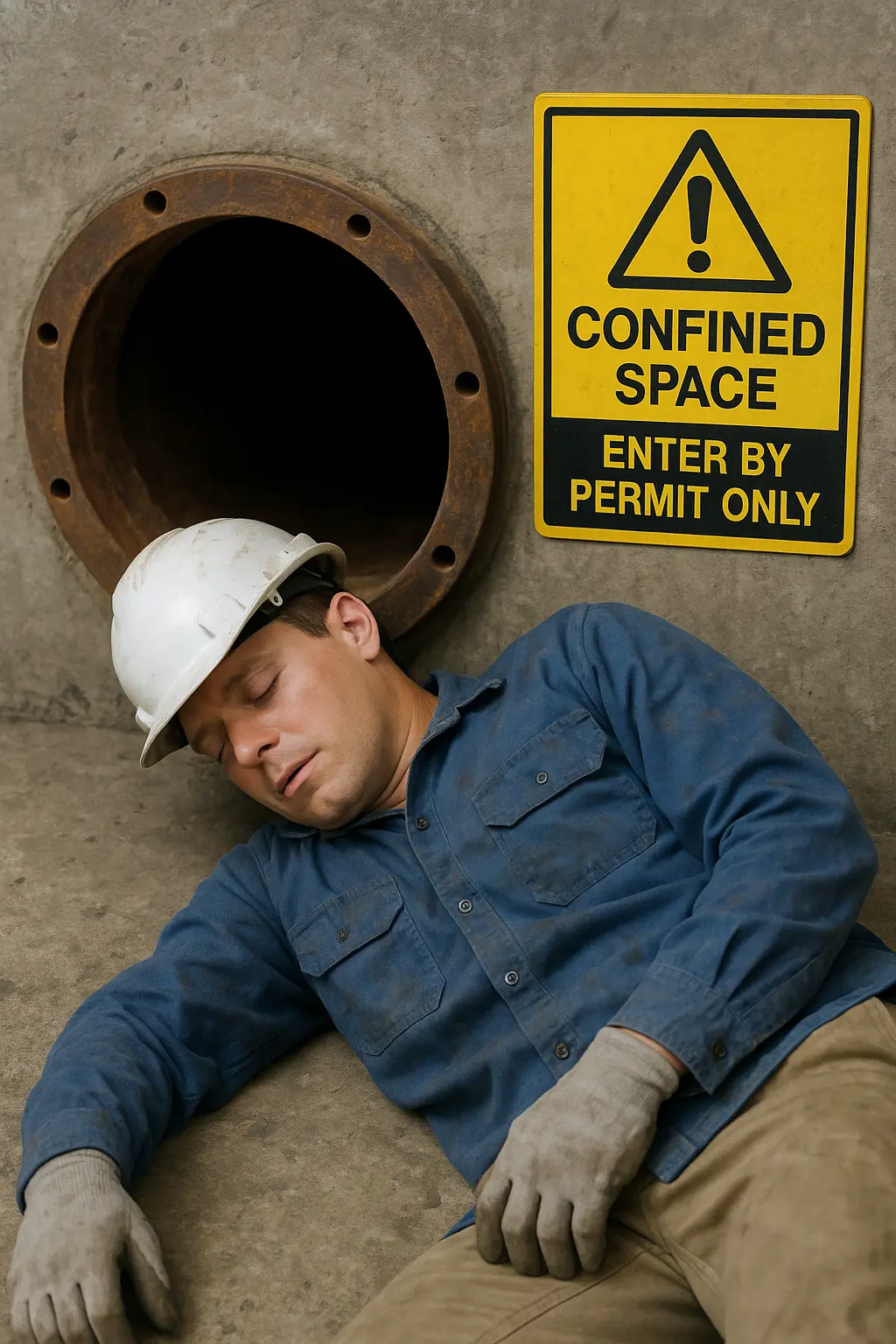
Confined Space
A space that meets all of the following:
Is large enough and so configured that a person can bodily enter and perform assigned work.
Has limited or restricted means for entry and exit.
Confined Space on a Ship or Vessel
A compartment of small size and limited access such as a double bottom tank, cofferdam, or other space that is enclosed by bulkheads and overheads and can readily create or aggravate a hazardous exposure.
Construction
Construction, alteration and/or repair, includes painting and decorating.
Construction Loads
Those loads imposed on a partially completed or temporary structure during and as a result of the construction process. Construction loads include, but are not limited to, materials, personnel, and equipment imposed on the temporary or permanent structure during the construction process.
Contaminated
Any material which by reason of its action upon, within, or to a person is likely to cause physical harm.
Contaminated Water
As related to underwater diving; water which contains any chemical, biological, or radioactive substance which poses a chronic or acute health risk to exposed personnel. Supervisory personnel are encouraged to contact local agencies to obtain information on local water contaminants and hazards.
Contamination Reduction Zone (CRZ)
A facility near the work site that can be used to provide adequate washing for employees.
Contracting Officer (KO/Contracting Officer Representative (COR)
- The USACE representative, usually within the district or center Contracting Office. The KO is designated by the Senior Contracting Official and the COR is designated by the KO to enter and administer contracts for the Government and make determinations and findings thereon.
Contractor
Any individual or firm under contractual agreement with the government or its subunits for the performance of services and products, such as construction, maintenance, and hazardous waste activities, including all subcontractors.
Contractor Controlled Site
A system, site, or area clearly defined and accepted by the KO or COR, in which the contractor is responsible for the application of their Site-Specific Energy Control Plan (SSECP) and the development and use of hazard isolation procedures (HIPs)
Contractor Corporate Safety Official
The prime contractor’s corporate official responsible for the company’s SOH Program.
Contractor Quality Control (QC)
The part of quality management focused on fulfilling quality requirements of a project, product, service, or process. It includes those processes used to ensure performance meets agreed upon stakeholder requirements that are consistent with law, regulations, policies, sound technical criteria, schedules, and budget.
Controlled Decking Zone (CDZ)
Forms which are jacked or hoisted vertically during the placement of concrete.
Conventional Notch
A directional felling notch cut into the tree on the same side that the tree is to fall. The notch starts with a horizontal cut approximately one third the tree’s diameter. The second cut is sawed at a 45-degree angle from a height of
2.5 inches (6.4 cm) per 1 foot (0.3 m) of diameter above the base of the notch.
Crane, Floating
A rotating superstructure, power plant, operating machinery, and boom mounted on a barge or pontoon. The power plant may be installed below decks. The crane’s function is to handle loads at various radii.
Debris Net
A net designed to catch only debris. It must be used in conjunction with a personnel net if there is any possibility for personnel to fall.
Decibel (db)
A unit used to measure the intensity of a sound (sound pressure level).
Decibel-A-Weighted (dBA)
A-weighted decibel is an expression of the relative loudness of sounds in air as perceived by the human ear.
Decibel-C-Weighted (dBC)
C-weighted sound level is the sound pressure in decibels measured with a sound level meter using the C-weighting network and slow meter response. The C-weighted network correlates with the ear’s response for the levels above 85 dB.
Decking Hole
A gap or void more than 2 inches (5.1 cm) in its least dimension and less than 12 inches (30.5 cm) in its greatest dimension in a floor, roof or other walking or working surface. Pre-engineered holes in cellular decking (for example, for wires, cables) are not included in this definition.
Derrick Floor
An elevated floor of a building or structure that has been designated to receive hoisted pieces of steel prior to final placement.
Designated Dive Coordinator (DDC)
A USACE employee responsible for the appropriate oversight of a District, Fleet, Laboratory, Field Operating Activity (FOA), or Center Dive Safety Program
Designated Person
An employee who has been trained or is qualified and assigned the responsibility to perform a specific task.
Distribution Lines and Equipment
Electric lines and equipment with operating voltages from 4kilovolt (KV) to 46KV.
Dive Safety Inspector (DSI)
An onsite government representative for contractor or USACE in-house diving operations. The DSI will assure dive team safety through coordination with the USACE supervisor/KO or COR and provide recommendations to correct deficiencies in the dive plan, AHA, or observed diving procedures.
Dive Safety Representative (DSR)
A USACE / government employee assigned by the DDC and is normally the District SOHO representative who is assigned the responsibility of dive safety, provides dive safety advice, actively participates in the review and comment process for diving plans and hazard analyses, and onsite monitoring of diving operations.
Diving Supervisor (DS)
The person with the primary authority for any dive team’s operation. Each dive team must have a designated DS to manage all aspects that affect the safety and health of dive team members.
Diving, Direct Source Breathing Air Compressor
A machine that raises air or other gasses to a pressure above 1 atmosphere and supplies breathing air to a diver.
Diving, Heavy Gear
Surface-supplied deep-sea diving gear including helmet (with or without breastplate), dry suit, and weighted shoes. The helmet is directly connected to the dry suit, forming a self-contained pressure envelope for the diver.
Dredge
Any vessel fitted with machinery for the purpose of removing or relocating material from or in a body of water.
Drilling Equipment
Mechanized equipment used for boring into rock, soil, or concrete.
Drilling Fluid
An engineered fluid that is pumped into a drilled hole and used to wash cuttings from the hole. Drilling mud is a type of drilling fluid made of a slurry of clay or polymers and water that is used to coat and support the sides of the drill hole and seal off permeable strata.
Drowning Hazards
Drowning hazards are associated with work on, over or adjacent to water and include the lack of life jackets, ring buoys and lifesaving skiffs and other devices. Drowning hazards also include work in confined spaces and during diving operations.
Duck Pond
Openings between stationary vessels or vessels and other structures that create fully enclosed water areas (duck ponds) into which personnel could fall.
Dust
Solid particles generated by handling, crushing, grinding, or detonation of organic or inorganic materials.
Effectively Grounded
Intentionally connected to earth through a ground connection or connections of sufficiently low impedance and having sufficient current-carrying capacity to prevent the buildup of voltages which may result in undue hazard to connected equipment or to people.
Electric Detonator
A detonator designed for, and capable of, initiation by means of an electric current.
Electrician Master/Journeyman
An industry term showing a level of competency and training that is required to safely perform electrical work according to national or state standards.
Electronic Detonator
A detonator that utilizes stored electrical energy as a means of powering an electronic timing delay element/module and that provides initiation energy for firing the base charge.
Emergency (Marine)
An unforeseen development that imposes an immediate hazard to the safety of the vessel, the passengers, the crew, the cargo, property, or the marine environment requiring urgent action to remove or mitigate the hazard.
Emergency Responses
Emergency response or responding to emergencies means a response effort by employees from outside the immediate release area or by other designated responders (that is, mutual-aid groups, local fire departments, etc.) to an occurrence which results, or is likely to result, in an uncontrolled release of a hazardous substance. Responses to incidental releases of hazardous substances where the substance can be absorbed, neutralized, or otherwise controlled at the time of release by employees in the immediate release area, or by maintenance personnel are not considered to be emergency responses within the scope of this chapter. Responses to releases of hazardous substances where there is no potential safety or health hazard (that is, fire, explosion, or chemical exposure) are not considered to be emergency responses within the scope of this chapter.
Employee
A government or contractor person engaged in work on a USACE project.
Employer
A government or contractor organization that has control over employees engaged in work on USACE projects.
Enclosed Space
Any space, other than a confined space, which is enclosed by bulkheads and overhead. It includes cargo holds, tanks, quarters, and machinery and boiler spaces.
Energized
Electrically connected to, or is, a source of voltage.
Energy Isolation Device
A physical device that prevents the transmission or release of energy. Includes but is not limited to manually operated circuit breakers, disconnect switches, slide gates, slip blinds, line valves, blocks, or similar devices, capable of blocking or isolating energy, with a position indicator. The term does not include push buttons, selector switches, and other control circuit type devices.
Engineering Supervision
An industry term derived from NFPA 70 and NESC indicating oversight, approval, or stamped approval by a licensed professional electrical engineer and synonymously used with the following terms: engineering evaluation, engineering judgement, engineering analysis, qualified engineering study, and engineering supervision.
ENGLink
Online system that USACE uses to track commodities, mission status, and manage deployments. Through ENGLink, team members can report in real time activities that are occurring, commodities being used or installed, personnel needs, and the amount of commodities needed.
Enter with Restrictions
Refers to entry into a confined space on a ship or vessel when engineering controls, PPE and time limitations are imposed by the CPCSSV.
Entrant
An individual authorized by the Entry Supervisor to enter a confined space and perform an assigned task or operation.
Entry Permit
The document that lists the hazards, controls, and procedures required for entry into a permit-required confined space (PRCS).
Entry Supervisor
The QP responsible for determining if acceptable entry conditions are present at a PRCS. They will authorize entry, oversee entry operations, and terminate entry as required by this manual.
Environmental Cleanup and Investigation Projects
Environmental Cleanup and Investigation Projects are sites and activities specified in 29 CFR 1910.120(a)(1) or 29 CFR 1926.65(a)(1) and involve operations where hazardous substances are investigated, removed, contained, incinerated, treated, neutralized, cleaned-up, or in any other manner processed or handled with the goal of making the site safer for people or the environment.
Erection Bridging
The bolted diagonal bridging that is required to be installed prior to releasing the hoisting cables from the steel joists.
Evacuation
An unaided emergency exit or self-rescue from a confined space. This action may result from the Entrant’s own decision or by a command from outside the space
Exclusive Zone (EZ)
The EZ is an area known or suspected to be contaminated. This is an area where site characterization activities and contamination removal activities will take place. Work conducted in this area may have the potential to expose personnel to occupational health hazards from contamination.
Explosive-Actuated Tool
A tool that uses the expanding gases from a powder load to drive a fastener. Also referred to as a powder-actuated tool.
Exposure or Exposed
When an employee is subjected in the course of employment to a chemical that is a physical or health hazard. “Subjected” in terms of health hazards includes any route of entry (for example, inhalation, ingestion, skin contact, or absorption).
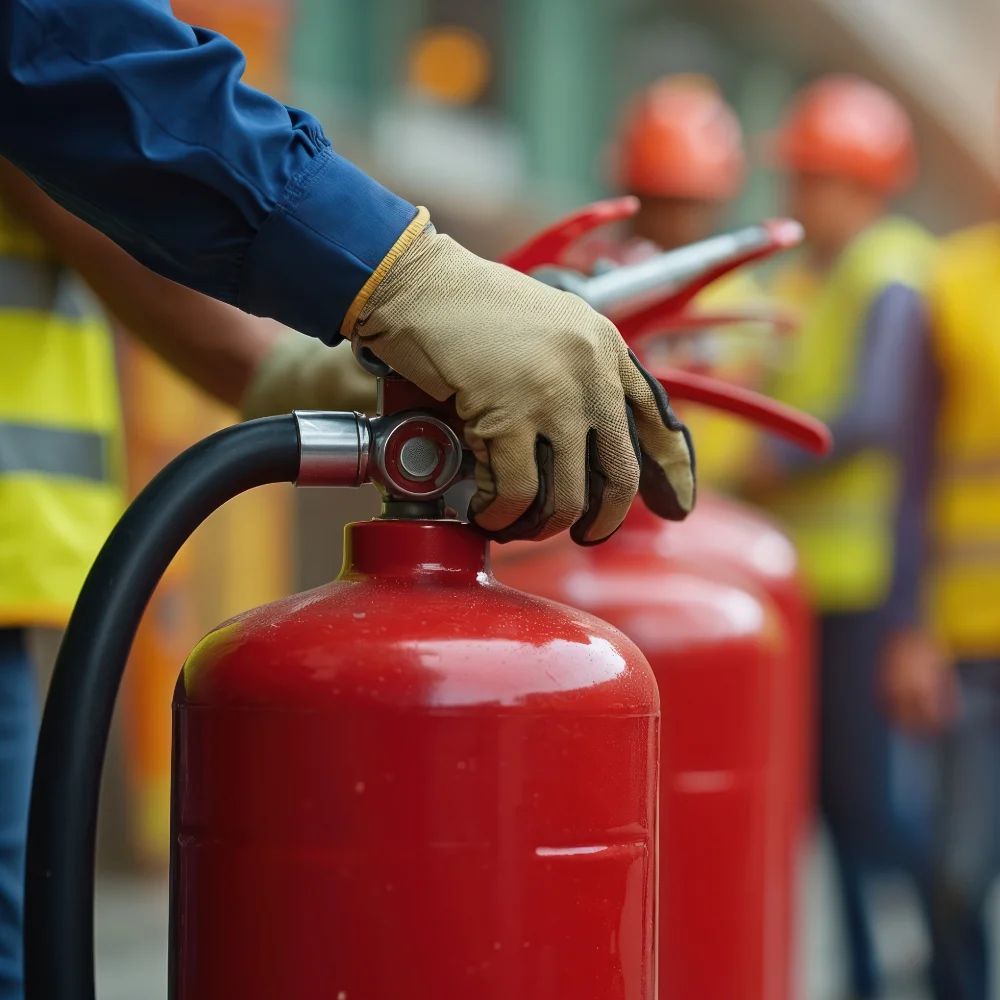
Extinguisher Classification
The letter classification given to an extinguisher to designate the classes of fire on which it will be effective.
Extinguisher Rating
The numerical rating given to an extinguisher that indicates the extinguishing potential of the unit.
Extra-High Voltage
Nominal system voltages greater than 230 kV but less than 1000 kV.
Face
The advance end or wall of a tunnel, drift, or other excavation where work is progressing.
Facility
A permanent or temporary location that includes the following: building, structure, shed, tower, utility support system or utility conveyance system, swimming pool or other open concrete structure, whether above or below grade, or any other item that is designated by KO or COR as a facility.
Fall Protection Program Administrator (also known as, Program Manager)
A person designated by the employer to be responsible for the development, implementation, monitoring, and evaluation of the employer’s Fall Protection Program. The Program Administrator must have training and a working knowledge of current fall protection regulations, standards, equipment, and systems.
False Crotch
A pulley, block, sling, lashing, or metal ring affixed to a tree’s leader or limb, through which a load line is passed to raise or lower limbs or equipment.
Field Operating Activity (FOA)
All USACE Divisions, Districts, Labs, and Centers, as well as any other operational activity.
Filtering Facepiece Respirator
NIOSH-approved negative-pressure particulate respirator with a filter as an integral part of the facepiece or with the entire facepiece composed of the filtering medium.
Fire Cut-Offs
Building features (for example, fire walls, automatic fire doors) designed to retard or restrict the spread of a fire within the building.
First Aid
Refers to medical attention that is usually administered immediately after the injury occurs and at the location where it occurred. It often consists of a one- time, short-term treatment and requires little technology or training to administer. First aid is specifically defined by 29 CFR 1904.7.
First Aid Attendant
First Aid Attendants provide first aid and medical attention that is usually administered immediately after the injury occurs and at the location where it occurred. It often consists of a one-time, short-term treatment and requires little technology or training to administer. First aid can include cleaning minor cuts, scrapes, or scratches; treating a minor burn; applying bandages and dressings; the use of non- prescription medicine; draining blisters; removing debris from the eyes; massage; and drinking fluids to relieve heat stress. First Aid attendants will use the OSHA Best Practices Guide, Fundamentals of a Workplace First Aid Program OSHA 3317-06N 2006.
First Aid Staton
The place at an event where people can go for medical treatment if they become ill or are injured.
Fit Factor
A quantitative estimate of the fit of a particular respirator to a specific individual, and typically estimates the ratio of the concentration of a substance in ambient air to its concentration inside the respirator when worn.
Fit Test
The use of a qualitative or quantitative protocol to evaluate sealing surface leakage of a specific tight-fitting respirator while worn by an individual.
Fixed Extinguishing System
A permanently installed system that either extinguishes or controls a fire.
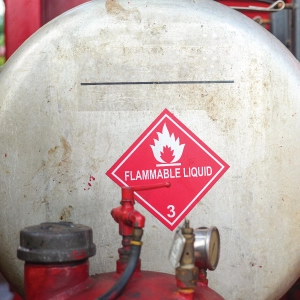
Flammable Liquid
Any liquid having a flashpoint at or below 199.4°F (93°C). Flammable liquids are divided into four categories as follows:
Category 1 includes liquids having flashpoints below 73.4°F (23°C) and having a boiling point at or below 95°F (35°C).
Category 2 includes liquids having flashpoints below 73.4°F (23°C) and having a boiling point above 95°F (35°C).
Category 3 includes liquids having flashpoints at or above 73.4°F (23°C) and at or below 140°F (60°C).
Category 4 includes liquids having flashpoints above 140°F (60°C) and at or below 199.4°F (93°C).
Flashback
A backfire of the flame in a mixing chamber of the oxy-fuel gas torch that may progress through the torch and hoses.
Float/Ship Scaffold
A scaffold hung from overhead supports by means of ropes and consisting of a unit having diagonal bracing underneath. The scaffold rests upon and is securely fastened to two parallel planks bearers at right angles to the span.
Floating Plant/Vessel
Used to transport personnel, work boats, floating cranes and derricks, barges, patrol boats, etc.
Flyrock
Material propelled from the blast area by the force of an explosion
Food Handler
A food handler is an employee of a food facility/establishment who is involved in the preparation, storage, service, or handling of food products. Anyone who prepares food or who may come in contact with food products, food utensils or equipment is a food handler.
Non-food establishment employees participating in food handling (for example, organizational days) should consult with local and state requirements for required food safety training.
Foot Candle
The English and American traditional measurement unit of light (illuminance) as perceived by the human eye, and is roughly equal to 10.7 Lux.
Foreign Object Debris (FOD)
Stones and other small objects that might damage aircraft propellers or jet aircraft.
Free-Fall Distance
The vertical distance traveled during a fall, measured from the onset of a fall from a walking-working surface to the point at which the fall protection system begins to arrest the fall. It excludes deceleration distance and the elongation of a lifeline or lanyard. It includes any distance that a deceleration device slides before engaging or the distance that a self-retracting lifeline or lanyard extends before fall arrest forces are applied. The distance is measured using a common reference point, typically the fall arrest attachment point (that is, anchor point).
Fuel Gas
A gas (for example, acetylene, hydrogen, natural gas, propane) used with oxygen in the oxyfuel process and for heating.
Fume
Very small suspended solid particles created by condensation from the gaseous state.
Fusible Plug
A device designed to relieve pressure and to indicate certain conditions that contribute to low water.
Gaffs
Spurs used to assist in climbing utility poles or trees.
Gangway
Any ramp, stairway, or ladder provided for personnel to board/leave a vessel.
Gas Metal Arc Welding
An arc welding process that uses an arc between a continuous filler metal electrode and the weld pool. Shielding from the atmosphere is provided by an externally supplied gas.
General Site Workers
General site workers are engaged directly in the hazardous substance investigation and/or removal and remediation activities. General site workers conduct investigation or cleanup activities in the EZ or CRZ and have the potential to be exposed to contamination while performing work activities.
Generator, Mobile
Mobile describes equipment, such as vehicle-mounted generators, that are capable of being moved on wheels or rollers.
Generator, Portable
Portable describes equipment that is easily carried by personnel from one location to another.
Girt (in systems-engineered metal buildings)
A "Z" or "C" shaped member formed from sheet steel spanning between primary framing and supporting wall material.
Government Flight Representative (GFR)
A current or previously rated U.S. Military officer or previously rated Government civilian. GFRs are appointed to perform the Contract Administration Services function, FAR Clause 42.302(a)(56).
Government-Owned Motor Vehicle
Any motor vehicle that is government owned or leased by USACE (for example, General Services Administration fleet vehicles). Personally owned vehicles or temporary duty rental cars being used while on-duty to transport Government employees for official business.
Ground
As a noun, the conductive body, usually earth, to which an electric potential is referenced or an incidental or accidental conductive connection between an electric circuit or equipment and a reference ground. As a verb, the connecting or establishing of an intentional or accidental connection between an electric circuit or equipment and a reference ground.
Grounded
Connected to earth or to some conducting body that serves in place of the earth.
Grounded Conductor
A system or circuit conductor that is intentionally grounded.
Grounded System
A system of conductors in which at least one conductor or point (usually the middle wire or neutral point of a transformer or generator windings) is intentionally grounded, either solidly or through a current limiting device (not a current- interrupting device).
Grounding Conductor
A conductor used to connect equipment or the grounded circuit of a wiring system to a grounding electrode or electrodes.
Grounding Electrode (Ground Electrode)
A conductor embedded in the earth, that is used to maintain conductors connected to it at ground potential and to dissipate current conducted to it into the earth.
Guardrail System
A rail system erected along unprotected or exposed sides, edges, or other areas of a walking-working surface to prevent persons from falling to a lower level. The system consists of a toprail, midrail, and their supports.
Hand Washing Facility
A washing facility for hand washing with potable water, cleansing agent, and drying mechanism.
Handrail
A rail used to provide persons with a handhold for support.
Hazard
Any actual or potential condition that can cause injury, illness, or death of personnel, damage to or loss of equipment or property, or contribute to mission degradation.
Hazard Isolation Procedure (HIP)
A written step-by-step procedure for the control of hazardous energy pertaining to a specific task or work area that has the potential for the release of hazardous energy. This includes identifying all hazards associated with the work item, total number of isolation points, procedural steps for de- energizing and isolating with lockout, and requirements for testing the effectiveness of energy control measures. The HIP must also address the step-by-step procedures for the restoration of equipment.
Hazardous Atmosphere
An atmosphere that exists or has the potential to exist and is capable of causing death, incapacitation, impairment of ability to self-rescue, injury, or illness. Examples include oxygen deficiency or enrichment, flammability or explosivity by gas, vapor, dust, or toxicity.
Hazardous Energy
Any energy including but not limited to mechanical (for example, power transmission apparatus, counterbalances, springs, pressure, gravity), pneumatic, hydraulic, electrical, chemical, nuclear, and thermal (for example, high or low temperature) energies, which could cause injury to employees.
Hazardous Energy Control Program (HECP)
An organization’s methods and mindset for the control of hazardous energy at the corporate level. The HECP document speaks in generalities and is intended to be all-encompassing. It covers all scenarios an organization may encounter. It does not contain information pertaining to a specific location. It includes definitions, roles and responsibilities, methods and procedures, training, program review, and reportable incident history.
Hazardous Noise
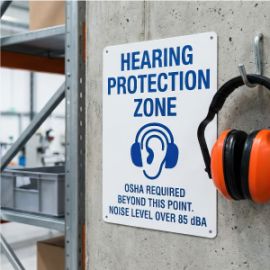
Noise exceeding 85 dBA.
Hazardous or Toxic Agent
To include but not limited to, any substance defined as a hazardous substance under 29 CFR 1910.120 (29 CFR 1910 Subpart H), 29 CFR 1926.65, or 40 CFR 302, any chemical determined to be a hazard as specified in 29 CFR 1910.1200 to include gases, liquid vapors, mists, dusts, or fumes which have been identified as causing adverse health effects in exposed employees, noise and radiation where duration and quantity of exposure is capable of causing adverse health effects, or any agent pertaining to or that may cause poison, be poisonous, or harmful.
Hazardous Substance
Hazardous substance means any substance designated or listed as hazardous substance or hazardous waste as defined in 29 CFR 1910.120(a)(3) or 29 CFR 1926.65(a)(3), where exposure to which results or may result in adverse effects on the health or safety of employees during the performance of their duties.
Heading
A wall of unexcavated rock at the advance end of a tunnel. Also used to designate either a small tunnel or a small tunnel driven as a part of a larger tunnel.
Health Care Provider
A Health Care Provider is:
A doctor of medicine or osteopathy who is authorized to practice medicine or surgery (as appropriate) by the state in which the doctor practices; or
Note. State means any state of the United States or the District of Columbia or any Territory or possession of the United States.
Note. The phrase authorized to practice in the state as used means that the provider must be authorized to diagnose and treat physical or mental health conditions.
Any other person determined by the Secretary of Labor or authorized representative to be capable of providing health care services. Including but not limited to (See 29 CFR 825.125 for other health care services providers):
Podiatrists, dentists, clinical psychologists, optometrists, and chiropractors (limited to treatment consisting of manual manipulation of the spine to correct a subluxation as demonstrated by X-ray to exist) authorized to practice in the state and performing within the scope of their practice as defined under state law.
Nurse practitioners, nurse-midwives, clinical social workers, and physician assistants who are authorized to practice under state law and who are performing within the scope of their practice as defined under state law.
Note. A health care provider listed above who practices in a country other than the United States, who is authorized to practice according to the law of that country, and who is performing within the scope of his or her practice as defined under such law is capable of providing health care services.
Health Hazard
Health hazard means a chemical or a pathogen where acute or chronic health effects may occur in exposed employees. It also includes stress due to temperature extremes and other physical agents. The term health hazard includes chemicals that are classified according to 29 CFR 1910.1200, as posing one of the following hazardous effects: acute toxicity (any route of exposure); skin corrosion or irritation; serious eye damage or eye irritation; respiratory or skin sensitization; germ cell mutagenicity; carcinogenicity; reproductive toxicity; specific target organ toxicity (single or repeated exposure); aspiration toxicity; or simple asphyxiant.
Heat Stress
The net heat load to which a worker is exposed. Physical exertion, environmental factors, and clothing worn all contribute to heat stress.
Heavy Duty
A scaffold designed and constructed to carry a working load of 75 lbs/ft2 (3.2 kg/m2), that is intended for stone masonry work, with storage material on the platform.
Helium-Oxygen (HeO2).
Breathing gas mixtures composed of helium and oxygen.
High Voltage
Nominal system voltages equal to or greater than 100 kV and equal to or less than 230 kV.
High-Efficiency Particulate Air (HEPA)
A filter capable of trapping and retaining at least 99.97% of 0.3 micrometer diameter mono-disperse particles.
High-Visibility Safety Apparel (HVSA)
High Visibility Safety Apparel (HVSA). Personal protective safety clothing intended to provide conspicuity during both daytime, nighttime, and other low-light condition usage.
Hoist
A machinery unit that is used for lifting or lowering a freely suspended (unguided) load.
Hole
Any gap or open space in a floor, roof, horizontal walking-working surface, or similar surface that measures at least 2 inches (5.1 cm) in its least dimension.
Horizontal Lifeline (HLL) System
An active fall protection system made of flexible wire, rope, or synthetic cable that is spanned horizontally between two end anchorages or anchorage connectors. It may include in-line energy absorber, lifeline tensioner, or turnbuckles and may also include intermediate anchorages. The system is used for attaching a fall arrest or in restraint system applications.
Hot Tapping
A procedure of attaching connections to equipment in service by welding and drilling.
Hot Work
Hot work is considered any activity that generates or has the potential to generate, heat, sparks, open flame, or explosion (for example, hot riveting, welding, burning, abrasive blasting, brazing, cutting, grinding, powder-actuated tools, soldering). Grinding, drilling, abrasive blasting, or similar spark-producing operations are also considered hot work except when such operations are isolated physically from any atmosphere containing more than 10% of the lower explosive limit (LEL) of a flammable or combustible substance.
Hot Work Permit
Written authorization to perform hot work operations.
Humboldt Notch
A directional felling notch cut into the side of a tree. The completed notch faces the intended direction of fall and consists of a horizontal face cut and an angled cut below it, creating a notch of approximately 45-degrees. A Humboldt notch is usually reserved for larger trees on steep slopes.
Hygienic
Conducive to maintaining health and preventing disease, especially by being clean; sanitary.
Identified (as applied to equipment, for example, containers, portable fire extinguishers)
Recognizable as suitable for the specific purpose, function, use, environment, application, etc., where described in a particular code requirement. Suitability of equipment for a specific purpose, environment, or application may be decided by a qualified testing laboratory, inspection agency, or other organization concerned with product evaluation. Such identification may include labeling or listing. See definitions of Labeled and Listed.
Immediately Dangerous to Life or Health (IDLH)
An atmosphere that poses an immediate threat to life, would cause irreversible adverse health effects, or would impair an individual's ability to escape from a dangerous atmosphere. IDLH values are often used to guide the selection of breathing apparatus made available to workers or firefighters in specific situations.
Imminent Danger
Any conditions or practices in a place of employment which are such that a danger exists which could reasonably be expected to cause death or serious physical harm immediately or before the imminence of such danger can be eliminated.
Impulse Noise
The pressure-time history of a single impulse includes a rise of 40 dB or more in 1 second or faster to a peak pressure, followed by a somewhat slower decay of the pressure envelope to ambient pressure, both occurring within 1 second. When the intervals between impulses are less than 500 milliseconds, the noise is considered continuous, except for short bursts of automatic weapons fire, which are considered impulse noise.
Incidental Individual
An individual who under normal circumstances, would not be in an area where a system is under lockout and/or tagout, but is required to enter or pass through such an area.
Incipient Stage Fire
A fire that is in the initial or beginning stage and that can be controlled or extinguished by portable fire extinguisher, Class II standpipe, or small hose systems without the need for protective clothing or breathing apparatus.
Induced Current
The generation of a current in a conductor caused by its proximity to a second alternating current (AC) source (for example, a moving direct current (DC) source, such as a motor, or an extraneous voltage source, such as lightning).
Industrial Hygienist (IH)
A scientist or engineer devoted to the anticipation, recognition, evaluation, prevention, and control of those environmental factors or stresses arising in or from the workplace which may cause sickness, impaired health and well-being, or significant discomfort among workers or among the citizens of the community. A Certified Industrial Hygienist (CIH) is a professional credential for this vocation, which is governed by the Board for Global EHS (environmental, health and safety) Credentialing.
Infrequent
A task or job is performed only on occasion, when needed (for example, equipment breakdown), on an occasional basis, or at sporadic or irregular intervals. Infrequent tasks include work activities such as annual maintenance or servicing of equipment, monthly or quarterly replacement of batteries or HVAC filters, and responding to equipment outage or breakdown. In these instances, the frequency of exposure to fall hazards is very limited. By contrast, tasks performed or repeated on a daily, routine, or regular basis are not infrequent activities. Infrequent tasks also do not include those that workers perform as a primary or routine part of their job or repeatedly at various locations during a work-shift. A task may be considered infrequent when it is performed once a month, once a year, or when needed.
Isolation
An activity that physically prevents the transmission or release of energy.
Issuing Individual
Is a person with jurisdiction over an area or project, for example, they may be the operator in charge of a shift at a powerhouse or lock, the supervisory engineer of a project or facility, or other person having operational control or system to be placed under HEC procedures.
Jib
On hammerhead cranes, the horizontal structural member attached to the rotating superstructure of a crane and upon which the load trolley travels. On mobile cranes, an extension attached to the boom to provide added boom length for lifting specified loads.
Jumbo
A movable machine containing working platforms and drills, used for drilling rocks and loading blast holes, scaling the face, or performing other work related to excavation.
K
No terms found
Labeled
Equipment or material that has an attached label, symbol, or other identifying mark of an organization that is acceptable to the AHJ and concerned with the product evaluation that maintains periodic inspection of production of labeled equipment or materials and by whose labeling the manufacturer indicates compliance with appropriate standards or performance in a specified manner.
Ladder
A device incorporating or employing steps, rungs, or cleats on which a person may step or ascend or descend.
Ladder, Articulated
A portable ladder with one or more pairs of locking hinges which allows the ladder to be set up in several configurations (for example, single or extension ladder, with or without a stand-off, stepladder, trestle ladder, scaffold, worktable).
Ladder, Double-Cleated
A ladder, similar to a single cleat ladder, but with a center rail, which allows simultaneous two-way traffic for employees ascending or descending.
Ladder, Extension
A non-self-supporting portable ladder that consists of two or more sections, traveling guides or brackets, or the equivalent, and is adjustable in length.
Ladder, Fixed
A ladder that cannot be readily moved or carried because it is an integral part of a building or structure.
Ladder, Job-Made
A ladder fabricated by employees, typically at the construction site, and is not commercially manufactured.
Ladder, Platform
A self-supporting portable ladder of fixed size with a platform provided at the intended highest standing point.
Ladder, Portable
A ladder that can readily be moved or carried. It usually consists of side rails joined at intervals by steps, rungs, cleats, or rear braces.
Ladder, Single Cleat
A ladder consisting of a pair of side rails connected together by cleats, rungs, or steps.
Ladder, Single Rail
A portable ladder with rungs, cleats, or steps mounted on a single rail instead of the typical two rails.
Ladder, Step Stool
A self-supporting, foldable, portable ladder, non-adjustable in length, 32 inches (81.3 cm) or less in height, with flat steps and without a pail shelf. It is designed to be climbed on the ladder top cap as well as all steps.
Leader
The upper portion of the primary axis of a tree.
Ledger
A horizontal scaffold member upon which bearers rest; the longitudinal member that joins scaffold uprights, posts, poles, and similar members.
Lift Director
The person designated to direct the load handling activity. They must have a thorough knowledge of safety procedures for the crane, rigging, employee conduct, and be both a CP and a QP working with the specific LHE being used. The person may be the crane operator or another individual.
Light Duty
A scaffold designed and constructed to carry specific working load of 25 lbs/ft2 (1.1 kg/m2), that is intended for workers only, with no material storage other than weight for tools.
Limbing
To cut limbs from a tree trunk.
Limited Access Zone
An area alongside a masonry wall, which is under construction, and which is clearly demarcated to limit access by employees.
Limited Approach Boundary
An approach limit at a distance from an exposed energized electrical conductor or circuit part within which a shock hazard exists.
Liquefied Petroleum Gas (LP-Gas)
Any material that is composed predominantly of any of the following hydrocarbons or mixtures of them: propane, propylene, butanes, or butylenes.
Listed
Equipment, materials, or services included in a list published by an organization acceptable to the AHJ and concerned with the evaluation of products or services that maintains periodic inspection of production of listed equipment or materials or periodic evaluation of services and whose listing states either that the equipment, material, or service meets identified standards or has been tested and found suitable for a specified purpose.
Live Boating
A diving technique where a single surface-supplied diver performs work underwater while his hose is being tended from the bow of a vessel and while the vessel is being manually operated by the vessel master and is underway using its main propulsion system.
Live-Line Bare-Hand Technique (Work)
A highly specialized technique (usually used on medium and high-voltage transmission lines) where a QP working from an insulated aerial platform is electrically bonded to an energized line. This technique effectively cancels any electrical potential difference across the worker’s body and protects the employee from electric shock.
Live-Line Tools
Tools used by QPs to handle energized conductors. The tool insulates the employee from the energized line, allowing the employee to perform the task safely. (Also known as “hot sticks”).
Load Handling Equipment (LHE)
A term used to describe cranes, hoists, and all other hoisting equipment (hoisting equipment means equipment, including excavators or forklifts, used with rigging to hoist and move a load).
Load Indicator
A device that measures the weight of the load.
Load Moment Indicator (LMI) (rated capacity indicator)
A device that indicates the bending moment on a crane by measuring both the load on a boom and the horizontal distance from the load (boom point) to the crane’s axis of rotation. LMI are often equipped with warning devices or disengaging devices that are actuated before a crane is overloaded.
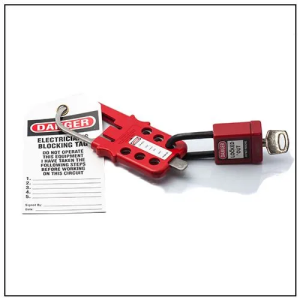
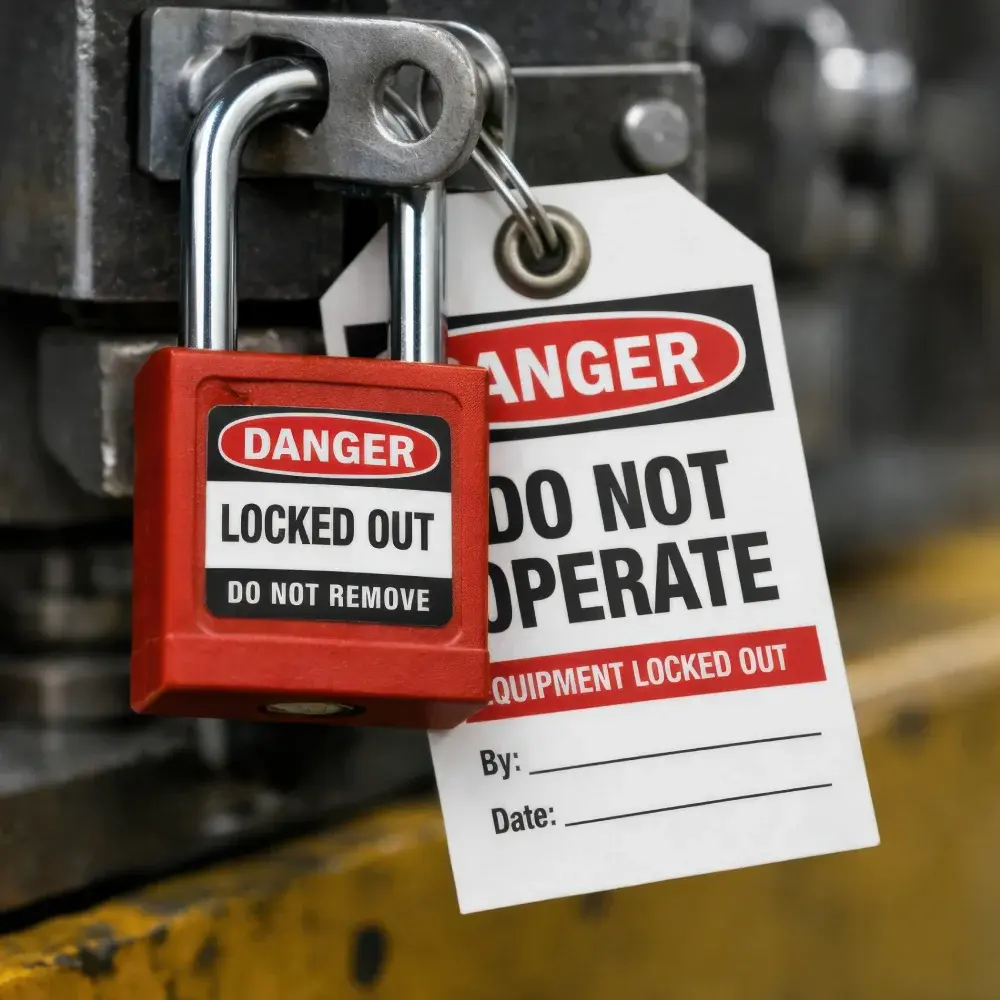
Lockout
A form of HEC using the placement of a lockout device, according to established procedures, on an energy-isolating device to ensure that the energy- isolating device and the system being controlled cannot be operated until the lockout device is removed.
Lockout Device
A device that uses a positive means, such as a key or combination lock, to hold an energy-isolating device in the safe position and prevent the energizing of a system.
Low Voltage
Nominal system voltages of 1000 volts or less
Lower Explosive Limit/Lower Flammability Limit (LEL/LFL)
The lowest concentration (that is, percentage) of a gas or a vapor in air capable of producing a flash of fire in presence of an ignition source (for example, arc flash, flame, heat).
Lower Levels
Areas below the level where the employee is located and to which an employee can fall. Such areas include but are not limited to, ground levels, floors, roofs, ramps, runways, excavations, pits, tanks, materials, water, and equipment
Lux
The International System of Units measurement of light (illuminance) as perceived by the human eye.
Machinery and Mechanized Equipment
Mobile, stationary, self-propelled, or towed equipment intended for use on construction sites or industrial sites. This equipment is not intended for operation on public highways.
Management Information System for Aviation & Remote Systems (MARS)
A management information database that tracks equipment and personnel and assists in mission planning, approval, tracking, and archiving.
Manned Vessels
Vessels that operate with crews, quartered personnel, or that have work areas that are occupied by assigned personnel during normal work activities.
Marine Activities
Operations and work involving proximity to or on water.
Maritime Industry
Includes the construction, repair, and scrapping of vessels, as well as the movement of cargo and other materials.
Mast Climbing Work Platform (MCWP)
A hoist having a working platform used for temporary purposes to raise personnel and materials to the working position by means of a drive system mounted on an extendable mast which may be tied to a building.
Medium Duty
A scaffold designed and constructed to carry a working load of 50 lbs/ft2 (2.1 kg/m2), that is intended for bricklayers or plasterers, with weight of material in addition to workers.
Medium Voltage
Nominal system voltages greater than 1000 volts and less than 100 kV.
Metal Decking
A commercially manufactured, structural grade, cold-rolled metal panel formed into a series of parallel ribs; this includes metal floor and roof decks, standing seam metal roofs, other metal roof systems, bar gratings, checker plate, expanded metal panels, and similar products.
Minimum Approach Distance (MAD)
An approach limit at a distance from an exposed energized electrical conductor or circuit part within which there is an increased likelihood of electric shock, due to electrical arc-over combined with inadvertent movement. NFPA 70E calls MAD the Restricted Approach Boundary, this chapter will use the terms interchangeably.
Mishap
Within the context of this manual, mishap is synonymous with accident.
Mission Briefing Officer (MBO)
MBOs interact with the mission crew to validate the flight plan, risk assessment, and risk mitigation measures for approval by the AMAA.
Mission Coordinator (MC)
MCs are the overall SUAS mission leader and operational authority. MCs are selected for their level of aviation proficiency, judgment, and communication skills. The Remote Pilot (RP) is automatically the MC unless otherwise directed. MC and RP duties may be performed simultaneously. A single MC must be designated for missions involving more than one crew.
Mixed-Gas Diving
A diving mode in which the diver breathes mixture other than air, (for example, HeO2, Oxygen Enriched Air (OEA), nitrogen-oxygen (Nitrox).
Mobile
Equipment that is capable of being moved on wheels or rollers.
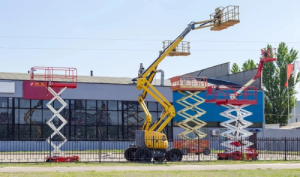
Mobile Elevating Work Platforms (MEWP)
Any vehicle mounted device, telescoping, or articulating, or both, which is used to position or elevate personnel to jobsites or activities above the ground. May be made of other material (metal, wood, fiberglass reinforced plastic or other); may be power or manually operated.
Motor Vehicle
A sedan, van, sport utility vehicle, truck, motorcycle, or other mode of conveyance intended for use on public roadways. This includes construction equipment that is driven on public highways.
Motorcycle
A motor vehicle with motive power having a seat or saddle for the use of the rider and designed to travel on not more than three wheels in contact with the ground.
Mudsill
A 2 inch x 10 inch x 8 inch (5.1 cm x 25.4 cm x 20.3 cm) (minimum) wood plate that is used to distribute the scaffolding load over a suitable ground area.
Multiple Lift Rigging (MLR)
A rigging assembly manufactured by wire rope rigging suppliers that facilitates the attachment of up to five independent members of similar structural types spaced at a minimum of 7 feet (2.1 m) apart to the hoist rigging of a crane.
Near Miss
A potentially serious accident that could have resulted in personal injury, death, or property damage, damage to the environment, or illness but did not occur due to one or more factors.
Near Proximity
Emergency care must be available within no more than 3-4 minutes from the workplace
Negative Pressure Respirator/Tight-Fitting Facepiece Respirator
A respirator in which the air pressure inside the facepiece is negative during inhalation with respect to the ambient air pressure outside the respirator.
Nitrogen-Oxygen (Nitrox)
Breathing gas mixtures ranging from 75 percent nitrogen/25 percent oxygen to 60 percent nitrogen/40 percent oxygen.
Non-Certified Anchorage
Unquestionably strong anchorage that a CP can judge to be capable of supporting the predetermined anchorage strength as prescribed by 29 CFR 1926, Subpart M and ANSI/ASSP Z359.1 requirements. Non-certified anchorages are used for fall-arrest, work positioning, travel restraint, or rescue.
Non-permit Confined Space (NPCS)
A confined space that does not contain or have the potential to contain a hazard capable of causing death or serious physical harm.
Occupational Exposure Limit (OEL)
A generic term used to apply to all exposure limits, to include DoD standards such as military exposure guidelines, OSHA permissible exposure limits, ACGIH TLVs, NIOSH Recommended Exposure Limits, and other exposure limits reviewed for potential use.
Open-Faced Notch
Two sequential cuts into the side of a tree that results in either a conventional notch or Humboldt notch.
Opening
Any gap or open space in a wall, partition, vertical walking-working surface, or similar surface that is at least 30 inches (76.2 cm) high and at least 18 inches (45.7 cm) wide, through which an employee can fall to a lower level.
Operating Envelope
The area surrounding any crane. Inside this "envelope" is the crane, the 360-degree area up to the crane’s maximum working radius, the operator, riggers, and crane walkers, rigging gear between the hook and the load, the load and the crane's supporting structure (for example, ground, rail).
Operational Test
A test to evaluate if the crane is operating properly and its ability to safely lift loads within its performance rating. The test includes operational performance tests and load performance tests.
Other Potentially Infectious Materials
Human body fluids (that is, semen, vaginal secretions, cerebrospinal fluid, synovial fluid, pleural fluid, pericardial fluid, peritoneal fluid, amniotic fluid), any body fluid that is visibly contaminated with blood, and all body fluids where it is difficult or impossible to differentiate or identify; unfixed human tissues or organs; and human immunodeficiency virus (HIV)-containing cell or tissue cultures, organ cultures, and HIV- or hepatitis B virus (HBV)-containing culture medium or other solutions, or blood, organs, or other tissues infected with HIV or HBV.
Other Site Workers
Other site workers are those regularly onsite who work in areas which have been monitored and fully characterized indicating that exposures are under permissible exposure limits and published OELs where respirators are not necessary, and the characterization indicates that there are no health hazards or the possibility of an emergency developing.
Ototoxic Chemicals
An agent known to have adverse effects on organs or nerves involved in hearing or balance and may be physical (for example, noise), biological, or chemical. Examples include arsenic, carbon disulfide, carbon monoxide (CO), cyanide, lead and derivatives, manganese, mercury and derivatives, n-hexane, Stoddard solvent, styrene, trichloroethylene, toluene, xylene.
Outrigger
Extendable or fixed structural members with one end attached to the base of a piece of equipment and the other end resting on floats on the ground used to distribute loads in supporting equipment.
Oxyfuel Gas Cutting
An oxygen cutting process that uses heat from an oxyfuel gas flame.
Oxyfuel Gas Welding
A welding process that joins work pieces by heating them with an oxyfuel gas flame.
Oxygen Deficient Atmosphere
An atmosphere with an oxygen content below 19.5% by volume.
Oxygen Enriched Air (OEA)
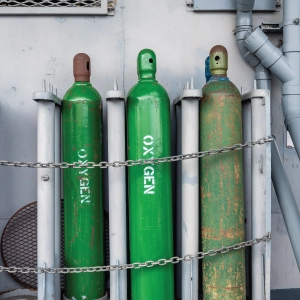
A term often used to describe oxygen-rich mixtures.
Oxygen Enriched Atmosphere
An atmosphere containing more than 23.5% oxygen by volume.
Oxygen Enriched Atmosphere, on a Ship or Vessel.
An atmosphere containing more than 22% oxygen by volume.
Passive Fall Protection System
A system that does not require a worker to use or wear personal fall protection equipment. Examples include guardrails, safety nets, covers, and compliant parapet walls
Penetration Dive
A dive that requires a diver to access an area that is both a physically confining space and one in which there is no direct access to the surface or bell for recovery of the diver from the water by the tender.
Percent Grade
Equal to the number of feet that the roadway vertically inclines or declines over a horizontal distance of 100 feet (30.5 m). For example, a 10 percent grade means the roadway vertically rises or drops 10 feet (3 m) for every 100 feet (30.5 m) traveled.
Perimeter Protection
Measures taken to prevent personnel, vehicles, and materials from falling into an excavation.
Permanent Floor
A structurally completed floor at any level or elevation, to include slab on grade.
Permit-Required Confined Space (PRCS)
A confined space that has one or more of the following characteristics: (34-2.q)
Contains or has the potential to contain a hazardous atmosphere.
Contains a material that has the potential for engulfing an Entrant.
Has an internal configuration such that an Entrant could be trapped or asphyxiated by inwardly converging walls or by a floor that slopes downward and tapers to a smaller cross-section.
Contains any other recognized serious safety or health hazard.
Personal Flotation Device (PFD)
A piece of equipment designed to assist a wearer to keep afloat in water. The wearer may be either conscious or unconscious. Commonly referred to as a life jacket, life preserver, life belt, Mae West, life vest, life saver.
Personal Protective Equipment (PPE)
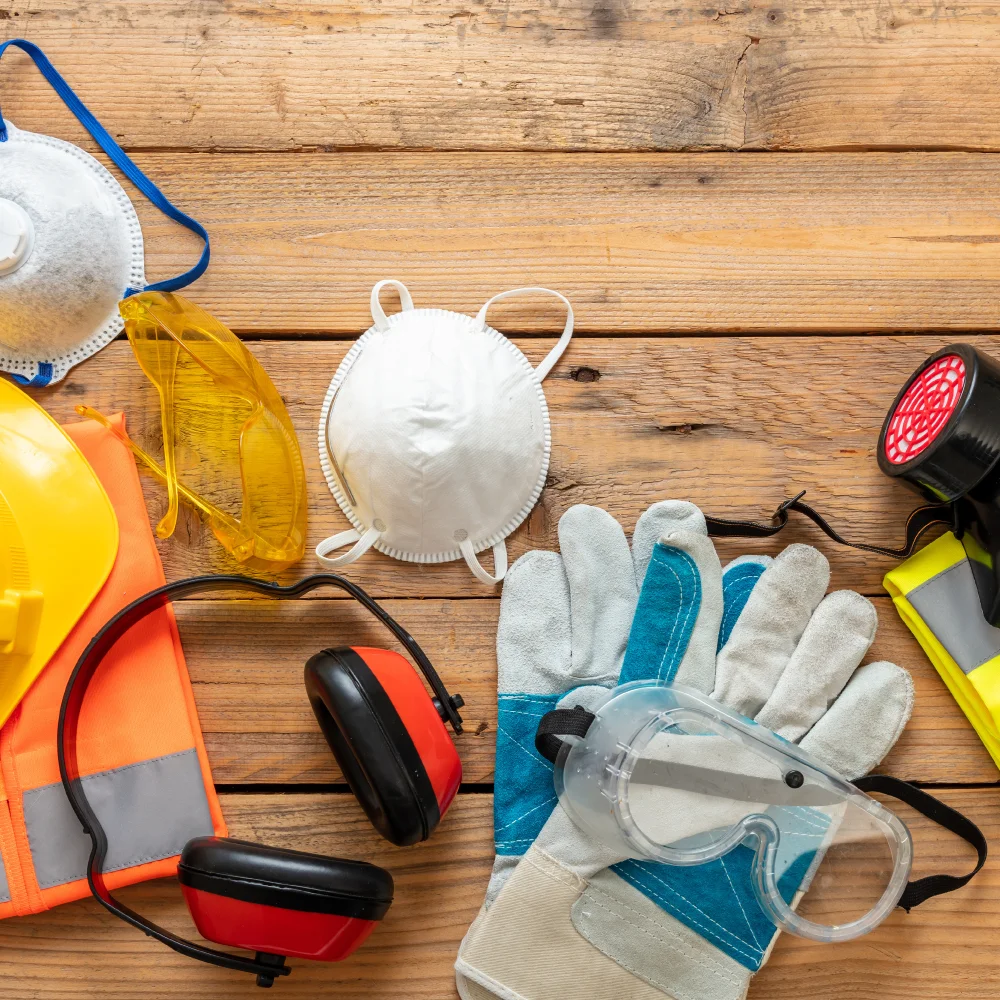
Any equipment worn to minimize exposure to hazards that cause serious workplace injuries and illness.
Physician or Other Licensed Health Care Professional (PLHP)
A physician or other licensed health care professional is an individual whose legally permitted scope of practice (that is, license, registration, or certification) allows him or her to independently perform, or be delegated the responsibility to perform, the activities of a physician.
Platform
A work surface elevated above lower levels. Platforms can be constructed using individual wood planks, fabricated planks, fabricated decks, and fabricated platforms.
Portable
Equipment that is easily carried by personnel from one location to another.
Portable Water
Water that meets the standards for drinking purposes of the state or local AHJ, or water that meets the quality standards prescribed by the U.S. EPAs National Primary Drinking Water Regulations (40 CFR 141). See also TB MED 577/NAVMED P-5010-10 and NAVMED P-5010-6.
Post Emergency Response
The portion of an emergency response performed after the immediate threat of a release has been stabilized or eliminated and clean-up of the site has begun. If post emergency response is performed by an employer's own employees who were part of the initial emergency response, it is considered to be part of the initial response and not post emergency response. However, if a group of an employer's own employees, separate from the group providing initial response, performs the clean-up operation, then the separate group of employees would be considered to be performing post-emergency response and subject to 29 CFR 1910.120(q)(11) or 29 CFR 1926.65(q)(11).
Prescribed Fire
Any fire ignited to meet specific management objectives.
Pressure Systems
All pipe, tubing, valves, controls, and other devices that operate or are maintained above atmospheric pressure.
Project Manager (PM)
An individual assigned to achieve the project objectives. The PM manages the scope, schedule, budget, and quality while leading a project delivery team (PDT). PMs may be assigned to any organizational or geographic element.
Project Structural Engineer of Record
The RPE responsible for the design of structural steel framing and whose seal appears on the structural design drawings.
Protective System
Methods used to protect employees from cave-ins, from material falling into an excavation, or from the collapse of adjacent structures. Systems include benching, sloping, shoring, trench shields, underpinning, rock bolting, and similar.
Purging
The replacement of a flammable, indeterminate, or high-oxygen- bearing atmosphere with another gas that, when complete, results in a non-flammable final state.
Purlin (in systems-engineered metal buildings)
A "Z" or "C" shaped member formed from sheet steel spanning between primary framing and supporting roof material.
Qualified Inspector (QI)
Individuals performing authorized inspections as required in the ASME BPVC. The QI may not be employed by the manufacturer.
Qualified Line-Clearance Tree Trimmer
A tree worker who, through related training and on the-job experience, is familiar with the line-clearance hazards and has demonstrated ability in the performance of the special techniques involved.
Qualified Line-Clearance Tree Trimmer Trainee
Any worker undergoing line- clearance tree trimming training who, in the course of such training, is familiar with line- clearance hazards and has demonstrated ability in the performance of the special techniques involved.
Qualified Mast-Climbing Work Platform (MCWP) Operator
An employee designated in writing by the employer that has been trained by a CP for Scaffolding; must be able to recognize hazards associated with mast-climbing scaffolds; have specific equipment familiarization prior to operation.
Qualified Person (QP)
An individual who, by possession of a recognized degree, certificate, or professional standing, or who by extensive knowledge, training, and experience, has successfully demonstrated the ability to solve or resolve problems relating to the subject matter, the work, or the project.
Qualified Person (QP), Electrical
Someone who meets the criteria for a QP as defined in this manual.
Qualified Person (QP), Fire Protection Systems, Inspection, Testing and Maintenance.
An individual who meets the criteria of a QP as defined in UFC 3-601-02.
Qualified Person (QP), Underground Construction
One, who by possession of a recognized degree, certificate, or professional standing, or extensive knowledge, training, and experience, has successfully demonstrated the ability to solve or resolve problems related to the subject matter, the work, or the project. A typical QP for this paragraph is an RPE, Geotechnical Engineer, Mining Engineer or Engineering Geologist certified or licensed as required by the AHJ for the site location.
Qualified Person for Fall Protection (QP for Fall Protection)
A person with a recognized degree or professional certificate with extensive knowledge, training, and experience in the fall protection and rescue field. The QP for Fall Protection must be capable of designing, analyzing, evaluating, and specifying fall protection and rescue systems.
Qualified Rigger (QR)
A qualified rigger is a rigger who meets the criteria for a QP as defined in this manual (see paras 1-2 or 2-2, as applicable) and 29 CFR 1926, Subpart CC that is designated by the employer in writing to rig loads and/or oversee the rigging of loads for hoisting.
Qualified Tree Worker
An individual who, through related training and on-the- job experience, is familiar with the equipment, techniques, and hazards of tree maintenance and removal and has demonstrated ability in the performance of the special techniques involved.
Qualitative Fit Test (QLFT)
A pass/fail fit test to assess the adequacy of respirator fit that relies on the individual's response to the test agent.
Quality Assurance Representative (QAR)
A Government employee (for example, construction representative) that assures end product quality, by monitoring the contractor’s quality control (QC) activities and performing independent testing and/or inspections of contract work.
Quantitative Fit Test (QNFT)
An assessment of the adequacy of respirator fit by numerically measuring the amount of leakage into the respirator.
Radiant Energy
The energy of electromagnetic waves produced by movement of molecules excited by the heat of an electric arc, gas flame, or the passage of electric current. Includes ultraviolet, visible light, and infrared energy.
Ramp
Any inclined walking-working surface used to access another level.
Rated Load
The maximum allowable working load established by the rigging equipment manufacturer. The terms “rated capacity” and “working load limit” (WLL) are commonly used to describe rated load.
Recompression Chamber
A pressure vessel for human occupancy such as a surface decompression chamber, closed bell, or deep diving system especially equipped to recompress, decompress, and treat divers.
Recordable Accident
A reportable accident that meets the minimum criteria stated in this manual for aviation and ground Class A through F accidents.
Red Flag Barge/Vessel
A barge/vessel carrying in bulk hazardous cargoes regulated by Subchapter D (petroleum) and O (chemical) of 46 CFR Chapter I, or vessels whose primary purpose is the transporting of flammable or other hazardous cargos (for example, oil tankers, chemical parcel tankers, liquid chemical barges, liquefied gas tankers).
Registered Professional Engineer (RPE)
A person who has been duly and currently registered and who is licensed as a professional engineer by an authority (for example, state licensure board) within the United States or its territories to practice the profession of engineering.
Regulated Area
An area established by the employer to demarcate areas where airborne concentrations of contaminants exceed, or there is a reasonable possibility that they may exceed the OEL
Remote Pilot (RP)
The RP is responsible for safe mission execution and is the final authority for operating, servicing, and securing the UA. RP is the base qualification for crewmembers, MBOs, and AMAAs.
Reportable Accident
All occurrences that cause injury, occupational illness, or property damage of any kind.
Rescue Service
A team of qualified responders with the training, expertise, and equipment to readily provide confined space rescue
Reshoring
The construction operation in which shoring equipment (that is, reshores or reshoring equipment) is placed as the original forms and shores are removed. The reshoring supports partially cured concrete and construction loads.
Residual Risk
The level of risk remaining after controls have been identified and countermeasures selected for hazards. Risks remaining after hazard mitigation measures have been applied.
Rest
A period of time during which the person concerned is off duty, is not performing work, including administrative tasks, and is afforded the opportunity for uninterrupted sleep. This does not include time for breaks, meals, to travel time to/from work.
Restricted Approach Boundary
See MAD.
Restricted Zone
The area on each side of a wall subject to the effect of a masonry wall collapse, measured by a horizontal distance equal to the height of the constructed wall plus 4 feet, measured at right angles to the wall, and continuing for the length of the wall plus a minimum of 4 feet beyond the ends of the wall.
Rigging
Components used to secure, lift, and suspend loads (for example, chains, ropes, slings, cables).
Rigging Hardware
Hardware components used in tandem with rigging to secure, lift, and suspend loads (for example, shackles, hooks, links, rings, swivels, turnbuckles, eyebolts, hoist rings, wire rope clips, wedge sockets).
Risk Assessment Code (RAC)
The conversion of the probability and severity of a given hazard into a specific risk level based on the residual risk. The levels of risk are extremely high (E), high (H), medium (M) and low (L).
Risk Management
A business process that includes the identification, assessment, and prioritization of risks, followed by coordinated and economical application of resources to minimize, monitor, and control the probability and/or impact of unfortunate events to an acceptable level.
Risk Matrix
A risk management tool that is used to determine the RAC for a specific work element and the overall RAC for the activity, task, or DFOW. The risk matrix is used to evaluate the severity (that is, an approximate amount of potential harm, damage, or injury occurring) and probability (that is, likelihood of something happening) associated with a given accident (see para 2-10.a). Severity is categorized as catastrophic, critical, moderate, or negligible. Probability is categorized as frequent, likely, occasional, seldom, or unlikely.
Rope Access
A variety of advanced access techniques where ropes and specialized equipment are used as the primary method for providing access and support to workers in their jobs at high or hard-to-reach places.
Rope Access Lead Technician/Competent Person (CP) for Rope Access
An experienced Rope Access Technician who has completed training and certification to identify, evaluate, and address existing and potential hazards involved with rope access, including fall protection and rescue, and who has the employer’s authority to take prompt corrective action with regard to such hazards. The Rope Access Lead Technician/CP for Rope Access must work under the direct supervision of a Rope Access Supervisor/Qualified Person (QP) for Rope Access.
Rope Access Supervisor/Qualified Person (QP) for Rope Access
The Rope Access Supervisor/QP for Rope Access is responsible for the entire rope access work site, including management and oversight of Rope Access Technicians on the work site and designing, analyzing, evaluating, and specifying the rope access work systems. They must have knowledge and experience to direct rescue operations from rope access systems and be able to perform advanced rescue from rope access systems.
Rope Access Technician/Authorized Technician
An individual who has completed training and certification to perform standard rope access operations including operating ascent and descent systems, using fall protection, and have the skills necessary to perform limited rescue from rope access systems. They may only work under the direct supervision of a Rope Access Lead Technician/CP for Rope Access or Rope Access Supervisor/QP for Rope Access.
Runway
A personnel passageway elevated above the surrounding floor or ground level, such as a foot walk along shafting or a walkway between scaffolds.
Safe for Workers
Denotes a confined space on floating plant that meets the following criteria: (34-2.t)
The oxygen content of the atmosphere is at least 19.5% and below 22% by volume.
The concentration of flammable vapors is below 10% of the LEL.
Any toxic materials in the atmosphere associated with cargo, fuel, tank coatings, or inserting media are within permissible concentrations at the time of the inspection.
Safety Can
An approved container, of not more than 5-gal (18.9 L) capacity, having a spring-closing lid and spout cover and designed to safety relieve internal pressures under fire exposure. An approved container is one that has been listed or approved by a NRTL such as Factory Mutual Engineering Corp., or.UL, or federal agencies such as Bureau of Mines or USCG, which issue approvals for such equipment.
Safety Data Sheet (SDS)
A document that includes information such as the properties of each chemical, the physical, health and environmental health hazards, protective measures, and safety precautions for handling, storing, and transporting the chemical. OSHA requires that SDS preparers provide specific minimum information as detailed in Appendix D of 29 CFR 1910.1200 (29 CFR 1910 Subpart Z)
Safety Lashing
A rope, cord, chain, or other suitable material flexible lacing that is used to fasten two objects together securely and thus rendering the objects safe.
Safety Relief Valves
Valves that relieve excess pressure or vacuum (depending on their design) that would otherwise damage equipment or cause injury to personnel.
Scaffold
Temporary elevated platform (supported or suspended) and its supporting structure (including anchorage points), used for supporting employee(s), materials, or both.
Scaffold, Hanging
A scaffold/work platform that is hung from a location (such as a lock gate) for work to be performed and that remains stationary until it is then repositioned with a crane/hoisting device.
Scaffold, Load Ratings
Maximum loadings for the following categories: (22-2.o)
Heavy Duty. A scaffold designed and constructed to carry a working load of 75 lbs/ft2 (3.2 kg/m2), that is intended for stone masonry work, with storage material on the platform.
Medium Duty. A scaffold designed and constructed to carry a working load of 50 lbs/ft2 (2.1 kg/m2), that is intended for bricklayers or plasterers, with weight of material in addition to workers.
Light Duty. A scaffold designed and constructed to carry specific working load of 25 lbs/ft2 (1.1 kg/m2), that is intended for workers only, with no material storage other than weight for tools.
Special Duty. A scaffold designed and constructed to carry specific types of objects, such as palletized materials. The design of planks and other types of scaffold units, the scaffold, and accessories will be based on categories of load ratings.
Scaffold, Mason’s Multiple-Point Adjustable Suspension
A scaffold having a continuous platform supported by bearers suspended by wire rope hoists from overhead supports.
Scaffold, Metal Frame.
A scaffold consisting of a work platform supported by prefabricated metal frames.
Scaffold, Needle-Beam
A platform resting on two bearers that is suspended by a line.
Scaffold, Pump Jack
A scaffold consisting of a work platform supported by movable support brackets mounted on vertical poles.
Scaffold, Trestle Ladder
A work platform supported by a trestle ladder. A trestle ladder is self-supporting portable ladder that can be adjustable in length, consisting of two sections, hinged at the top to form equal angles with the base.
Scaffold, Tube and Coupler
A scaffold consisting of a work platform supported by individual pieces of tubing (uprights, bearers, runners, bracing) connected with couplers.
Scaffold, Two-Point Suspension
A suspension scaffold consisting of a platform supported by hangers (stirrups) suspended by two ropes from overhead supports and equipped with means to raise and lower the platform.
Scaffold, Window Jack
A supported scaffold consisting of a platform supported by a bracket or jack that projects through a window opening.
Scaling
The removal of loose, overhanging, protruding, or otherwise precariously positioned material from above or along the sides of an excavation.
Scientific Diving
Diving performed solely as a necessary part of a scientific, research, or educational activity by employees whose sole purpose for diving is to perform scientific research tasks. Scientific diving does not include performing any tasks usually associated with commercial diving such as but not limited to placing or removing heavy objects underwater; inspection of pipelines and similar objects; construction; demolition; cutting or welding; or the use of explosives.
Self-Contained Underwater Breathing Apparatus (SCUBA) Diving
A diving mode independent of surface supply in which the diver uses open-circuit self-contained underwater breathing apparatus.
Separately Derived System
A premises wiring system whose power is derived from generator, transformer, or converter winding and has no direct electrical connection, including a solidly connected grounded circuit conductor, to supply conductors originating in another system.
Service
The conductors and equipment for delivering electric energy from the serving utility to the wiring system of the premises served.
Shaft
A passage made from the surface of the ground to a point underground that cuts through the ground at an angle greater than 20° to the horizontal.
Shore
A supporting member (for example, false work to support an elevated concrete deck pour) that resists a compressive force imposed by a load.
Shoring and Bracing
Temporary support of a building, structure, or trench to provide stability during demolition to decrease the danger of collapse and protect property, workers, and the public.
Single Anchor lifeline
A flexible line along which a fall arrestor travels that is supported by a single anchorage. A lifeline may be used in vertical, horizontal, or sloped applications.
Site of Work
The primary location of the work. The physical place(s) where the work called for in the contract will remain when work on it is completed, or the secondary location of the work, if any, which is any other site where a significant portion of work is performed, provided that such site is established specifically for the performance of the contract or project.
Site Safety and Health Officer (SSHO)
A contractor employee that is responsible for overseeing and ensuring implementation of the prime contractor’s SOH program according to the contract, this manual, applicable federal, state, and local requirements (see paras 2-3 and 2-4).
Site-Specific Energy Control Plan (SSECP)
A written plan for a specific location that clearly and specifically identifies the hazardous energy sources and outlines the scope, purpose, and procedures for periodic inspections, procedural steps for creating and updating HIPs, site specific training documents, and assignment of roles and responsibilities defined in the HECP.
Sloping
The removal of loose, overhanging, protruding, or otherwise precariously positioned material from above or along the sides of an excavation.
Small Uncrewed Aircraft System (SUAS)
Group 1 or 2 remotely piloted aircraft, the associated control unit, antennas, and ancillary equipment. The term SUAS applies when referring to the entire system.
Snow Machine
Any vehicle designed to travel over ice and snow using mechanical propulsion in conjunction with skis, belts, cleats, or low-pressure tires.
Snug Tight
A condition that exists when all plies in a connection have been pulled into firm contact by the bolts in the joint and all of the bolts in the joint have been tightened sufficiently to prevent removal of the nuts without the use of a wrench.
Soft Demolition
Removal of non-structural parts during renovation activities of a facility or systems within a structure. This includes removal of doors, windows, lay-in tile ceilings, fixtures, interior equipment, lighting, HVAC system components, floor covering, etc.
Sound-Pressure
Steady state sound that does not significantly change in intensity or frequency with time.
Special Duty
A scaffold designed and constructed to carry specific types of objects, such as palletized materials. The design of planks and other types of scaffold units, the scaffold, and accessories will be based on categories of load ratings.
Specialty Vehicle
All other vehicles not meeting any of the vehicle, machine, or equipment definitions in this chapter and may include cargo or personnel carriers or custom.
Spring Line
The point where the curved portion of the roof meets the top of the wall. In a circular tunnel, the spring lines are at opposite ends of the horizontal center line.
Sprinkler System
A system of piping designed according to fire protection engineering standards and installed to control or extinguish fires. The system includes an adequate and reliable water supply, a network of specialty sized piping and sprinklers that are interconnected, a control valve, and device for actuating an alarm when the system is in operation.
Stable Rock
Natural, solid, mineral material that can be excavated with vertical sides and remain intact while exposed.
Station Bill
A placard that designates vessel personnel duties and procedures to be followed in the event of an emergency or emergency drill. Placards must be permanently placed in personnel quarters and work areas and are strategically located throughout the vessel.
Steel Erection
The construction, alteration, or repair of steel buildings, bridges, and other structures, including the installation of metal decking and all planking used during the process of erection.
Steel Joist
An open web, secondary load-carrying member of 144 feet
(43.9 m) or less, designed by the manufacturer, that is used for the support of floors and roofs. This does not include structural steel trusses or cold-formed joists.
Steel Joist Girder
An open web, primary load-carrying member, designed by the manufacturer, used for the support of floors and roofs. This does not include structural steel trusses.
Steel Truss
An open web member designed of structural steel components by the project structural engineer of record. A steel truss is considered equivalent to a solid web structural member.
Storage Tank
Any vessel having a liquid capacity that exceeds 60 gal (227.1 L), is intended for fixed installation, and is not used for processing.
Stored Energy
Energy (for example, electrical, mechanical, chemical, hydraulic, pneumatic, gravitational) that might be found in a charge capacitor, a loaded spring, chemical solutions, flood control barrier, or other similar hazardous form.
Structural Demolition
The removal of a structural part of a facility carried out during full structural demolition or renovation activities. This includes buildings, load bearing structures, bridges, chimneys, etc.
Structural Steel
A steel member, or a member made of a substitute material (for example, fiberglass, aluminum, composite members). These members include, but are not limited to, steel joists, joist girders, purlins, columns, beams, trusses, splices, seats, metal decking, girts, an fall protection all bridging cold-formed metal framing that is integrated with the structural steel framing of a building.
Substation
A high-voltage electric system facility used to switch generators, equipment, and circuits or lines in and out of a system.
Supervisors
Supervisors are individuals that provide onsite management and are directly responsible for employees engaged in hazardous waste cleanup and investigation operations.
Supplied-Air Respirator
An atmosphere-supplying respirator for which the source of breathing air is not designed to be carried by the user.
Support System
A structural means of supporting the walls of an excavation to prevent cave-ins. Systems include shields, shoring, underpinning, rock bolts, and similar.
Support Zone
The support zone is an area that is not and will not become contaminated because of investigation or cleanup activities. This is an area that borders the CRZ and where administrative and other support personnel remain to regulate and oversee the activities happening in the other work zones and the operation at large. This area is not anticipated to be contaminated and does not have the potential cause exposure to support zone personnel from contamination in the CRZ or EZ.
Supported Scaffolds
One or more platforms supported by outrigger beams, brackets, poles, legs, uprights, posts, frames, or similar rigid support such as frame scaffolds or fabricated frame, pole or wood pole, mobile scaffolds, mast climbing scaffolds.
Surface Supplied Air (SSA)
A diving mode in which the diver in the water is supplied from the dive location with compressed air for breathing.
Systems-Engineered Metal Building
A metal, field-assembled building system consisting of framing, roof, and exterior wall coverings. Typically, many of these components are cold-formed shapes. These individual parts are fabricated in one or more manufacturing facilities and shipped to the jobsite for assembly into the final structure. The engineering design of the system is normally the responsibility of the systems-engineered metal building manufacturer.
Tagout
A form of HEC procedure using the placement of a tagout device according to established procedures, on an energy-isolating device to indicate that the energy-isolating device and the system being controlled may not be operated until the tagout device is removed.
Tagout Device
A prominent warning device, such as a tag with a means of attachment, which can be securely attached to an energy-isolating device according to established procedures to indicate that the energy-isolating device and system being controlled may not be operated until the tagout device is removed.
Temporary
Means that the duration of the task the worker performs is brief or short. Temporary, brief, or short tasks generally include those that a worker is able to perform in less time than it takes to install or set up conventional fall protection. Examples of temporary tasks include changing a filter in a roof-top HVAC system, replacing a part on a satellite dish, caulking or resealing the flashing around a skylight, or sweeping a chimney.
Temporary Protective Ground (TPG)
A personal protection device consisting of a specialized full fault rated cable assembly connected between a de-energized circuit and ground. The device creates a zone of equipotential to limit the voltage to a safe value.
Tepid
Tepid water is 60° F - 100° F (15.6° C - 37.8° C).
Thermal Stress
Thermal stress includes both heat and cold stress. These conditions arise when temperatures become too extreme for the body, resulting in a physical response.
Three Points of Contact
When either both hands and one foot, or both feet and one hand are always in contact with the climbing device. Required when ascending or descending ladders.
Threshold limit Value (TLV)
Airborne concentrations of chemical substances and represent concentrations under which it is believed that nearly all workers may be repeatedly exposed, day after day, over a working lifetime, without adverse health effects.
Threshold Limit Values
Airborne concentrations of chemical substances and represent concentrations under which it is believed that nearly all workers may be repeatedly exposed, day after day, over a working lifetime, without adverse health effects.
Tied In
When a tree climber’s climbing line has been properly crotched and attached to the saddle and taut-line hitch is tied.
Toe-board
A vertical barrier at floor level erected along exposed edges of a floor opening, wall opening, platform, runway, or ramp to prevent materials from falling.
Toilet Facility
A fixture maintained within a toilet room for the purpose of defecation or urination, or both. A toilet facility may be a toilet, water closet, commode, urinal, or similar.
Toilet Room
An enclosure containing one or more toilet facilities.
Toilet Seat Cover
A disposable or removable seat covering intended to protect the user from direct contact with the toilet seat.
Transmission Lines and Equipment
Electric lines and equipment with operating voltages from 69KV to 765KV.
Tremies
Pipe through which concrete may be deposited under water.
Trestle
A braced framework of timbers, piles, or steel work for carrying a walkway, road, or railroad over a depression.
Trusted Agent (TA)
TAs are selected by the ATPM and appointed in writing by the APM (see figure 22 in APL 95-1-1), to validate the contractor’s SUAS fleet and periodically monitor flight operations for compliance with the cybersecurity rules outlined by DoD.
Tunnel
An excavation beneath the surface of the ground, the longer axis of which makes an angle not greater than 20° to the horizontal.
Tunnel Boring Machine (TBM)
A machine that excavates a tunnel by drilling out the heading to full size in one operation. May also be referred to as a 'mole'. The TBM is typically propelled forward by jacking off the excavation supports emplaced behind it or by gripping the side of the excavation.
Turbine Maintenance Platforms (TMPs)
A type of scaffold unique to hydropower operations and maintenance that incorporates aspects of both suspended scaffolds and hanging scaffolds. These TMPs are assembled in the draft tube below the turbine where they are physically attached to the structure. Some TMPs must be assembled below the turbine at the draft tube door level and raised into position and may also be required to be close to the turbine blades such that the TMP must wrap around the turbine hub. This applies to vertical access turbines where the TMP is assembled under the runner.
Two-Block Damage Prevention Device (also known as anti-two blocking (A2B)
A system that stops the current function so that a hoist rope or crane machinery components are not damaged.
Two-Block/A2B Warning Device
A warning device to alert the operator of an impending two blocking condition.
Uncrewed Aircraft System (UAS) Groups
Group 1 UAS. UAS typically less than 20 pounds in weight; normally operate below 1200 feet AGL) at speeds less than 250 knots.
Group 2 UAS. UAS typically are in the 21 – 55-pound weight class; normally operate below 3500 feet AGL at speed less than 250 knots.
Group 3 UAS. These UAS weigh more than 55 pounds, but less than
1320 pounds. They normally operate below 18,000 feet mean sea level at speeds less than 250 knots.
Underground Blasting
The controlled use of explosives and other methods in underground construction, shafts, and caissons.
Unfired Pressure Vessels
Vessels that can withstand internal pressure or vacuum, but are not heated by burning fuel or electricity (heat may be generated in the vessel due to chemical reactions or the application of heat directly to vessel contents).
Universal Waste
Hazardous wastes that are widely produced by households and many different types of businesses. Universal wastes include televisions, computers, and other electronic devices as well as batteries, fluorescent lamps, mercury thermostats, and other mercury containing equipment, among others.
Unmanned Vessels
Vessels that carry cargo such as materials, supplies, equipment, or liquids, and do not have personnel on board during normal operations.
Unprotected Sides and Edges
Any side or edge, except at entrances to points of access, of a walking-working surface (for example, floor, roof, ramp, runway) where there is no wall, guardrail system, or stair rail system to protect persons from falling to a lower level.
Unqualified Person
A person who is not a QP but has received safety training to identify the hazards and reduce the associated risk.
Utility-Terrain Vehicle (UTV)
Vehicles designed to perform off-road utility tasks such as passenger and cargo transportation with side-by-side seating.
Vehicle-Mounted Elevating and Rotating Work Platforms
An elevating and rotating work platform mounted on the chassis of a commercial vehicle.
Vermin
Insects, birds, and other animals, such as rodents and feral cats, that may create safety and health hazards for employees.
Vertical Slip Forms
Forms which are jacked or hoisted vertically during the placement of concrete.
Vessel
Every type of watercraft or artificial contrivance used, or capable of being used, as a means of transportation on water, including special-purpose floating structures not primarily designed for or used as a means of transportation on water.
Visitor
Anyone who is not assigned to work at the site of work, either permanently or temporarily, that comes to the site of work for short-term action (for example, inspections, meetings, deliveries).
Visual Observer (VO)
VOs are fully integrated crewmembers who attend and participate in the crew brief and debrief. VOs maintain visual contact with the UA and communicate its proximity to hazards, other aircraft, direction of travel, and location.
Voltage Classes
Low Voltage. Nominal system voltages of 1000 volts or less.
Medium Voltage. Nominal system voltages greater than 1000 volts and less than 100 kV.
High Voltage. Nominal system voltages equal to or greater than 100 kV and equal to or less than 230 kV.
Extra-High Voltage. Nominal system voltages greater than 230 kV but less than 1000 kV.
Washing Facility
A facility near the work site that can be used to provide adequate washing for employees.
Wet-Bulb Globe Temperature Index
A measurement of environmental factors that correlate with human deep body temperature and other physiological responses to heat.
Wildland Fire
A planned or unplanned fire involving wildland fuels.
Working Distance
The distance between a person’s face and chest area and a prospective arc source.
Working Load
The external load applied to the crane or derrick, including the weight of load-attaching equipment such as load blocks, shackles, and slings.
Working On
Activities which involve intentional contact with energized electrical conductors or circuit parts with tools or body parts regardless of the PPE a person is wearing which are not in an electrically safe work condition (ESWC). This includes the process of establishing and verifying an ESWC, troubleshooting, manipulation of cables, or performing any repairs/alterations.
X
No terms found
Y
No terms found
Z
No terms found