English and
 Español. After purchase, use the language toggle in your course Player to switch between English and Spanish at any time.

 EN
EN ES
ES


















































































Glossary - OSHA Warehouse Safety Training
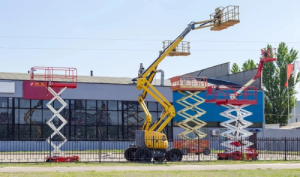
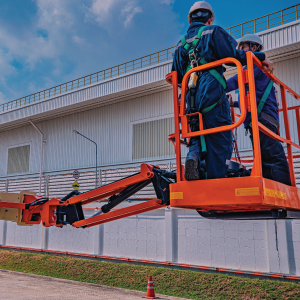
Aerial Work Platform (AWP)
A mechanical device—such as a scissor lift or boom lift—used to elevate personnel to overhead work areas. Subject to ANSI/SIA A92 standards and operator training requirements.
Aisle
A designated travel path within a warehouse used by pedestrians, powered industrial trucks, or both. Must be clearly marked, adequately lit, and kept free of obstructions at all times per 29 CFR 1910.22.
Anchorage Point
A secure structural attachment point for personal fall arrest system hardware. Must support at least 5,000 lbs. per attached employee or be designed by a qualified person per 29 CFR 1910.140.
ANSI (American National Standards Institute)
A private nonprofit organization that coordinates the development and use of voluntary consensus standards for products, services, and systems across U.S. industries.
Authorized Employee
A worker who implements a lockout/tagout procedure by applying their own personal lock or tag to an energy-isolating device before servicing or maintaining equipment per 29 CFR 1910.147.
Battery Charging Area
A designated location for recharging or replacing industrial truck batteries. Must be properly ventilated, equipped with an eyewash station, protected from ignition sources, and clearly marked per 29 CFR 1910.178.
Boom Lift
An aerial work platform with an extendable articulating or telescoping arm used to position workers at elevated heights. Governed by ANSI A92.5 (vehicle-mounted) and ANSI A92.6 (self-propelled).
Burden
The total combined load being transported or stored—including the pallet, product, and packaging materials—used to assess forklift capacity and rack loading.
Capacity Plate
A manufacturer-installed data placard affixed to a powered industrial truck that specifies rated load capacity, maximum lift height, and load limitations when attachments are used.
Chemical Segregation
The physical separation of incompatible hazardous chemicals in storage to prevent dangerous reactions such as fires, explosions, or toxic releases. Governed by 29 CFR 1910.1200 and NFPA 30.
Conveyor
A mechanical system used to move materials continuously through a facility. Conveyor systems must be equipped with guards, emergency stop devices, and proper clearances per ASME B20.1 and 29 CFR 1910.212.
Counterbalance Forklift
The most common type of powered industrial truck, featuring forks at the front and a heavy counterweight at the rear to offset the weight of carried loads.
Crane
A powered device used to hoist, lower, and horizontally move suspended loads. Overhead and gantry cranes in warehouses are governed by ASME B30.2 and 29 CFR 1910.179.
Dead Man Switch
A safety control mechanism on powered equipment that automatically stops operation or applies brakes when the operator releases the control, preventing uncontrolled movement.
Dock Board (Dock Plate)
A portable or permanently installed bridge used to span the gap between a loading dock face and a trailer bed. Must be rated for the intended load and secured in place per 29 CFR 1910.26.
Dock Leveler
A mechanical, hydraulic, or air-powered device installed in a dock pit that bridges vertical height differences between the dock and trailer floor, enabling safe forklift and pedestrian passage.
Dock Safety
The combined set of practices and protective equipment used to protect workers at loading and unloading areas, including wheel chocks, vehicle restraints, dock locks, communication systems, and visual warning devices.
Egress
A means of exit from a workplace or area. OSHA requires that egress routes be kept unobstructed, adequately lit, and marked with visible exit signs at all times per 29 CFR 1910.36–.37.
Emergency Action Plan (EAP)
A written document required by 29 CFR 1910.38 that establishes employer and employee procedures for responding to fires, chemical releases, medical emergencies, and other workplace emergencies, including evacuation routes and assembly points.
Energy Control Program
A formal written program that establishes procedures, training requirements, and equipment specifications for controlling hazardous energy during the servicing and maintenance of machinery and equipment per 29 CFR 1910.147.
Ergonomics
The science of designing tasks, tools, equipment, and work environments to match the physical capabilities and limitations of workers, with the goal of reducing musculoskeletal injuries and improving efficiency.
Eyewash Station
A fixed or portable emergency device that delivers a gentle, controlled flow of water for flushing chemical or foreign material from the eyes. Placement and maintenance are governed by ANSI Z358.1.
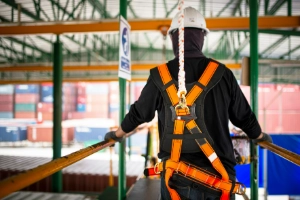
Fall Arrest System
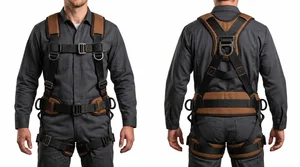
A combination of interconnected equipment—including a full-body harness, connecting lanyard or self-retracting lifeline, and anchorage connector—designed to safely stop a worker's fall and limit arrest forces per 29 CFR 1910.140.
Fall Protection
Engineering controls, administrative measures, and personal protective equipment used to prevent workers from falling from elevated work surfaces, or to arrest falls in progress. Governed by 29 CFR 1910 Subpart D.
Fire Extinguisher
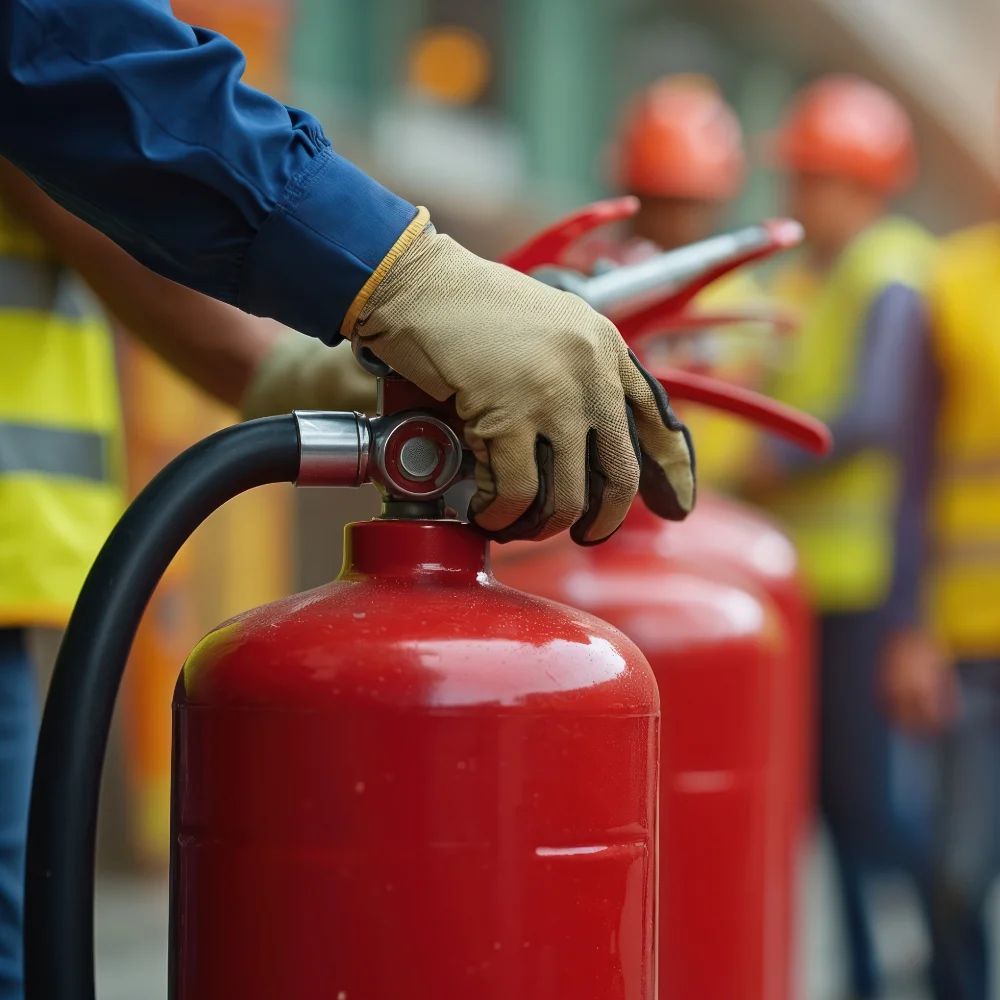
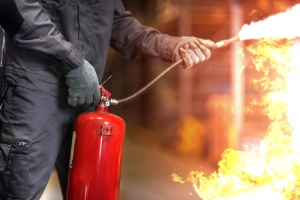
A portable first-response device used to suppress incipient-stage fires. Classified by the types of fires they control (A, B, C, D, K). Inspection, maintenance, and placement are governed by NFPA 10 and 29 CFR 1910.157.
Fire Prevention Plan
A written plan required by 29 CFR 1910.39 that identifies potential ignition sources and combustible materials, describes methods for controlling those hazards, and designates personnel responsible for maintaining fire prevention equipment.
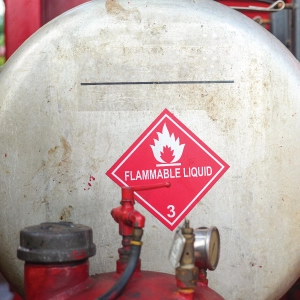
Flammable Liquid
A liquid with a flash point below 100°F (37.8°C). Class I flammable liquids under NFPA 30 present the highest fire risk and require specialized storage containers, cabinets, ventilation, and spill control measures.
Floor Load Limit
The maximum allowable weight per square foot that a warehouse floor structure is engineered to safely support. Must be conspicuously posted and observed to prevent structural failure per 29 CFR 1910.22(d).
Forklift (Powered Industrial Truck)
A powered motorized vehicle designed to lift, transport, stack, and tier materials using forks or an attachment. Operator training, evaluation, and recertification are required per 29 CFR 1910.178.
General Duty Clause
Section 5(a)(1) of the Occupational Safety and Health Act of 1970, which requires every employer to provide a workplace free from recognized hazards that are causing or are likely to cause death or serious physical harm to employees.
Global Harmonized System (GHS)
An internationally standardized framework for classifying and communicating chemical hazards through uniform labels and Safety Data Sheets. Adopted in the U.S. as HazCom 2012 under 29 CFR 1910.1200.
Guardrail
A passive fall protection barrier system consisting of a top rail at 42 (±3) inches, a midrail at approximately 21 inches, and vertical posts. Required at all open-sided walking or working surfaces elevated 4 feet or more per 29 CFR 1910.29.
Hazard Communication Standard (HazCom)
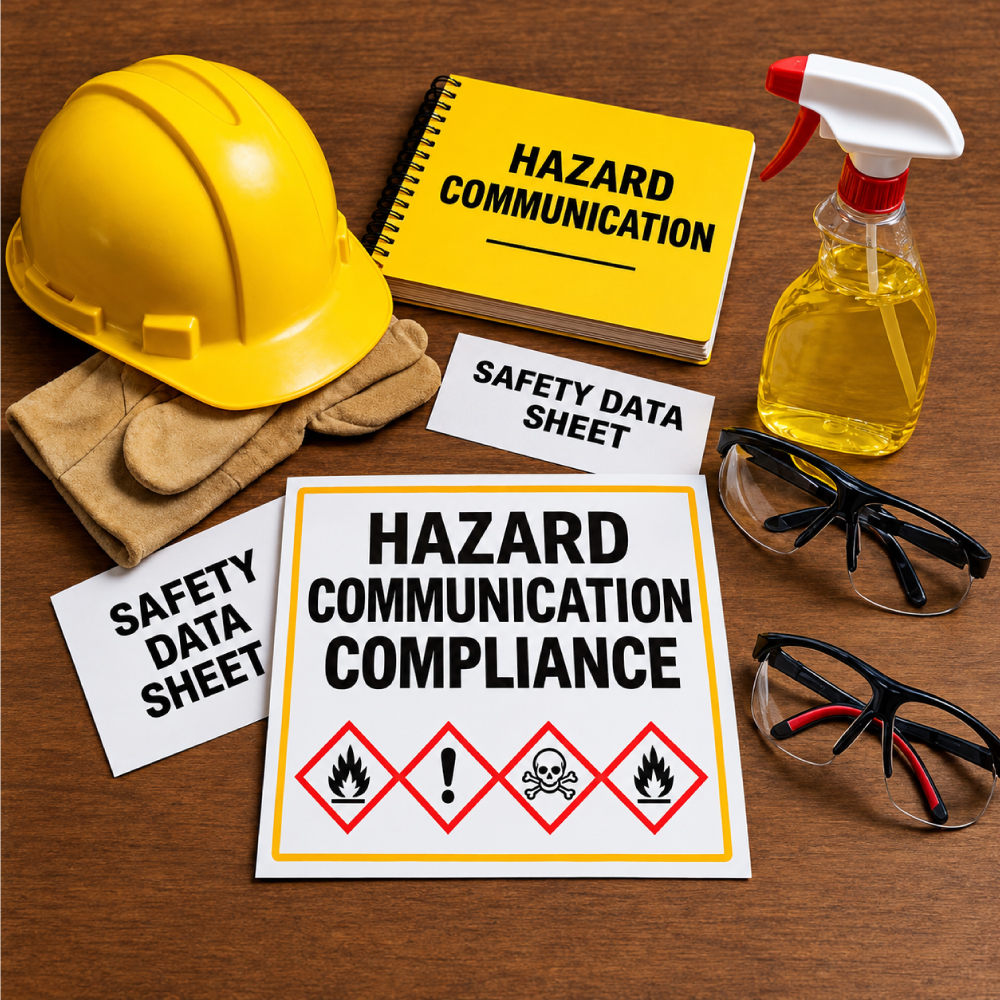
OSHA standard 29 CFR 1910.1200 that requires chemical manufacturers, importers, and employers to classify chemicals and communicate hazard information to workers through container labels, Safety Data Sheets, and training.
Hazardous Energy
Any form of energy—including electrical, mechanical, hydraulic, pneumatic, chemical, thermal, or gravitational—that could injure workers if unexpectedly released during the servicing, maintenance, or setup of equipment.
Hazardous Materials (HazMat)
Substances that pose a risk to health, safety, property, or the environment due to their chemical, physical, or biological properties. Storage, handling, and transport are regulated by OSHA, DOT 49 CFR, and EPA standards.
HazCom Label
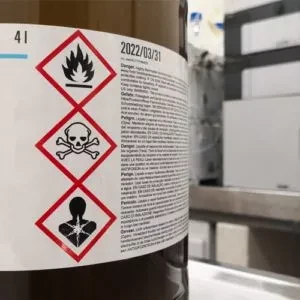
A GHS-compliant container label required under 29 CFR 1910.1200 that must include the product identifier, GHS hazard pictograms, signal word, hazard statements, precautionary statements, and supplier contact information.
Heat Stress
A physiological condition in which the body cannot adequately dissipate excess heat from the environment or physical exertion. Stages include heat cramps, heat syncope, heat exhaustion, and heat stroke, the most severe and life-threatening form.
Hierarchy of Controls
A ranked framework for selecting hazard controls in order of effectiveness: Elimination, Substitution, Engineering Controls, Administrative Controls, and Personal Protective Equipment (PPE).
Incident
Any unplanned, undesired event that results in—or has the potential to result in—worker injury, illness, property damage, equipment failure, environmental harm, or operational disruption.
Incident Investigation
A structured post-event process used to identify the root causes and contributing factors of an incident, and to develop and implement corrective and preventive actions to eliminate or control recurrence.
Incident Reporting
The formal process by which workers and supervisors document and communicate reports of injuries, illnesses, property damage, near misses, or unsafe conditions as required under 29 CFR 1904 and employer safety policies.
Job Hazard Analysis (JHA)
A proactive safety technique that breaks a job down into individual steps, identifies the hazards associated with each step, and recommends specific controls to eliminate, reduce, or manage those hazards before work begins.
Just Culture
An organizational safety philosophy that holds individuals accountable for their choices while acknowledging the role of system factors, distinguishing between honest mistakes, at-risk behavior, and reckless disregard for safety when responding to incidents.
Kinetic Energy
The energy of a body in motion, equal to one-half its mass times the square of its velocity. In warehouse environments, kinetic energy from moving forklifts, conveyor loads, and falling objects represents a significant source of injury hazard.
Label
Required identification affixed to hazardous chemical containers under 29 CFR 1910.1200, including the product name, GHS pictograms, signal word, hazard and precautionary statements, and the manufacturer's name and contact information.
Lanyard
A flexible connector—made of rope, wire rope, or web material—linking a worker's body harness to a lifeline, deceleration device, or anchorage point. Must limit free-fall to no more than 6 feet per 29 CFR 1910.140.
Load Center
The horizontal distance from the vertical face of the forks to the center of gravity of the load. The standard load center is 24 inches for most warehouse pallets and directly affects the forklift's rated capacity.
Loading Dock
A recessed bay or platform where trailers are positioned for loading and unloading freight. Required safety features include dock levelers, vehicle restraints, wheel chocks, dock bumpers, and clear communication between the dock and the truck cab.
Lockout
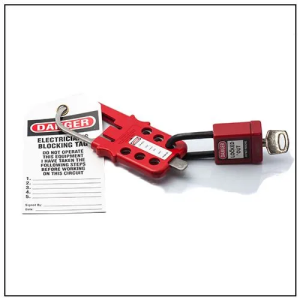
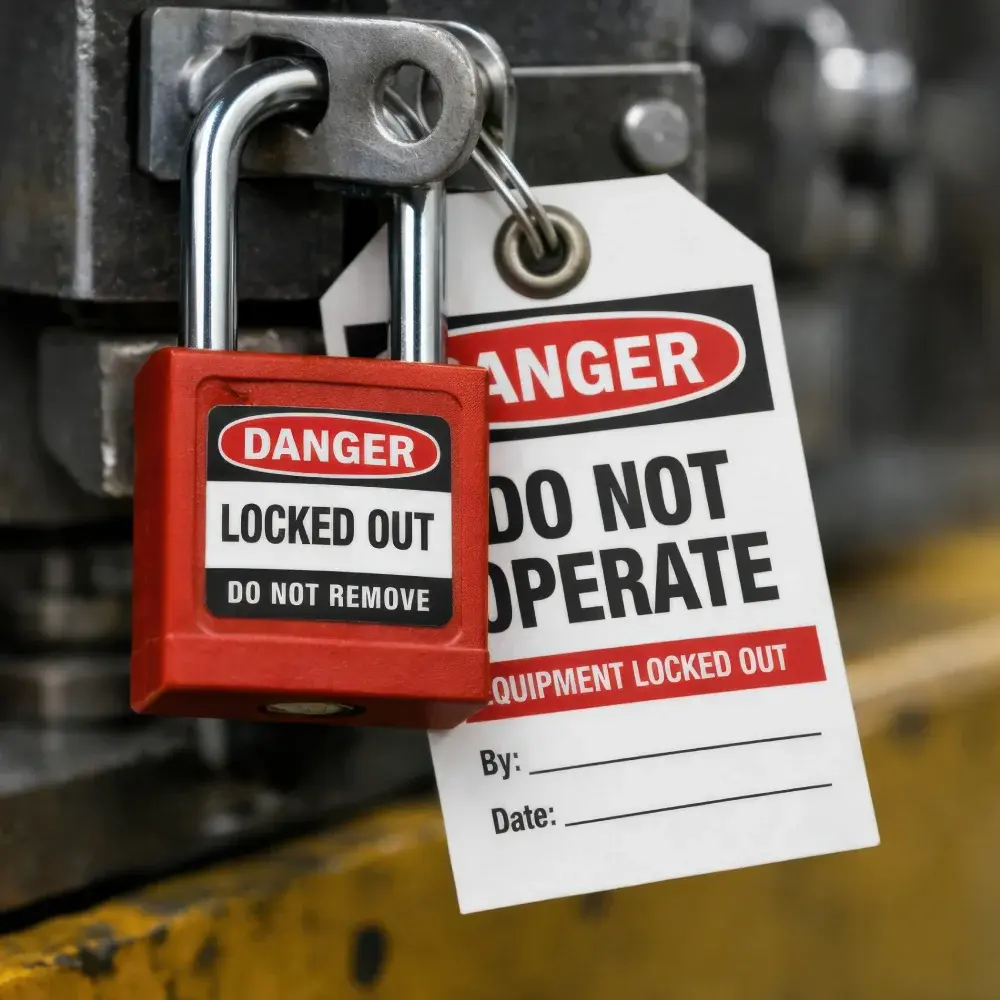
The application of a personal lockout device to an energy-isolating device to ensure that the equipment being serviced cannot be energized until the lock is deliberately removed by the authorized employee who applied it per 29 CFR 1910.147.
Lockout/Tagout (LOTO)
A hazardous energy control procedure in which authorized employees apply locks and warning tags to energy-isolating devices before servicing or maintaining equipment, preventing accidental energization and protecting affected employees per 29 CFR 1910.147.
Material Handling
The movement, storage, protection, and control of materials and products throughout a manufacturing or distribution facility using manual methods, mechanical equipment, or automated systems.
Maximum Intended Load
The total design load—including product weight, equipment, pallets, and the weight of any personnel who may be on a structure—that a rack, shelf, mezzanine, or floor system is engineered and rated to support simultaneously.
Mezzanine
An intermediate-level floor or platform constructed within a warehouse used for storage, office space, or operations. Open sides elevated 4 feet or more above a lower level require guardrails or other fall protection per 29 CFR 1910.29.
Musculoskeletal Disorder (MSD)
An injury or disorder affecting muscles, tendons, ligaments, nerves, joints, cartilage, or spinal discs—such as strains, sprains, tendinitis, or carpal tunnel syndrome—typically caused by repetitive motion, forceful exertion, awkward postures, or overloading.
Near Miss
An unplanned event or unsafe condition that did not result in injury, illness, or property damage but had the potential to do so under slightly different circumstances. Reporting and investigating near misses is essential for proactive hazard control.
NFPA (National Fire Protection Association)
A nonprofit standards development organization that publishes widely adopted fire, electrical, and life safety codes, including NFPA 10 (fire extinguishers), NFPA 13 (sprinkler systems), NFPA 30 (flammable and combustible liquids), and NFPA 70 (National Electrical Code).
Nip Point
A hazardous point created where a rotating machine element meets a stationary surface or another moving part, capable of drawing in and crushing, tearing, or amputating a body part. All nip points must be effectively guarded per 29 CFR 1910.212.
Operator Daily Inspection
A visual and functional check of a powered industrial truck performed by the operator at the beginning of each shift to identify any defects, damage, fluid leaks, or unsafe conditions before putting the truck into service per 29 CFR 1910.178(q)(7).
OSH Act
The Occupational Safety and Health Act of 1970 (Public Law 91-596), the federal law that established OSHA and created the legal framework for workplace safety and health regulation in the United States, including employer and employee rights and duties.
OSHA (Occupational Safety and Health Administration)
A federal agency within the U.S. Department of Labor responsible for establishing, enforcing, and communicating workplace safety and health standards to assure safe and healthful working conditions for American workers.
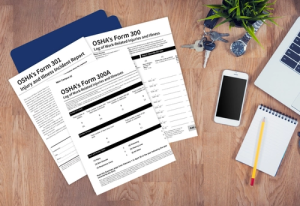
OSHA 300 Log
An OSHA recordkeeping form (Form 300) used to record all work-related injuries and illnesses throughout the calendar year. The annual summary (Form 300A) must be certified and posted from February 1 through April 30 per 29 CFR 1904.
Overhead Guard
A protective framework or canopy mounted over the operator's station on a powered industrial truck to protect the operator from falling objects while allowing clear visibility to the load and surroundings.
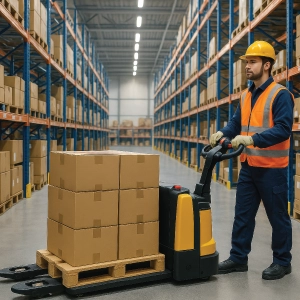
Pallet Jack (Pallet Truck)
A manually operated or battery-powered material handling device used to lift palletized loads several inches off the floor and transport them horizontally within a warehouse or storage area.
Pedestrian Safety Zone
A clearly delineated and marked area within a warehouse designated exclusively for foot traffic and physically or visually separated from powered industrial truck and vehicle travel lanes to prevent vehicle-pedestrian collisions.
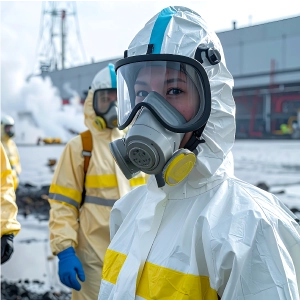
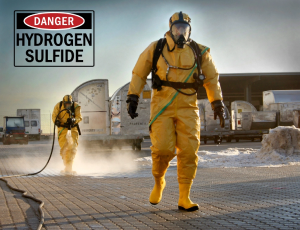
Personal Protective Equipment (PPE)
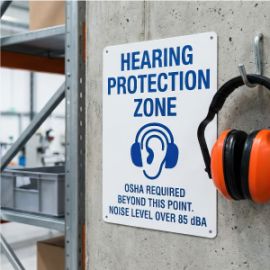
Employer-provided protective devices worn or carried by workers to minimize their exposure to physical, chemical, biological, or other workplace hazards. Common examples include hard hats, safety glasses, hearing protection, gloves, high-visibility vests, and steel-toed footwear per 29 CFR 1910 Subpart I.
Pictogram
A standardized GHS graphic symbol printed on chemical labels and Safety Data Sheets to convey, at a glance, the category of physical hazard, health hazard, or environmental hazard associated with a chemical substance or mixture.
Pinch Point
Any location where a part of the human body can become caught or compressed between two objects moving toward each other, or between a moving object and a stationary surface, potentially causing crush, laceration, or amputation injuries.
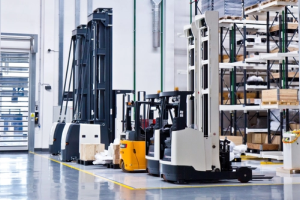
Powered Industrial Truck (PIT)
Any mobile, power-propelled truck used to carry, push, pull, lift, stack, or tier materials. Includes counterbalance forklifts, reach trucks, order pickers, pallet jacks, and turret trucks. Operator training is mandatory per 29 CFR 1910.178.
Qualified Person
An individual who possesses a recognized degree, professional certificate, or sufficient knowledge, training, and experience to identify, evaluate, and specify controls for specific hazards encountered in a workplace task or operation.
Rack Inspection
A periodic structural and visual assessment of industrial pallet racking systems to identify column damage, base plate deformation, beam deflection, missing safety clips, or overloading. Required after any impact and in accordance with RMI ANSI MH16.1 guidelines.
Reach Truck
A narrow-aisle powered industrial truck on which the fork carriage extends forward on rails to reach into high-bay pallet racking, then retracts to carry the load over the front wheels, enabling efficient use of vertical storage space.
Recordable Incident
A work-related injury or illness that meets OSHA's specific criteria for entry on the OSHA 300 Log, including cases resulting in days away from work, restricted duty, transfer to another job, medical treatment beyond first aid, or diagnosis of a significant condition per 29 CFR 1904.7.
Risk Assessment
A structured process of identifying workplace hazards, evaluating the likelihood and potential severity of harm they could cause, and selecting, prioritizing, and implementing controls using the hierarchy of controls framework.
RMI (Rack Manufacturers Institute)
An industry association that publishes ANSI MH16.1, the primary voluntary consensus standard governing the design, testing, utilization, and inspection of industrial steel storage rack systems used in warehouses and distribution centers.
Safety Data Sheet (SDS)
A standardized 16-section technical document required under 29 CFR 1910.1200 that provides detailed information on a chemical substance's or mixture's properties, physical and health hazards, exposure limits, first aid measures, safe handling procedures, and emergency response actions.
Safety Signage
Warning signs, instructional notices, caution placards, and prohibition postings required in warehouses under 29 CFR 1910.145. Signs must conform to ANSI Z535 standards for color coding, signal words, format, and symbol use.
Scissor Lift
A self-propelled aerial work platform that elevates a work platform vertically using a linked, folding scissor-arm support mechanism. Governed by ANSI/SAIA A92.6 and ANSI A92.20 and subject to fall protection, inspection, and operator training requirements.
Signal Word
A term printed prominently on a GHS chemical label that communicates the relative severity of the hazard: 'DANGER' indicates more severe hazards; 'WARNING' indicates less severe hazards per 29 CFR 1910.1200.
Slip, Trip, and Fall (STF)
Three of the most common and preventable warehouse injury mechanisms. Prevention strategies include regular housekeeping, slip-resistant flooring and footwear, adequate lighting, clearly marked and unobstructed aisles, and prompt spill response.
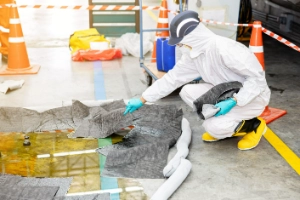
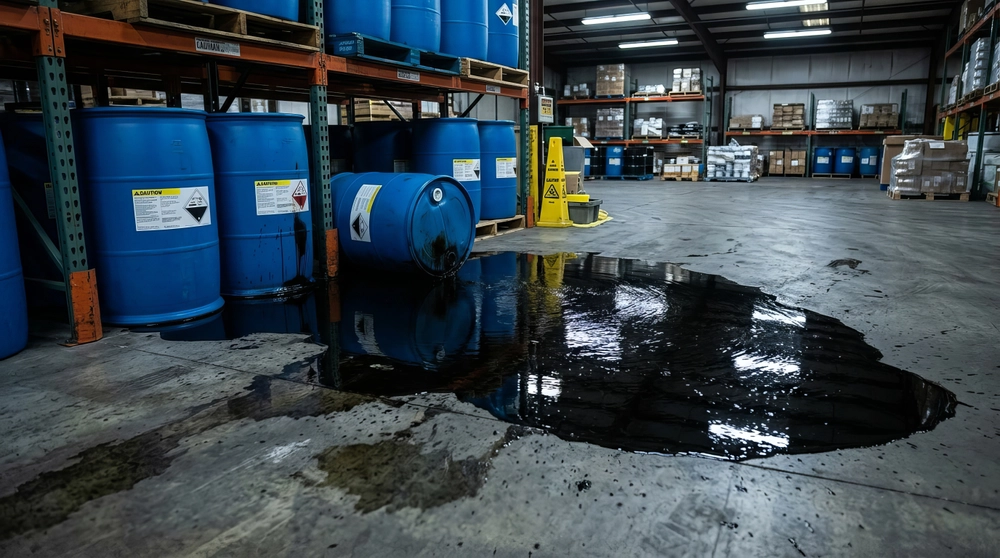
Spill Kit
A pre-assembled collection of absorbent pads, booms, PPE, waste bags, and containment materials staged near chemical storage or use areas for use in the immediate containment and cleanup of hazardous liquid spills.
Sprinkler System
An automatic water-based fire suppression system required in most warehouse occupancies per NFPA 13. A minimum 18-inch vertical clearance below all sprinkler deflectors must be maintained at all times to ensure proper water spray pattern coverage.
Stack Height
The maximum permissible height to which materials, products, or pallets may be stacked in a warehouse, determined by product stability, packaging type, racking capacity ratings, aisle width requirements, and sprinkler clearance.
Supervisor Responsibility
The legal and operational duty of a supervisor to ensure that employees under their direction receive adequate safety training, follow established safe work procedures, operate in a hazard-controlled environment, and that incidents are promptly investigated and corrected.
Tagout
The application of a standardized warning tag to an energy-isolating device to indicate that the device must not be operated or re-energized until the tag is removed by the authorized employee who applied it per 29 CFR 1910.147.
Tip-Over
A forklift stability failure in which the vehicle tilts laterally or forward and falls onto its side or front. Tip-overs are the leading cause of powered industrial truck operator fatalities in the United States and can also injure nearby pedestrians.
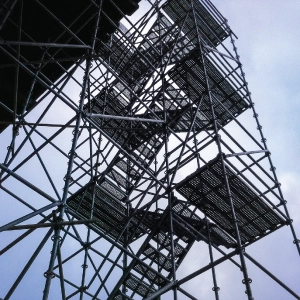
Toe Board
A low vertical barrier—typically 3.5 inches high—installed along the exposed open edges of elevated platforms, mezzanines, and scaffolding to prevent tools, materials, and debris from falling onto workers or equipment below.
Traffic Management Plan
A documented facility-wide strategy establishing designated forklift travel routes, pedestrian walkways, speed limits, right-of-way rules, intersection controls, and safety signage to safely manage the movement of vehicles and people within the warehouse.
Travel Path
The marked and designated route within a warehouse over which powered industrial trucks are authorized to travel. Must be maintained clear of obstructions, properly surfaced, adequately lit, and clearly delineated with floor markings or barriers.
Uncontrolled Release
An unplanned, unintended escape or discharge of hazardous energy or material—including electricity, pressurized fluid, steam, chemical vapors, or stored mechanical energy—that can cause injury, property damage, or environmental contamination.
Upper Explosive Limit (UEL)
The maximum concentration of a flammable vapor or gas in air above which the fuel-air mixture is too rich to sustain combustion. Concentrations above the UEL are non-ignitable in that state but become hazardous as they dilute back toward the flammable range.
Vehicle Restraint
A mechanical device—such as a dock lock, ICC bar hook, or wheel chock—used to secure a trailer to the dock face during loading and unloading operations, preventing accidental trailer separation or 'trailer creep.'
Ventilation
The controlled supply and circulation of air within a work area, used to dilute or remove airborne contaminants such as forklift exhaust, chemical vapors, welding fumes, and dusts to safe levels per 29 CFR 1910.94 and applicable TLVs.
Warning Label
A label affixed to machinery, chemical containers, electrical panels, or work areas to communicate specific hazards, required precautions, and safe operating procedures. Must comply with ANSI Z535 or GHS formatting requirements as applicable.
Wheel Chock
A wedge-shaped block of rubber, wood, or metal placed firmly against the drive tires of a parked vehicle or trailer to prevent forward or rearward movement during loading, unloading, maintenance, or fueling operations.
Work Zone
A defined, controlled area where a specific operation, maintenance task, or construction activity is being performed. Boundaries are established with barriers, signage, or floor markings to restrict unauthorized access and protect nearby workers.
Working Load Limit (WLL)
The maximum load in pounds or tons that a piece of rigging hardware—such as a chain, wire rope sling, shackle, or hook—is rated and approved by the manufacturer to handle under normal working conditions. Must be marked on all hardware.
X
No terms found
Y
No terms found
Zero Energy State
The confirmed condition of a machine or piece of equipment after all energy sources have been properly isolated, locked out, and verified through testing to confirm that no residual, stored, or potential energy remains that could cause unexpected movement or energy release during servicing.