English and
 Español. After purchase, use the language toggle in your course Player to switch between English and Spanish at any time.

 EN
EN ES
ES













































































































Glossary - EPA Spill Prevention, Control, and Countermeasure (SPCC) Training
Aboveground Storage Tank (AST)
Any container, vessel, or structure used to store oil that is located on or above the surface of the ground. Under 40 CFR Part 112, facilities with aggregate aboveground oil storage capacity greater than 1,320 gallons (in containers of 55 gallons or more) must comply with SPCC requirements.
Aggregate Aboveground Oil Storage Capacity
The total oil storage capacity of all aboveground containers at a facility that individually have a capacity of 55 gallons or more. This figure is used to determine whether the 1,320-gallon SPCC applicability threshold is met under 40 CFR §112.1(d)(2)(ii).
Alarm System
A device or network of devices — audible, visual, or both — designed to alert on-site personnel to an emergency condition such as an oil overfill, leak, or spill event. Required as part of emergency preparedness under 40 CFR §112.7 and as an overfill prevention measure under §112.8(c)(8).
Automatic Tank Gauge (ATG)
An electronic system installed in a storage tank that continuously monitors oil level, temperature, and water content. ATG systems can provide high-level alarms and perform statistical leak detection through inventory reconciliation. Widely used at petroleum bulk storage facilities.
Amendment (SPCC Plan)
A formal written update to the SPCC Plan required when material changes occur at the facility. Under 40 CFR §112.5(a), amendments must be made within 6 months of a change that affects the potential for an oil discharge. A discharge exceeding 1,000 gallons to navigable waters also triggers amendment requirements under §112.4.
Adjoining Shorelines
The shoreline or banks immediately adjacent to navigable waters of the United States. Discharges that reach adjoining shorelines — even if they do not enter the water itself — are considered discharges under the Clean Water Act and trigger SPCC reporting obligations under 40 CFR Part 110.
API Standard 653
An American Petroleum Institute inspection standard governing the inspection, repair, alteration, and reconstruction of aboveground storage tanks. Referenced in 40 CFR §112.8(c)(6) as an applicable industry standard for AST integrity management. Specifies inspection intervals based on corrosion rate and tank service history.
Berm
An earthen or concrete embankment constructed around one or more oil storage tanks to serve as secondary containment. Berms must be impervious, structurally sound, and sized to contain the capacity of the largest single tank plus freeboard for the 25-year, 24-hour storm event under 40 CFR §112.7(c)(1).
Bulk Storage Container
Any container used to store oil with a capacity of 55 gallons or more, including aboveground storage tanks, portable tanks, drums, and intermediate bulk containers (IBCs). All bulk storage containers are subject to inspection, containment, and operational requirements under 40 CFR §112.8(c).
Buried (Underground) Piping
Piping that is routed beneath the surface of the ground and used to transfer oil between storage tanks, loading areas, or delivery points. Under 40 CFR §112.8(d)(4), buried piping must have corrosion protection and be leak-tested at least annually or equipped with an appropriate leak detection system.
Cathodic Protection
An electrochemical corrosion control system that protects underground or submerged metal structures (tanks and piping) from corrosion by making the metal surface a cathode of an electrochemical cell. Required or strongly recommended under 40 CFR §112.8(d) for buried metallic piping and underground storage components.
Clean Water Act (CWA)
The primary federal statute governing the quality of navigable waters in the United States, enacted in 1972. Section 311(j)(1)(C) of the CWA authorizes the EPA to promulgate regulations to prevent oil discharges — the legal authority underlying 40 CFR Part 112 and the SPCC program.
Containment Area
A physically bounded area — such as a bermed tank farm, a curbed loading rack, or a vaulted underground sump — designed to capture and hold oil released from storage or transfer equipment. Must meet volume and impermeability requirements under 40 CFR §112.7(c) and §112.8(c)(2).
Contingency Measures
Actions identified in the SPCC Plan to be taken in response to oil discharge scenarios. These include source control (stopping the flow), containment, spill kit deployment, NRC notification, and cleanup. Required to be documented under 40 CFR §112.7(a)(3).
Corrosion
The gradual chemical or electrochemical degradation of a container, pipe, or structural component caused by its environment. Corrosion is one of the leading causes of aboveground storage tank failures and oil spills. Prevention and monitoring are required under 40 CFR §112.8(c)(6) using standards such as API 653.
Discharge
Under 40 CFR §112.2, any spilling, leaking, pumping, pouring, emitting, emptying, or dumping of oil. A discharge is reportable under 40 CFR Part 110 when it causes a film, sheen, or discoloration on navigable waters or adjoining shorelines, regardless of the quantity released.
Dike
A barrier — typically earthen, concrete, or masonry — constructed to confine a potential oil spill within a defined area and prevent it from reaching navigable waters. Dikes function as secondary containment structures and must comply with 40 CFR §112.7(c)(1) sizing and construction requirements.
Double-Walled Tank
A storage tank with an inner tank and an outer containment shell (interstitial space). The interstitial space serves as integral secondary containment. Leak sensors in the interstitial space can detect a failure of the inner tank before oil reaches the environment. Accepted as secondary containment for certain applications under 40 CFR §112.7(c).
Drainage Control
The system of valves, gates, or other controls used to manage stormwater and spill liquids collected in secondary containment areas. Under 40 CFR §112.8(b)(2), drainage valves in diked areas must be manually operated, kept in the closed position, and only opened after an operator confirms the accumulated water is not contaminated with oil.
Drip Pan
A shallow, impermeable pan placed beneath equipment, containers, or transfer connections to capture minor leaks, drips, and spills before they reach the ground or a drainage system. Drip pans are a required control at transfer connection points under 40 CFR §112.7(h)(1) and at drum dispensing locations.
Emergency Coordinator (Oil Spill)
A designated employee — identified by name or job title in the SPCC Plan — who has the authority and responsibility to direct the facility's response to an oil spill emergency. Must be reachable at all times (on-site or on-call) and thoroughly familiar with the SPCC Plan, facility layout, and regulatory reporting obligations under 40 CFR §112.7.
Emergency Response Equipment
Equipment maintained at an SPCC-regulated facility for use during an oil spill response, including absorbent booms, pads, and granular sorbents; portable containment berms; drum vacuums; drain plugs; and PPE. Must be inventoried in the SPCC Plan, inspected regularly, and staged within 50 feet of oil storage and transfer areas.
Environmental Protection Agency (EPA)
The U.S. federal agency responsible for administering and enforcing the SPCC program under 40 CFR Part 112. EPA Regional Offices receive written SPCC discharge reports under §112.4, conduct facility inspections, and issue compliance orders and civil penalties for SPCC violations.
Facility Diagram
A scaled or proportional site drawing that must be included in every SPCC Plan under 40 CFR §112.7(a)(3). Must show all oil storage containers, transfer areas, secondary containment structures, drainage patterns (including storm drains and ditches), navigable water bodies, and the location of emergency response equipment.
Facility Response Plan (FRP)
A stand-alone emergency response document required under 40 CFR Part 112, Subpart D for facilities that store more than one million gallons of oil AND could reasonably be expected to cause substantial harm to navigable waters through a worst-case oil discharge. The FRP must be submitted to the EPA Regional Administrator and includes a worst-case discharge analysis, response resource contracts, and a drill/exercise program.
Field-Erected Tank
An aboveground storage tank that is fabricated and assembled at the installation site, typically of welded steel construction. Field-erected tanks are generally large-volume (thousands to millions of gallons) and are inspected under API Standard 653. Distinguished from shop-fabricated tanks, which are built off-site and transported.
Freeboard
The vertical distance between the top of a secondary containment structure (berm or dike) and the maximum liquid level that the containment is designed to hold. Adequate freeboard is critical to prevent containment overflow during rain events. The 25-year, 24-hour storm precipitation volume must be accommodated within the containment area under 40 CFR §112.7(c)(1).
Good Engineering Practices (GEP)
A standard referenced throughout 40 CFR Part 112 requiring that prevention and response measures be consistent with accepted engineering principles, applicable industry codes, and standards published by organizations such as the American Petroleum Institute (API), NFPA, and STI. Where the regulations do not prescribe a specific numerical standard, GEP is the applicable benchmark.
Generator (Oily Waste)
Under RCRA (40 CFR Part 262), a facility whose activities produce a solid or hazardous waste stream — including petroleum-contaminated soil, spent absorbents, or oily water — is classified as a generator of that waste and subject to applicable storage, labeling, manifesting, and disposal requirements based on monthly generation volume.
Harmful Quantity
The amount of oil the discharge of which into or upon navigable waters of the United States causes a sheen, film, or discoloration — or deposits a sludge or emulsion. Defined in 40 CFR Part 110 as the threshold above which discharge is reportable to the National Response Center under Clean Water Act §311(b)(5). There is no minimum volume: any quantity causing a visible sheen is harmful.
High-Level Alarm
A device that activates an audible or visual alert when oil in an aboveground storage tank reaches a predetermined level — typically 90% of tank capacity — providing operators time to stop a delivery before overfill occurs. Required as part of overfill prevention under 40 CFR §112.8(c)(8). Must be tested and documented regularly.
Hydrostatic Testing
A tank or piping integrity test in which the vessel is filled with water and pressurized to detect leaks or structural weaknesses. Used to verify tank integrity before returning a repaired container to service. Referenced in API 653 and applicable as an integrity testing method under 40 CFR §112.8(c)(6).
Impervious Surface
A surface — typically concrete, compacted clay, or HDPE liner — that does not allow liquid to pass through it. Secondary containment structures must be constructed of impervious materials to prevent oil released within the containment area from infiltrating the soil and reaching groundwater or surface water. Required under 40 CFR §112.7(c)(1).
Inspection Log
A written or electronic record documenting the date, findings, and inspector identity for each inspection of oil storage containers, containment structures, piping, valves, and emergency response equipment. Required under 40 CFR §112.7(e) and must be retained at the facility for a minimum of 3 years.
Integrity Testing
Periodic testing of storage tanks and piping to verify structural soundness and confirm the absence of leaks or wall thinning due to corrosion. Methods include ultrasonic thickness testing, hydrostatic testing, and acoustic emission testing. Required at intervals specified in industry standards (API 653, STI SP001) referenced by 40 CFR §112.8(c)(6).
Intermediate Bulk Container (IBC)
A portable, reusable container — typically 275 to 330 gallons — used for the storage and transport of bulk liquids including petroleum products. Consists of a rigid plastic inner bladder held within a steel wire cage on a pallet. IBCs are subject to SPCC secondary containment and inspection requirements when oil-filled capacity meets the 55-gallon threshold.
Job Safety Analysis (JSA)
A documented procedure used before oil-handling tasks — such as tank deliveries, maintenance on oil-containing equipment, or spill cleanup — to identify hazards, assess risks, and confirm that proper PPE, tools, and procedures are in place. While not explicitly required by 40 CFR Part 112, JSAs support the good engineering practices standard and are required under OSHA.
K
No terms found
Leak Detection System
A device or method used to identify the presence of oil outside of a storage container before a significant discharge occurs. Includes interstitial monitoring for double-walled tanks and piping, automatic tank gauging systems, and periodic pressure testing. Required for buried piping under 40 CFR §112.8(d)(4).
Loading Rack
A fixed structure at a facility used for transferring petroleum products between storage tanks and transport vehicles (tank trucks or rail cars). Loading racks are high-risk transfer areas and must be equipped with secondary containment, drip pans, overfill prevention, and attended operations procedures under 40 CFR §112.7 and §112.8.
Lock-Out/Tag-Out (LOTO)
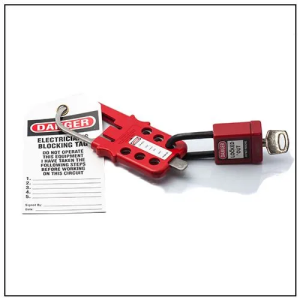
An OSHA-required safety procedure (29 CFR 1910.147) used during maintenance on oil-containing equipment to prevent unexpected energization, startup, or release of stored energy. LOTO procedures must be followed before opening or working on any pipe, valve, or vessel containing oil. Failure to use LOTO is a common cause of maintenance-related oil spills.
Material Change
Any physical or operational modification to a facility that increases the potential for an oil discharge or reduces the effectiveness of SPCC prevention or response measures. Material changes require SPCC Plan amendment within 6 months under 40 CFR §112.5(a). Examples include adding new storage tanks, modifying drainage, or relocating transfer operations.
Minor Discharge
An incidental oil release that is fully captured within secondary containment and does not reach navigable waters, adjoining shorelines, or storm drains connected to water bodies. Minor discharges do not trigger NRC notification but must be documented in the facility's internal spill log and inspected to determine whether SPCC Plan amendments are required.
National Response Center (NRC)
The federally-designated communication center that receives all reports of oil discharges to navigable waters in the United States. Available 24 hours a day, 7 days a week, at (800) 424-8802. Reports to the NRC are required immediately — meaning as soon as the person in charge has knowledge of a reportable discharge — under Clean Water Act §311(b)(5) and 40 CFR Part 110.
Navigable Waters
Waters of the United States, including the territorial seas, that are used in interstate or foreign commerce or that have a connection to such waters. Under Clean Water Act §311 and 40 CFR Part 112, facilities with the potential to discharge oil into navigable waters must comply with SPCC requirements. The definition has been the subject of significant regulatory and judicial interpretation.
NFPA 30
The National Fire Protection Association's Flammable and Combustible Liquids Code. A widely-referenced industry standard for the storage, handling, and use of flammable and combustible liquids, including petroleum products. NFPA 30 provisions for secondary containment, tank spacing, and fire protection apply to many SPCC-regulated facilities as part of the good engineering practices standard.
Non-Petroleum Oil
Oil of any kind that is not derived from crude petroleum, including vegetable oils, animal fats, and synthetic lubricants. Non-petroleum oils are regulated under 40 CFR Part 112 in the same manner as petroleum oils when they are stored in quantities above SPCC thresholds. Facilities storing cooking oils, biodiesel feedstocks, or transformer fluids must evaluate SPCC applicability.
Oil
Under 40 CFR §112.2, oil means oil of any kind or in any form, including petroleum, fuel oil, sludge, oil refuse, and oil mixed with wastes other than dredged spoil. The broad definition encompasses crude oil, diesel fuel, gasoline, heating oil, lubricating oil, hydraulic fluid, mineral oil, vegetable oil, and animal fats.
Oil Spill Removal Organization (OSRO)
A private contractor with the equipment, personnel, and expertise to respond to oil spills on water and land. Facilities subject to Facility Response Plan requirements under 40 CFR §112.20 must have contracts or written agreements with OSROs capable of responding to a worst-case oil discharge within applicable response time requirements.
Overfill
A discharge of oil that occurs when a storage tank or container receives more oil than its available capacity — causing oil to overflow from the top or through vents. Overfill is one of the most preventable and frequently cited causes of large oil spills at SPCC-regulated facilities. Prevention devices are required under 40 CFR §112.8(c)(8).
Overfill Prevention Device
Equipment designed to prevent a storage tank from receiving more oil than its capacity. Acceptable devices include high-level alarms, automatic shutoff valves, flow restrictors, and overflow return lines. Required for all bulk storage tank containers under 40 CFR §112.8(c)(8). Must be tested regularly and documented.
Personal Protective Equipment (PPE)
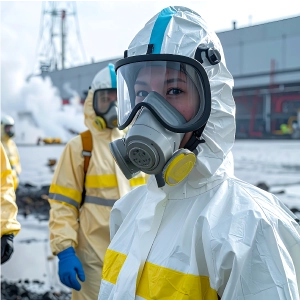
Clothing and equipment worn by personnel to protect against exposure to oil and its vapors during spill response operations. Selection must be based on a hazard assessment of the specific oil type. Levels range from Level D (minimum — gloves and goggles for minor petroleum spills) to Level A (maximum — fully encapsulating suit and SCBA for highly hazardous or unknown materials).
Person in Charge
Under Clean Water Act §311(b)(5), the individual responsible for notifying the National Response Center of a reportable oil discharge. This person — whether a facility operator, shift supervisor, or Emergency Coordinator — has a personal legal obligation to report immediately upon gaining knowledge of the discharge. Failure to report can result in personal criminal penalties.
Petroleum Oil
Oil derived from crude oil through refining or processing. Includes gasoline, diesel fuel, aviation fuel, heating oil, lubricating oils, hydraulic fluids, fuel oils, and crude oil itself. The most commonly regulated substance under the SPCC program.
Professional Engineer (PE)
A licensed engineer who has met state education, experience, and examination requirements and is authorized to provide engineering certifications. Under 40 CFR §112.3(d), SPCC Plans for facilities that do not qualify as Tier I or Tier II Qualified Facilities must be prepared or reviewed and certified by a licensed PE, who certifies that the plan meets good engineering practice requirements.
Qualified Facility
A facility that meets specific criteria allowing the owner/operator to self-certify the SPCC Plan without Professional Engineer (PE) certification. Under 40 CFR §112.6, Tier I Qualified Facilities have aboveground oil storage of 10,000 gallons or less, no single container exceeding 5,000 gallons, and no prior reportable discharge to navigable waters. Tier II Qualified Facilities meet the storage thresholds but may not meet all Tier I criteria.
RCRA (Resource Conservation and Recovery Act)
The federal statute governing solid and hazardous waste management. Oil-contaminated materials generated during spill cleanup — including used absorbents, PPE, and contaminated soil — may be subject to RCRA requirements as solid or hazardous waste. Used oil is separately regulated under 40 CFR Part 279.
Reasonable Expectation of Discharge
The standard used under 40 CFR §112.1(d)(1) to determine whether a facility must have an SPCC Plan. A facility must comply with SPCC if it could reasonably be expected to discharge oil into or upon navigable waters or adjoining shorelines. This determination considers proximity to water bodies, drainage pathways, topography, and spill history.
Reportable Discharge
An oil discharge that triggers mandatory notification to the National Response Center under 40 CFR Part 110. A discharge is reportable when it causes a visible sheen, film, or discoloration on navigable waters or adjoining shorelines, or deposits a sludge beneath the water surface. There is no minimum volume threshold once visual evidence exists.
Response Plan
See Facility Response Plan (FRP). Also may refer to the emergency response annex within an SPCC Plan that documents procedures for containing and cleaning up oil discharges, notifying regulators, and restoring affected areas. Required as a component of all SPCC Plans under 40 CFR §112.7(a)(3).
Secondary Containment
A physical barrier or system designed to capture oil released from a primary container (tank, drum, pipe) before it can reach navigable waters. Under 40 CFR §112.7(c)(1), secondary containment must hold at least 110% of the capacity of the largest single container or 100% plus the volume of the 25-year, 24-hour storm event. Methods include earthen dikes, concrete berms, double-walled tanks, and drip pans.
Sheen
A thin, iridescent film of oil visible on the surface of water. Even the smallest quantity of oil can produce a visible sheen. Under 40 CFR §110.3, any discharge that causes a sheen on navigable waters is a harmful quantity — making it reportable to the National Response Center regardless of volume.
Shop-Fabricated Tank
An aboveground storage tank manufactured off-site at a factory and transported to the facility for installation. Typically smaller than field-erected tanks (usually under 50,000 gallons). Inspected under STI SP001 standards. Subject to SPCC requirements under 40 CFR §112.8(c).
SPCC Plan
Spill Prevention, Control, and Countermeasure Plan. A written, site-specific document required by 40 CFR Part 112 for facilities meeting oil storage thresholds. The plan must describe the facility, identify all oil storage containers, analyze discharge pathways, detail secondary containment systems, establish inspection and maintenance procedures, and provide emergency response procedures and training requirements.
STI SP001
The Steel Tank Institute's standard for inspection of shop-fabricated aboveground storage tanks. Referenced in 40 CFR §112.8(c)(6) as an applicable standard for integrity inspection of smaller ASTs. Provides inspection intervals and procedures for tanks that fall outside the scope of API 653.
Substantial Harm
A threshold under 40 CFR §112.20 used to determine whether a facility must prepare a Facility Response Plan (FRP). A facility could cause substantial harm if it stores more than one million gallons of oil and a worst-case discharge could reach navigable waters based on proximity, drainage, or terrain. Facilities must use the self-screening checklist in Appendix C to Part 112 to make this determination.
Tank Farm
A facility or portion of a facility consisting of multiple aboveground storage tanks, typically within a common secondary containment area (diked impoundment). Tank farms are common at petroleum bulk terminals, refineries, and distribution facilities and are subject to comprehensive SPCC requirements for containment, inspection, and transfer operations.
Tier I Qualified Facility
An SPCC-regulated facility with total aboveground oil storage of 10,000 gallons or less, no single container exceeding 5,000 gallons, and no history of reportable discharges to navigable waters. Tier I facilities may self-certify their SPCC Plan using the template in Appendix G to 40 CFR Part 112, without PE certification, under 40 CFR §112.6(a).
Tier II Qualified Facility
An SPCC-regulated facility with total aboveground oil storage of 10,000 gallons or less and no single container exceeding 5,000 gallons, but that does not meet all Tier I criteria (e.g., has a prior discharge history). Tier II facilities may prepare and self-certify their own SPCC Plan without PE certification under 40 CFR §112.6(b), but must comply with all §112.7 general requirements.
Transfer Operations
The movement of oil from one container to another — including deliveries from tank trucks to ASTs, pipeline transfers, drum filling, and loading rack operations. Transfer operations are among the highest-risk activities at SPCC facilities. Attendance, overfill prevention, and secondary containment are required at all transfer points under 40 CFR §112.7 and §112.8.
Ullage
The empty space remaining in a storage tank or container — the difference between the tank's total capacity and the current volume of oil it holds. Operators must verify adequate ullage before accepting a delivery to ensure the receiving tank can hold the incoming volume without overfilling. Ullage verification is a critical pre-delivery step required by good engineering practices.
Underground Storage Tank (UST)
A tank and connected underground piping that has at least 10% of its combined volume underground. USTs used for petroleum products are primarily regulated under 40 CFR Part 280 (EPA Underground Storage Tank regulations), not under SPCC. However, USTs with capacity over 42,000 gallons may trigger SPCC applicability under 40 CFR §112.1(d)(2)(i).
Used Oil
Petroleum-based or synthetic oil that has been refined from crude oil or synthesized, and has been used and as a result is contaminated by physical or chemical impurities. Used oil is regulated under 40 CFR Part 279 (EPA Used Oil Management Standards) and must be stored, labeled, and disposed of through a certified used oil processor, recycler, or re-refiner.
Vault
An underground, liquid-tight containment structure surrounding a storage tank that serves as secondary containment. Vaults must be large enough to hold 100% of the tank volume and must be inspected for water intrusion and structural integrity. Accepted as secondary containment for underground tanks under certain SPCC compliance scenarios.
Valve (Secondary Containment Drain)
A manually operated device used to control the discharge of accumulated stormwater from a secondary containment area. Under 40 CFR §112.8(b)(2), these valves must be kept in the closed (normal) position and opened only by a designated operator who has confirmed the accumulated water is free from oil contamination. Commonly color-coded red to indicate normally-closed status.
Waste Oil
A general informal term for oil that is no longer fit for its original intended use, including used motor oil, spent hydraulic fluid, and waste gear oil. When generated from petroleum-based products, waste oil is regulated as used oil under 40 CFR Part 279. Oil-contaminated materials generated during spill cleanup may also be characterized as solid or hazardous waste under RCRA.
Worst-Case Discharge
The maximum credible oil spill scenario at a facility, used as the basis for Facility Response Plan planning under 40 CFR §112.20. Typically defined as the full contents of the largest storage tank or vessel at the facility, with no active mitigation. The worst-case discharge volume is used to size required response resources (boom, skimmers, recovery capacity).
X
No terms found
Y
No terms found
Z
No terms found