English and
 Español. After purchase, use the language toggle in your course Player to switch between English and Spanish at any time.

 EN
EN ES
ES





























































































































Confined Space Rescue Planning: What OSHA Expects
Introduction:
A confined space emergency can become fatal within minutes. Toxic atmospheres, oxygen deficiency, engulfment, fire, or restricted access can prevent unplanned rescue from succeeding and put additional workers at risk. For this reason, OSHA requires employers to establish appropriate rescue and emergency procedures when workers enter permit-required confined spaces.
Effective rescue planning goes beyond keeping a phone number for emergency services or storing retrieval equipment nearby. Employers must determine how a rescue will be performed, identify who will conduct it, ensure rescuers are properly trained and equipped, and verify that the selected rescue service can respond to the space's specific hazards.
This blog explains what OSHA expects from confined space rescue planning and the key elements employers should address before entry begins.
OSHA'S Confined Space Rescue Team Training, Equipment, and Readiness
OSHA's requirements for rescue personnel depend on whether the employer uses its own employees or an outside rescue service. When employees are designated to provide permit-space rescue, OSHA requires specific training, appropriate PPE, and proficiency in assigned rescue duties under 29 CFR 1910.146(k)(2).
Rescue Team Training
Employees designated for permit-space rescue must be trained to perform their assigned rescue duties and must complete the training required to establish proficiency as authorized entrants. They must also receive training in basic first aid and CPR. At least one member of the rescue team or service available for rescue must hold current first-aid and CPR certification.
Training should address the hazards rescuers may encounter in the permit spaces they may be required to enter, along with the procedures and equipment needed to perform their assigned duties.
PPE and Rescue Equipment
Employers must provide designated rescue employees with the PPE needed to conduct permit-space rescues safely and train them to use that equipment proficiently. Required equipment depends on the hazards and characteristics of the spaces involved and may include respiratory protection, fall-protection equipment, retrieval equipment, communication devices, lighting, and other specialized rescue equipment.
For an outside rescue service, the employer must evaluate whether the service is properly equipped and proficient in the rescue-related tasks and equipment necessary for the particular permit spaces involved.
Rescue Practice and Proficiency
Training should be reinforced through practical rescue exercises. OSHA requires designated rescue teams or services to practice permit-space rescues at least once every 12 months, unless the team or service has successfully performed an actual permit-space rescue during that period.
Practice rescues must involve removing dummies, manikins, or actual persons from actual or representative permit spaces. The practice space should simulate the relevant characteristics of the spaces from which rescue may be required, including opening size, configuration, and accessibility.
Evaluating Rescue Readiness
Employers relying on an outside rescue service should evaluate its ability to respond within a time appropriate to the identified hazards and its proficiency in performing the required rescue. OSHA also requires the selected service to be informed of site hazards and given access to permit spaces so it can develop appropriate rescue plans and practice its procedures.
For ongoing readiness, employers should use actual or practice rescues to identify deficiencies in personnel, equipment, procedures, or training and address them before an emergency occurs. OSHA's Appendix F specifically recommends both initial and performance evaluations when assessing rescue services.
What a Compliant Confined Space Rescue Plan Should Include?
OSHA does not prescribe a single format for every confined space rescue plan. However, the procedures should be specific enough to guide rescuers through foreseeable emergencies and reflect the actual conditions of the permit space.
Foreseeable Rescue Scenarios
Identify emergencies that could require a rescue, based on the hazards and work being performed. The same space may present multiple rescue scenarios, and the appropriate response can differ depending on the emergency. Planning should account for how atmospheric hazards, engulfment, fire, falls, medical events, or hazardous releases could affect the rescue method, responder approach, and required equipment. Where multiple hazards could occur simultaneously, the plan should account for how one emergency may complicate another.
Rescue Procedures
Define how an incapacitated entrant will be recovered for each foreseeable emergency. Where feasible, the procedure should specify non-entry rescue. The planned rescue method should account for whether an incapacitated entrant can actually be reached, attached to a retrieval system, and removed without creating additional hazards. Planners should consider factors such as the entrant's position, orientation, mobility, distance from the access point, and whether the planned recovery method remains effective if the entrant is unconscious or injured.
Personnel Responsibilities
Identify the responsibilities of the attendant, entry supervisor, authorized entrants, and rescue personnel during an emergency. The procedure should make clear who initiates the response, who summons assistance, and who coordinates activities until the rescue is completed. Emergency roles may become difficult to execute when personnel are simultaneously managing alarms, communications, atmospheric monitoring, evacuation, and rescue coordination. The plan should therefore specify who can perform each critical function if a designated person is unavailable or becomes involved in another emergency task.
Rescue Equipment and Access Requirements
Identify the equipment required for the planned rescue method and the specific characteristics of the space that could affect extraction. Planners should determine whether retrieval equipment can be properly positioned and operated, whether the harness and connection points will remain effective during extraction, and whether respiratory protection or other equipment could affect the rescuer's mobility or access.
Emergency Communication
Specify how entrants, attendants, supervisors, and rescuers will communicate during an emergency. The procedure should identify how to initiate a rescue response and provide the information rescuers need to locate and access the space quickly. Communication can become unreliable because of the space's depth, configuration, noise, equipment interference, or the entrant's inability to respond. The plan should determine how communication will be maintained or replaced if the primary method fails and how rescuers will receive essential information without delaying the response.
Space-Specific Information
Provide critical information rescuers may need before entering the space, including its location, configuration, access points, known hazards, isolation requirements, atmospheric conditions, number of entrants, and the work being performed. Information that appears adequate during normal entry operations may not be sufficient for an emergency response. The plan should account for what rescuers will need to know when approaching the space under time pressure, including the location of access points, isolation points, internal obstructions, atmospheric hazards, and the entrant's last known position.
The plan should be practical for the specific space, not a generic procedure copied from another workplace. Any significant change to the space, hazards, entry operation, or rescue method should trigger a review of the procedures.
Common Confined Space Rescue Planning Mistakes
A rescue procedure can look complete on paper but still leave critical gaps in an actual emergency. The following mistakes can undermine an employer's confined-space rescue capability.
Relying on 911 Without Confirming Rescue Capability
Calling 911 does not automatically establish an adequate confined space rescue service. OSHA requires employers to evaluate a prospective rescue service's ability to respond within a time appropriate to the identified hazards and perform the required rescue. OSHA's Appendix F specifically cautions against simply posting an emergency number and assuming that emergency responders will provide the necessary rescue.
Failing to Account for the Space's Physical Constraints
A rescue method that works in one confined space may not work in another. Narrow openings, unusual configurations, vertical access, internal obstructions, or difficult approaches can affect how an injured entrant can be reached and removed. Rescue planning should therefore be based on the actual types of permit spaces involved.
Allowing Untrained Personnel to Attempt a Rescue
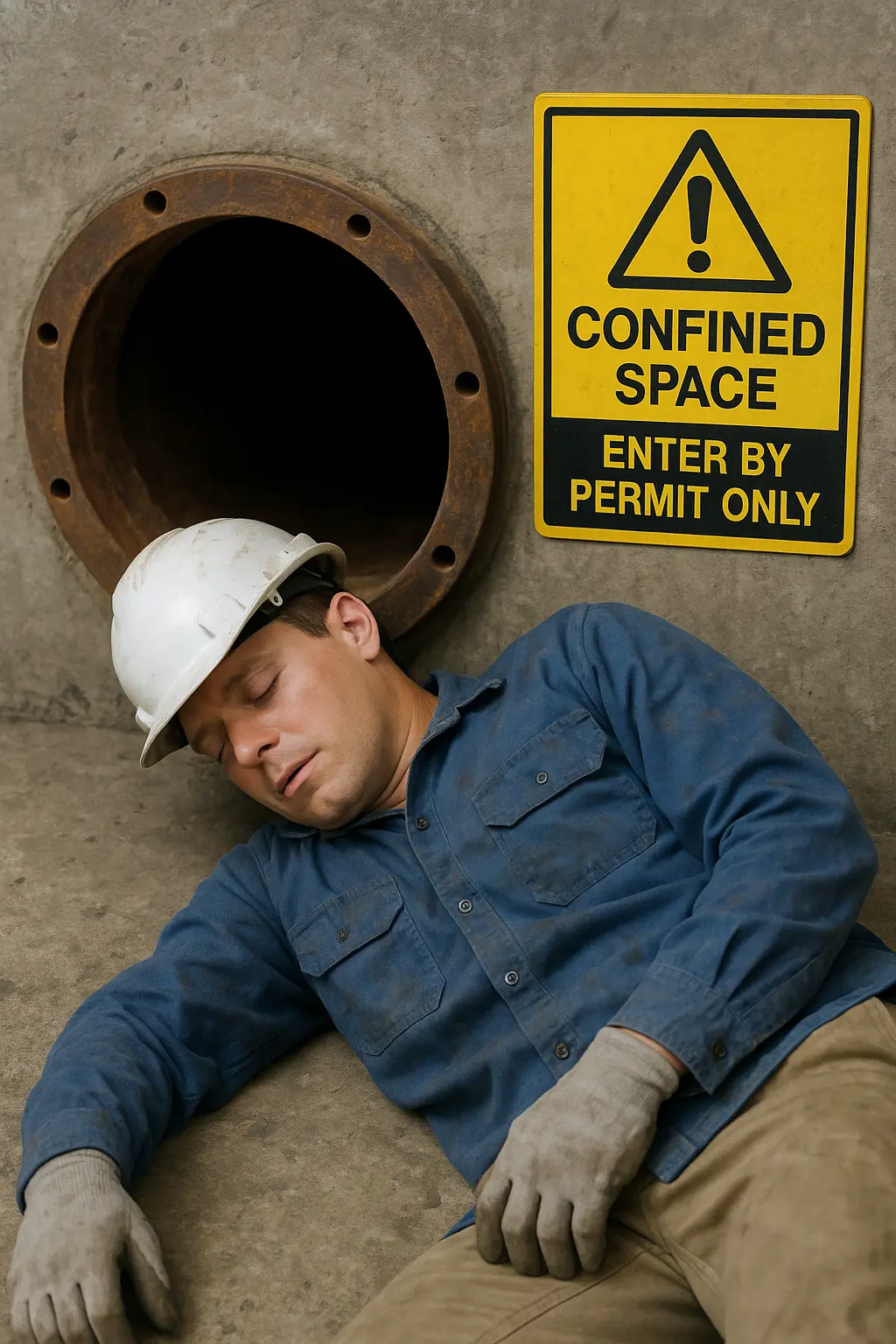
When a worker becomes incapacitated, coworkers may instinctively enter the space to help. This can create additional casualties, particularly when the original emergency involves an atmospheric hazard. OSHA requires employers to establish procedures for preventing unauthorized personnel from attempting rescues.
Failing to Establish Clear Rescue Triggers
Delays can occur when personnel are uncertain about when to initiate a rescue response. The entry procedures should clearly identify conditions that require entrants to evacuate and circumstances in which the attendant must summon rescue or emergency services.
Not Accounting for Changes in Entry Conditions
A rescue procedure can become unsuitable when the work, equipment, hazards, access conditions, or configuration of a permit space changes. Employers should review their permit-space program when deficiencies or changing conditions indicate that existing measures may no longer adequately protect workers.
Treating a Written Procedure as Proof of Readiness
A documented procedure does not demonstrate that personnel can execute it under emergency conditions. Employers should use training, evaluation, and appropriate practice to identify weaknesses before an actual rescue is required.
Effective rescue planning is ultimately about eliminating uncertainty before an emergency occurs. Personnel should know when to initiate the response, whom to contact, and what actions are permitted without creating additional hazards.
Conclusion:
A confined space rescue plan is only valuable when it can be executed effectively under the conditions workers may actually face. OSHA's requirements extend beyond having a written procedure. Employers must establish appropriate rescue arrangements, evaluate the capabilities of designated rescue services, and ensure that rescue personnel can perform their assigned duties safely.
For safety managers, the critical question is not simply, “Do we have a rescue plan?” It is “Can our designated rescuers or selected rescue service respond effectively to the hazards and conditions of the spaces we enter?” Answering that requires more than documentation. It requires capable personnel, appropriate equipment, realistic practice, and ongoing evaluation.
The goal is to identify weaknesses before an emergency exposes them. By treating confined-space rescue as an operational capability rather than a checkbox on a safety program, employers can reduce response delays, protect rescuers, and reduce the likelihood of additional casualties when an incident occurs.
Frequently Asked Questions
Under OSHA 29 CFR 1910.146(k), employers must establish procedures to rescue entrants from permit-required confined spaces and summon emergency services. Employers must evaluate the selected rescue service's ability to respond within an appropriate timeframe, perform the required rescue, and use the necessary equipment. Rescue personnel must also be properly trained and proficient in their assigned duties.
OSHA requires employers to provide appropriate rescue and emergency services for permit-required confined spaces, but it does not require every employer to maintain its own in-house rescue team. Employers may designate their own employees or arrange for an outside rescue service, such as a qualified emergency-response organization. The selected service must meet OSHA's applicable capability, training, and equipment requirements.
Yes, an employer may arrange for a local fire department or another outside service to provide confined-space rescue. However, simply posting 911's number or assuming emergency responders will perform the rescue does not satisfy OSHA's requirements. The employer must evaluate the rescue service's response time, capabilities, equipment, and proficiency for the specific permit spaces involved and coordinate with the service beforehand.
When an employer's own employees provide permit-space rescue, OSHA requires them to be trained to perform their assigned rescue duties and to establish proficiency as authorized entrants. They must also receive basic first-aid and CPR training, with at least one member of the rescue team or service available for rescue holding current first-aid and CPR certification. Rescuers must also be proficient in using the PPE required for their rescue duties.
OSHA does not prescribe a universal equipment list because rescue equipment must match the hazards and configuration of the permit space. Depending on the circumstances, equipment may include retrieval systems, harnesses, respiratory protection, communication equipment, lighting, and other appropriate PPE or rescue equipment. Employers must ensure designated rescuers have the equipment necessary to perform their duties safely and are proficient in its use.