 EN
EN ES
ES





























































































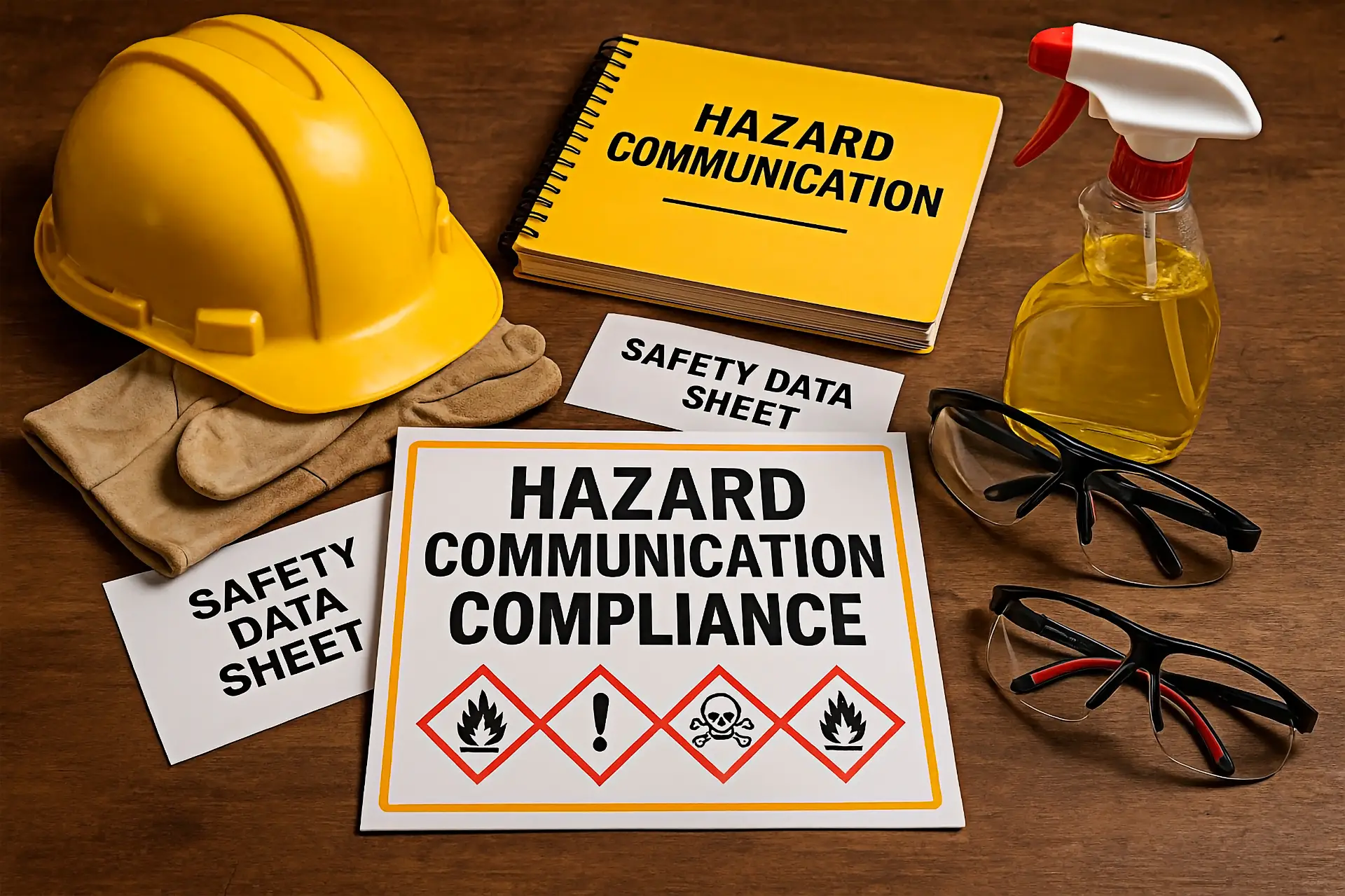
Cal/OSHA Hazard Communication (HazCom) with GHS Training
- In accordance with standards in Title 8, California Code of Regulations, Section 5194
- Supplemented by regulations in the 2024 federal OSHA standard 29 CFR 1910.1200, Hazard Communication
- Designed specifically for construction workers, including those on large-scale, public, or federally funded
- Available in:
 English |
  Español
 - Learn at your own pace and on your own schedule
- Receive your certificate instantly upon completion
- Select from SCORM-compliant, online streaming, virtual instructor-led, or in-person learning formats
0.2
Bulk Buying
| Employee | Per Seat |
|---|---|
| 2-10 | $59.39 |
| 11-20 | $58.79 |
| 21-50 | $58.19 |
| 51-100 | $56.99 |
| 101-250 | $55.79 |
| 251-500 | $55.19 |
| 501-1000 | $53.99 |
Course Facts


Training Duration

Learning Type

Course Access Validity

Device Support


Certificate Validity
Cal/OSHA Hazard Communication (HazCom) with GHS Training Course Syllabus
Cal/OSHA Hazard Communication (HazCom) with GHS Training consists of 04 lessons. Students are required to take each lesson in sequential order as listed below.
Introduction
Lesson 1: Cal/OSHA HazCom Aligned with the GHS
- Overview
- Cal/OSHA Hazard Communication Standard (T8 CCR §5194 Overview, California State Plan, California-Specific Requirements)
- The Globally Harmonized System of Classification and Labeling of Chemicals
- Why was the GHS Developed?
- GHS – A Framework for Hazard Classification and Communication
- HCS Aligned with the GHS
- Major Changes Introduced by the 2012 GHS Alignment (Federal OSHA HCS 2024 Updates, Federal OSHA HCS 2024 Compliance Dates)
- Why HCS 2024 Matters to California Workers
- Responsibilities of Chemical Manufacturers, Importers, and Distributors
- Responsibilities of Employers
- Organization of the Hazard Communication Standard (Subsections of T8 CCR §5194)
- Appendices to Section 5194
Lesson 2: Hazard Classification
- What is a Chemical? (Substance, Mixture, Chemicals Not Covered by T8 CCR §5194)
- Chemical Exposure (Routes of Exposure, Local and Systemic Toxicity)
- Hazard Classification (Downstream Use Under Federal OSHA HCS 2024, California Hazard Classification)
- Hazardous Chemical
- Classification of Mixtures
- Physical Hazards (Federal OSHA HCS 2024 Changes to Physical Hazard Classes: Flammable Gases, Aerosols, Desensitized Explosives)
- Health Hazards
- OSHA- and Cal/OSHA-Defined Hazards (Simple Asphyxiant, Combustible Dust, Pyrophoric Gas, Hazards Not Otherwise Classified)
- Hazard Communication Program (Multi-Employer Worksites, An Effective Hazard Communication Program)
- Information and Training Program (Elements of the Training Program, Employee Rights)
Lesson 3: Hazardous Chemical Labels
- What is a Label?
- Why Label Containers of Hazardous Chemicals?
- Labels on Shipped Containers
- Label Elements
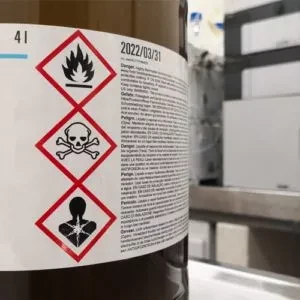
- Pictograms Used Under the HCS (HCS – The Pictograms)
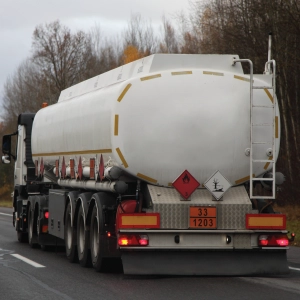
- HCS Pictograms and DOT Labels (DOT Pictograms)
- Label Elements for OSHA- and Cal/OSHA-Defined Hazards (Before and After Example: Flammable Gas and Small Container Labels)
- Labeling Containers in the Workplace
- Labeling Solid Materials
- Few Important Labeling Considerations (Containers Released for Shipment, Small and Very Small Containers)
- HCS Requirements and Other Labeling Systems (NFPA and HCS Labels)
Lesson 4: Safety Data Sheets
- Safety Data Sheets (California Plain-Language Health Risk Description)
- SDS – Sections 1 to 8
- SDS – Sections 9 to 11 and 16
- SDS – Sections 12 to 15
- Safety Data Sheet Sections
- Before and After Example: SDS Content Under Federal OSHA HCS 2024
- SDS Availability and Accessibility (California Missing SDS Procedure)
- A Few Important Considerations
Final Examination
Frequently Asked Questions
This course meets and exceeds the compliance requirements outlined in Title 8, California Code of Regulations, Section 5194, and is supplemented by regulations in the 2024 federal OSHA standard 29 CFR 1910.1200, Hazard Communication.
- Helps California employers meet the employee information and training requirements of Title 8 CCR Section 5194(h).
- Teaches workers to read chemical labels, pictograms, signal words, and SDSs, so they know a product's hazards before they use it.
- Helps prevent chemical burns, poisonings, fires, and long-term health effects by explaining how chemical hazards are classified and communicated.
- Informs employees of their rights to hazard information, including protection from retaliation for using those rights.
- Prepares workers to recognize labels and SDSs updated under federal OSHA's 2024 HazCom update.
- Built on Title 8 CCR Section 5194, not just the federal standard, so it covers California-only requirements such as the Director's List of Hazardous Substances, the health risk description on SDSs, and the 30-day rule for sharing revised SDS information.
- Explains federal OSHA's 2024 HazCom update and its current status in California, so workers can read updated labels and SDSs from suppliers who sell nationally.
- Uses before-and-after label and SDS examples to show exactly what has changed, including flammable gas Categories 1A and 1B, small-container labels, and trade secret concentration ranges.
- Teaches workers not to confuse HCS hazard categories with NFPA and HMIS ratings, which number hazards in opposite directions.
- Shows employers and workers what to do when an SDS is missing, including California's 7-working-day written inquiry procedure and the use of Cal/OSHA exposure limits instead of federal limits.
This training is for any California employee who works with or near hazardous chemicals, under normal conditions of use or in a reasonably foreseeable emergency. This includes:
- Workers in manufacturing, construction, healthcare, laboratories, agriculture, warehousing and distribution, auto repair, janitorial and maintenance services, and utilities
- Supervisors and managers who direct work involving hazardous chemicals
- Safety coordinators and HazCom program administrators responsible for the written program, chemical inventory, and SDS management
- Employees of chemical manufacturers, importers, and distributors who classify chemicals or prepare and ship labels and SDSs
- Contractors working at multi-employer worksites
- State, county, and city employees, since Section 5194 applies to public as well as private employers
In California, the employer must send a written inquiry to the manufacturer or importer within 7 working days. If there's no response within 25 working days, the employer must send a copy of the inquiry to the Director of Industrial Relations.
California's HazCom regulation includes Proposition 65 provisions. For chemicals covered by both, employers subject to Proposition 65 can meet its employee warning requirements by following Section 5194. Employers with fewer than 10 employees are not subject to Proposition 65.
Yes, as long as there are no barriers to immediate access for employees during every shift. Employers using electronic SDSs should have a backup, such as printed copies or a second device, in case of a power or network outage.
Yes, but not only in Spanish. Workplace labels must be in English, and employers may add Spanish or other languages alongside the English information.
Yes. Hazard communication is consistently among the most frequently cited OSHA standards, often for a missing written program, missing SDSs, unlabeled containers, or no employee training.
Not when the EPA regulates the waste under the Resource Conservation and Recovery Act (RCRA). Workers who handle hazardous waste are covered by other training requirements, such as the Cal/OSHA 40-Hour HAZWOPER Training.
There are no prerequisites for this course.
Employers can use the course for new employees at initial assignment and for additional training when new chemical hazards are introduced into the work area. Best practice is to conduct refresher training annually.
Certificate of Completion: Immediately after passing the final exam, you can download, save, or print your certificate in PDF format.
Validity: The course certificate is valid for one year.
Renewal: Simply take this course within 12 months to maintain compliance and stay current on Hazard Communication best practices.
Choose Your Ideal Training Format:



Scorm Package
$59.99/Seat


Virtual Instructor-Led
$299.00/Seat

In-Person Group
$750.00/Seat
Great refresher for anyone who works with or around hazardous chemicals!
I liked that the course focuses on Cal/OSHA while also explaining the latest federal OSHA HazCom updates. It helped me understand the differences and how they may affect workplaces handling chemicals across state lines.
It was helpful to see the Cal/OSHA requirements explained so clearly.
This course goes beyond the basics by explaining key updates while keeping the focus on California requirements!



The ROI of Online Safety Training
Discover the value of our efficient alternative to live training and calculate your return on investment.
ROI Calculator
Recommended Courses