English and
 Español. After purchase, use the language toggle in your course Player to switch between English and Spanish at any time.

 EN
EN ES
ES












































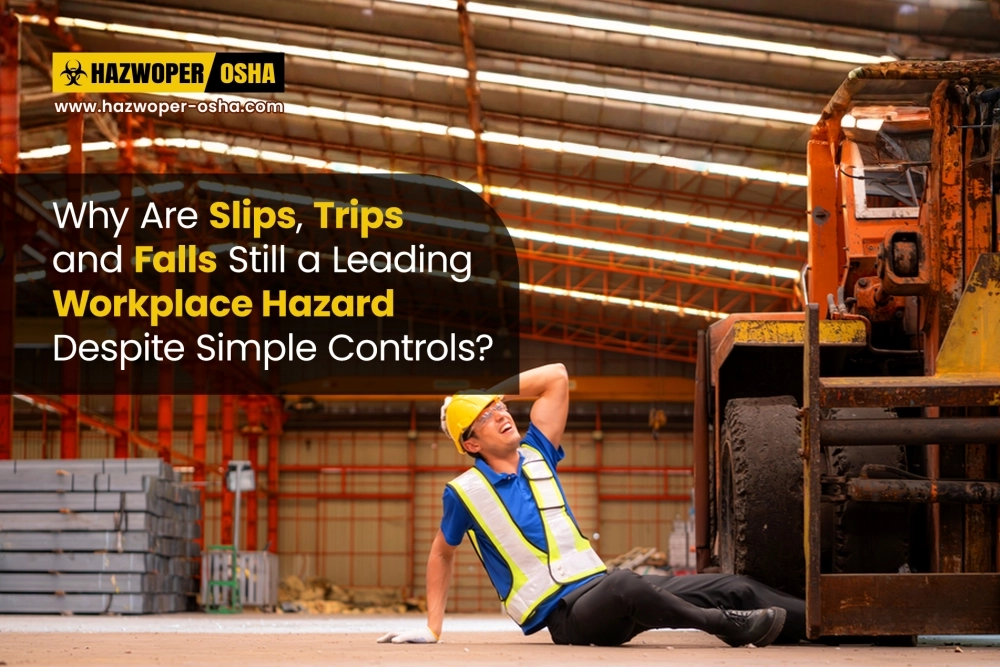
Why Are Slips, Trips, and Falls Still a Leading Workplace Hazard Despite Simple Controls?
Introduction:
Slips, trips, and falls are often labeled as “basic” workplace hazards. That assumption is exactly why they continue to cause serious injuries across industries. In many blogs and safety discussions, this issue keeps recurring: controls exist, guidance is available, yet incidents still happen. The problem is not a lack of solutions. It is how those solutions are understood, applied, and maintained in real work settings.
For employers, slips, trips, and falls rarely stem from a single obvious failure. They develop through everyday conditions, busy walkways, changing floor surfaces, temporary obstructions, and routine tasks performed under time pressure. These factors interact continuously, making fall risks dynamic rather than static. When hazards change throughout the shift, simple controls lose their effectiveness if they are not actively managed.
Another common gap in existing content is the assumption that awareness equals prevention. Knowing that wet floors or uneven surfaces are dangerous does not automatically change behavior or workplace conditions. Without consistent follow-through, even well-intentioned controls become background noise. Over time, familiarity replaces caution, and minor hazards are accepted as normal.
This blog examines why slips, trips, and falls persist despite straightforward prevention methods. It focuses on the practical challenges employers face, from workplace design and human behavior to training limitations. More importantly, it clarifies where common approaches fall short and what needs to change controls to work as intended day after day, not just on paper.
Why Slips, Trips, and Falls are a Persistent Issue at Workplace?
Slips, trips, and falls continue to be a leading cause of workplace injuries because they are embedded in daily operations and often underestimated. Understanding why these incidents keep occurring despite basic safety measures is crucial for effective risk management.
1. Constantly Changing Workplace Hazards
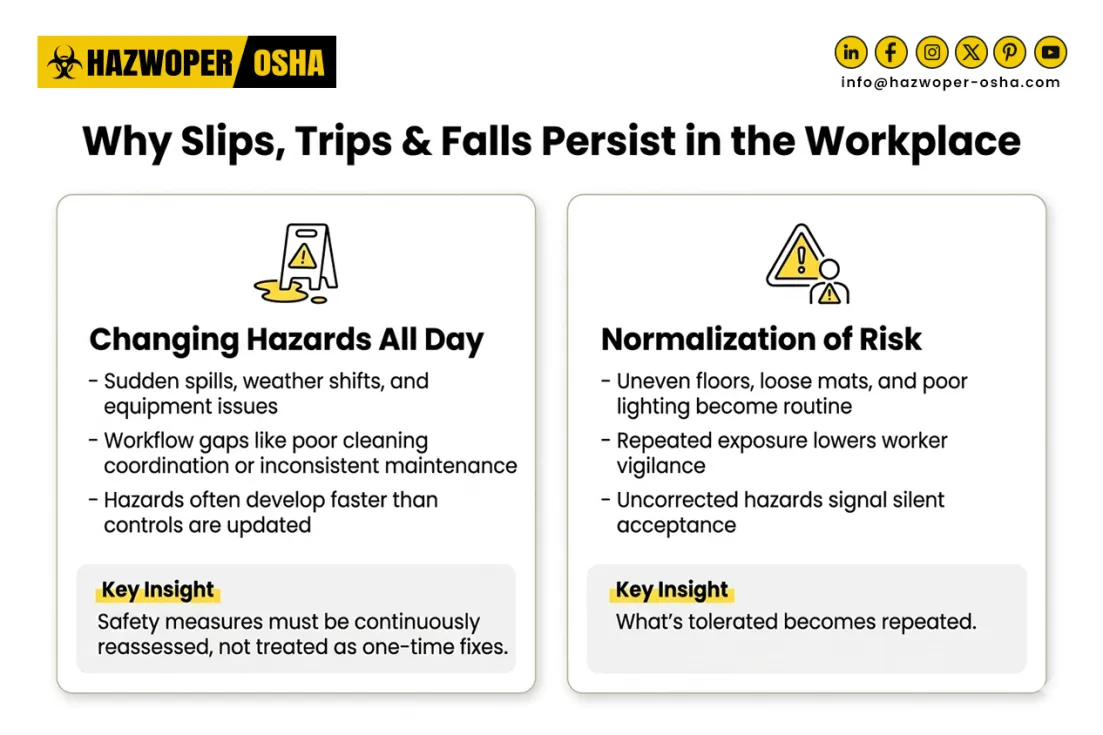
Workplace hazards are not static; they continuously evolve throughout the workday as tasks progress and environments change. True dynamic hazards arise from changing conditions such as sudden spills, shifting weather affecting outdoor surfaces, or equipment malfunctions that can appear unpredictably and require immediate attention.
At the same time, some hazards arise from gaps or flaws in workflows and processes. For example, if cleaning schedules are not coordinated with production activities or if maintenance routines are inconsistent, these workflow gaps can cause hazards, such as wet floors or cluttered pathways, to appear unexpectedly.
Effectively managing slips, trips, and falls means addressing both these aspects: promptly responding to genuinely dynamic hazards as they arise and regularly reanalyzing workflows to identify and close gaps that contribute to hazard development. Safety controls must be continuously reassessed, updated, and enforced rather than treated as one-time fixes.
2. Normalization of Hazards
When employees and supervisors are repeatedly exposed to uneven flooring, loose mats, or poor lighting, these conditions can gradually be accepted as “normal.” Over time, this reduces vigilance and delays hazard reporting or correction. Management tolerance plays a critical role in this normalization. When known issues are not addressed, prioritized, or corrected, it signals that the hazard is acceptable. For example, a small crack in the floor may go unreported or unfixed because it has “always been there” and leadership has allowed it to persist, increasing the likelihood of trips and falls over time.
3. Human Behavior and Workplace Pressure
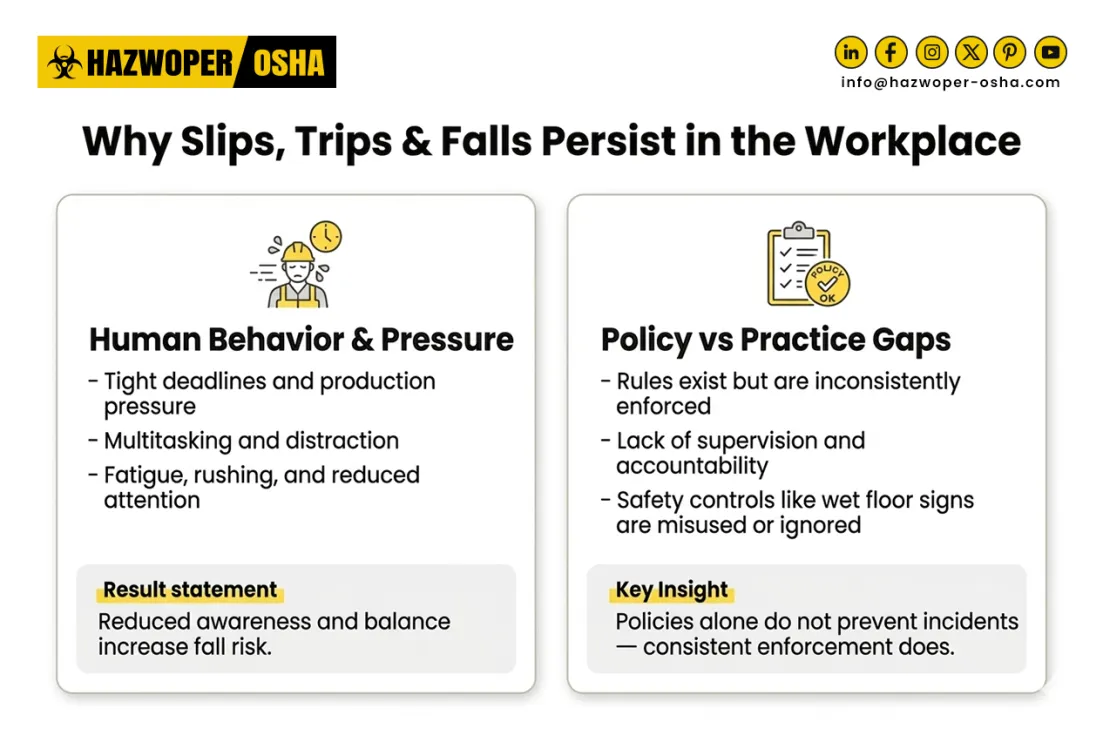
Workers often juggle tight deadlines, multitask, or experience fatigue, which can lead to rushing, distraction, or reduced balance. These behaviors directly increase the likelihood of falls and are hard to control with signs or one-time training. Employers can address this by managing workloads, scheduling breaks, and consistently reinforcing safety habits.
4. Gaps Between Safety Policies and Daily Practice
Many workplaces have policies for floor maintenance or hazard marking, but these rules often aren’t monitored or enforced. Without regular supervision and accountability, controls fail to prevent risks. For example, a wet floor sign might be placed but left unattended for hours, leading to avoidable incidents.
For employers, the challenge is to recognize these realities and build prevention strategies that reflect the complexity of daily work life. This means moving beyond static rules to dynamic management, regular hazard assessments, employee engagement, and adaptable controls that evolve with workplace conditions. Only then can the persistent problem of slips, trips, and falls be meaningfully reduced.
Overlooked Workplace Design and Layout Issues
Workplace design shapes the environment where slip, trip, and fall hazards arise. Employers often miss key layout problems that quietly increase risk, even with basic safety measures in place. Recognizing these hidden flaws is essential for effective hazard control.
Floor Transitions, Elevation Changes, and Blind Spots
Sudden changes in floor levels, such as steps, ramps, or uneven surfaces, are frequent causes of trips. When these transitions lack visible warnings like contrasting color strips or gradual slopes, workers are more likely to stumble. Blind spots, areas where workers cannot see upcoming obstacles or floor changes, often occur near corners, equipment, or shelving. Regular inspections should target these spots, using clear visual markings or redesigning layouts to improve sightlines and reduce hazards.
Inadequate Lighting
Dim, flickering, or uneven lighting can make spills, debris, or surface irregularities hard to detect. Areas with heavy foot traffic or task-critical work require consistent, well-distributed lighting free from glare or shadows. Installing brighter bulbs, motion-activated lighting, or additional fixtures in problem zones can significantly boost hazard visibility and worker safety.
Congested Walkways
Walkways cluttered with tools, materials, pallets, or cables force workers to navigate around obstacles, increasing trip risks. Common culprits include temporary storage of equipment, misplaced tools, or poorly planned material staging. Employers should implement clear storage protocols, designate specific areas for equipment, and conduct frequent walk-throughs to ensure pathways remain clear and accessible.
By focusing on these overlooked design and layout problems, employers can remove hidden hazards and strengthen their slip, trip, and fall prevention efforts.
What Human Factors Increase Slip, Trip, and Fall Risk?
Human behavior strongly influences slip, trip, and fall incidents in the workplace. Employers must understand these factors to create effective prevention strategies.
Rushing, Fatigue, and Task Pressure
Workers often face tight deadlines and heavy workloads, which encourage rushing. Moving quickly reduces attention to hazards and increases mistakes. Fatigue worsens this by impairing focus and balance. For example, a tired employee may miss a wet floor sign or uneven surface. Employers should manage workloads, schedule breaks, and encourage steady pacing to reduce these risks.
Inconsistent Use of Footwear and Personal Precautions
Proper footwear offers necessary grip and support on different surfaces. However, some workers wear inappropriate shoes or skip safety gear when tasks change or during informal activities. Similarly, neglecting precautions like holding handrails or avoiding phone use while walking raises fall risks. Employers can address this by setting clear footwear policies, providing suitable shoes if possible, and reinforcing personal safety habits through regular reminders and supervision.
Complacency Among Experienced Workers
While experience is often viewed as a safety asset, it can also become a hidden risk. Over time, familiarity with tasks and environments may lead experienced workers to develop overconfidence, causing them to underestimate hazards or bypass safety steps they perceive as unnecessary. Routine risks begin to feel less threatening, reducing overall hazard awareness. For example, an experienced employee may ignore a small crack in the floor because it “has always been there,” increasing the likelihood of injury despite years of incident-free work.
Understanding these human factors helps employers tailor controls and training real workplace behavior, making slip, trip, and fall prevention more effective and practical.
Why Training and Awareness Often Fail to Change Behavior?
Training sessions are important, but one-time events rarely lead to lasting changes in how employees act. Without ongoing reinforcement such as regular reminders, toolbox talks, or refresher courses workers tend to forget safety information or stop following best practices. Additionally, generic safety messages that don’t reflect the specific tasks and hazards employees face often feel irrelevant, causing workers to disengage and overlook important precautions.
Another major factor is the lack of accountability for unsafe walking behaviors. When unsafe actions go unaddressed, employees assume they are acceptable and continue them. Without clear expectations, supervision, and consequences, consistent safe practices become difficult to maintain. Employers must tailor training to real job conditions and enforce accountability to create meaningful behavior change and reduce slip, trip, and fall incidents.
What Employers Can Do Differently to Reduce Fall Incidents
Reducing slips, trips, and falls requires targeted actions that fit the realities of the workplace. Employers must shift from reactive measures to proactive, integrated strategies focused on identifying risks, embedding prevention in daily operations, and delivering relevant training.
1. Identifying & Managing High-Risk Walking Paths
Regular, scheduled inspections of walking routes are essential to identify and address hazards before incidents occur. Employers should implement daily or weekly walk-throughs, focusing on high-traffic areas such as loading docks, production floors, and common walkways. Using detailed checklists during these inspections helps ensure consistent hazard detection.
Involving frontline workers in this process is equally important, as they can offer valuable insights about spots where spills, clutter, or other risks frequently occur. Supervisors play a critical role by making fall prevention part of daily supervision and planning assigning clear responsibility for keeping walkways clear to janitorial teams, floor managers, or designated safety champions.
To maintain a hazard-free environment, supervisors should verify these areas during shift changes and include fall risk checks in daily briefings or pre-shift meetings. Additionally, planning maintenance and cleaning schedules around peak work hours can minimize workers’ exposure to wet floors or uneven surfaces during busy times.
2. Eliminate and Substitute Fall Hazards
Prioritize removing fall hazards at their source to prevent incidents before they happen. This means permanently fixing uneven floors, eliminating unnecessary walking routes through dangerous areas, and redesigning workflows to minimize foot traffic in high-risk zones. When complete removal isn’t possible, reduce risks by replacing slippery surfaces with safer materials or adjusting cleaning methods to avoid wet floors during busy times.
3. Modify the Work Environment to Reduce Risk
Create a safer workplace by implementing physical changes to reduce fall hazards. This includes installing slip-resistant flooring, improving drainage to prevent puddles, securing loose mats, adding guardrails or handrails where needed, and enhancing lighting in critical areas. Clearly mark pedestrian pathways to keep foot traffic separate from vehicles or machinery, further minimizing hazards.
4. Use Protective Equipment to Support Safety Efforts
When hazards can’t be fully eliminated, use appropriate protective equipment to add a layer of safety. Ensure workers wear slip-resistant footwear suited to the environment, and regularly check and replace this gear to maintain its effectiveness.
5. Practical, Task-Specific Training
Training must go beyond theory to address the actual conditions workers face. Hands-on sessions, scenario-based drills, and on-the-job coaching show employees how to navigate specific hazards like carrying tools on stairs or moving through cluttered spaces safely. Frequent refreshers and immediate feedback reinforce these habits. For instance, training could simulate walking on slippery surfaces while carrying materials, helping workers develop safer movement patterns.
By adopting these focused strategies, structured observations, daily managerial involvement, and practical training employers can build a workplace culture that actively prevents slips, trips, and falls, rather than reacting after incidents occur.
Conclusion:
Slips, trips, and falls remain a top workplace hazard because prevention often overlooks the changing conditions and human factors that influence risk throughout the day. Employers must move beyond static controls to actively manage hazards as they evolve.
Effective prevention requires regular inspections with frontline input, integrating fall risk management into daily supervision, and providing practical, task-focused training. Holding employees accountable and addressing hazards promptly are also key.
Specialized training like OSHA Competent Person for Fall Protection Training and OSHA Fall Protection Safety Training equips teams to identify and control fall hazards confidently.
By adopting these proactive strategies, employers can build a safety culture that prevents slips, trips, and falls every day not just on paper.
Frequently Asked Questions
A slip happens when your feet lose grip on a surface, a trip occurs when your foot strikes an object and you lose balance and a fall is when you lose balance and hit the ground or another surface. Knowing the difference helps target the right prevention steps.
Hazards such as wet floors, loose cables, cluttered walkways, or uneven flooring should be reported immediately, as they are frequent causes of workplace slip, trip, and fall incidents.
Yes, employers are generally required to assess risks and take reasonable steps to eliminate or minimize slip, trip, and fall hazards, including training workers and maintaining safe walkways. For example, OSHA’s 29 CFR 1910.22 requires employers in the U.S. to keep walking surfaces safe and promptly fix hazards. Similar regulations, like the UK’s Health and Safety at Work Act 1974, also mandate risk assessments and hazard control to prevent slips, trips, and falls.
Workers can help by reporting hazards, wearing appropriate footwear, avoiding distractions while walking, and following housekeeping and safety practices.