English and
 Español. After purchase, use the language toggle in your course Player to switch between English and Spanish at any time.
 EN
EN ES
ES





















































What’s the Difference Between Flammable and Combustible Materials
Introduction:
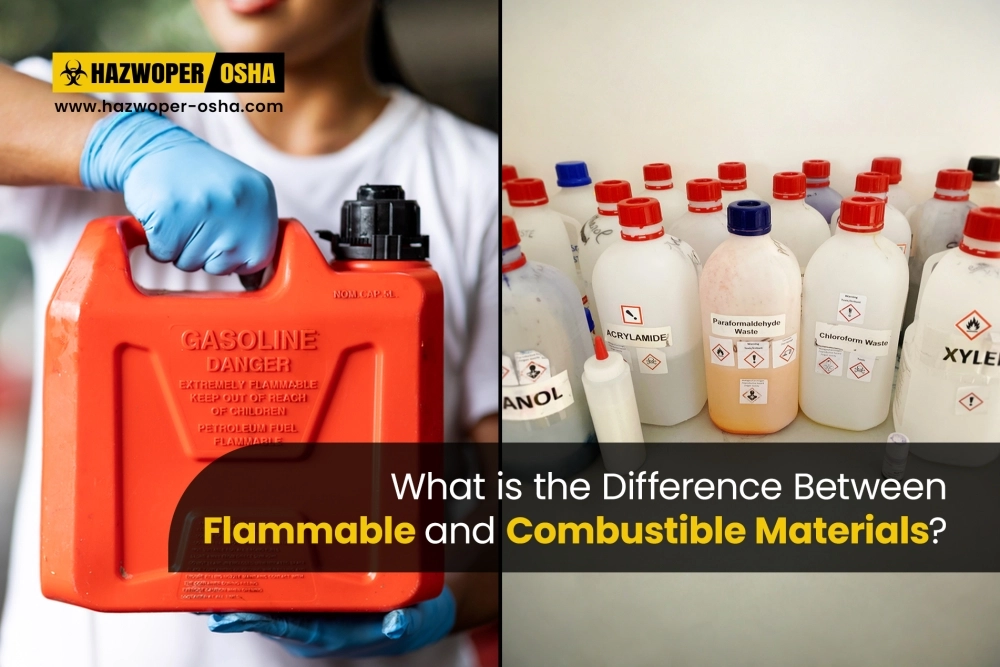
When a fire incident happens at work, it rarely comes down to chance. In most cases, it traces back to how materials were identified, stored, and handled. One of the most common gaps in fire risk awareness is the misunderstanding between flammable and combustible materials. These terms are often used interchangeably, but they describe very different behaviors around heat and ignition.
Flammable materials can ignite quickly because they release vapors at lower temperatures. Combustible materials require more heat to ignite, but once ignited, they can still fuel serious incidents. For employers, this distinction affects everyday decisions where materials are kept, how close they are to heat sources, and how prepared employees are to recognize early warning signs.
Misjudging these risks can lead to poor storage practices, unsafe handling, and delayed responses during emergencies. Understanding how these materials behave enables employers to correctly prioritize hazards and manage fire risks more effectively across their operations.
This blog breaks down the difference between flammable and combustible materials in clear, practical terms. It focuses on how each behaves, where the risks differ, and what employers need to consider for maintaining safer work environments.
What Are Flammable and Combustible Materials?
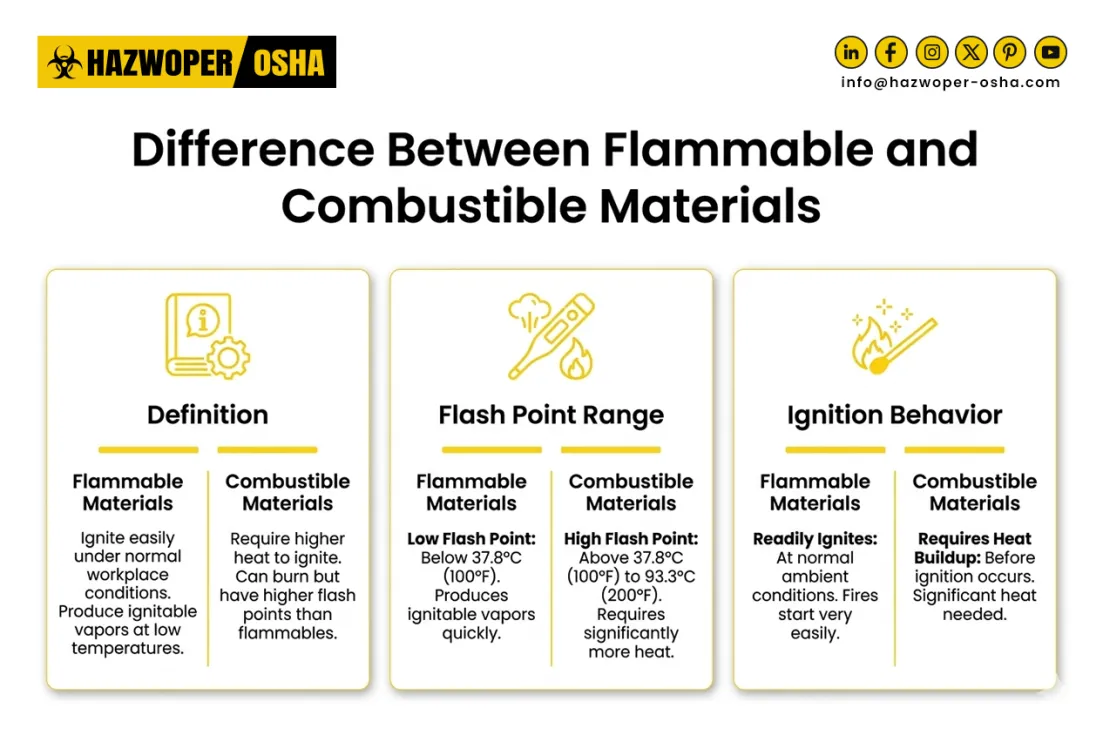
Flammable and combustible both describe how materials react to heat and ignition sources. The difference lies in how easily they produce enough vapor to catch fire, which determines how you manage them on site.
What Does “Flammable” Mean?
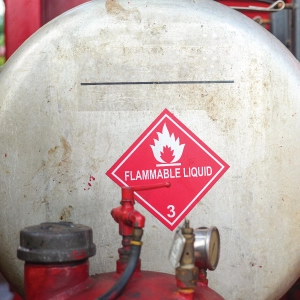
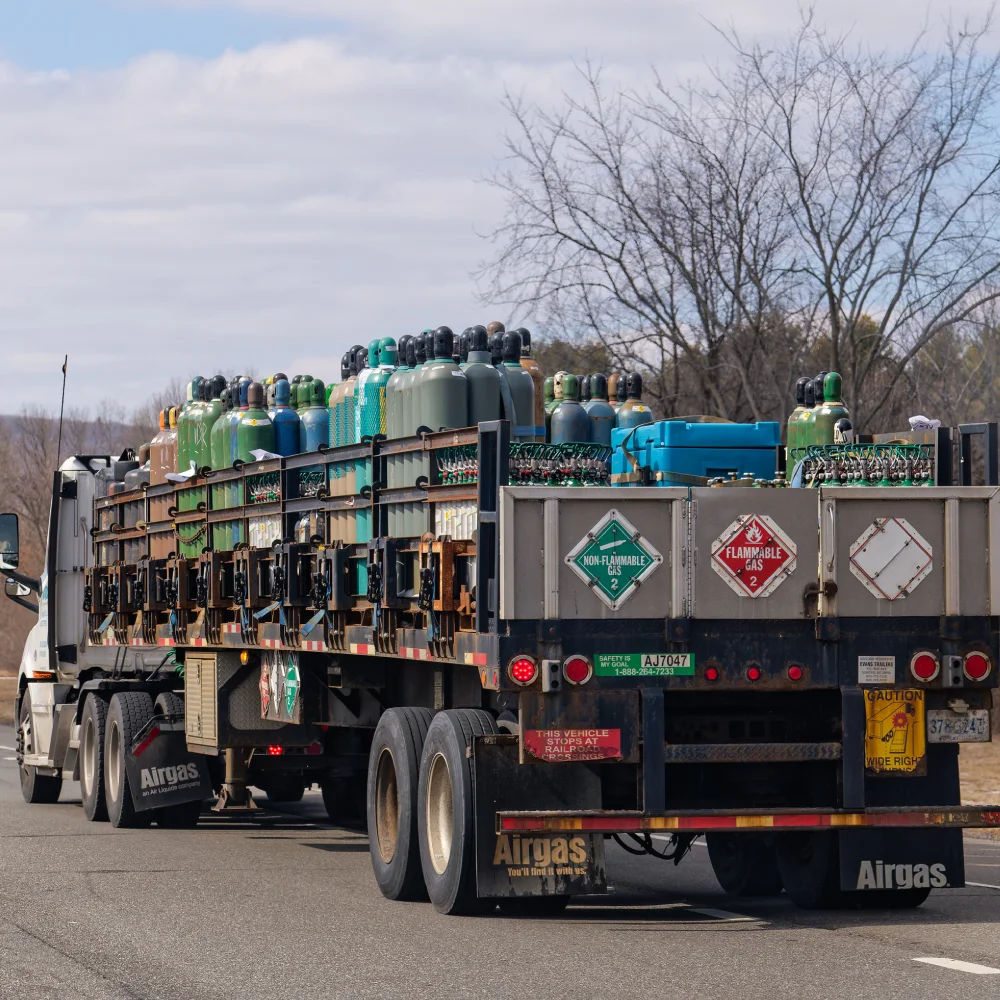
A flammable material is any substance, liquid, solid, or gas that can ignite easily under normal workplace conditions.
- Flammable liquids ignite because they release combustible vapors at low temperatures. Their flash point determines this, the lowest temperature at which enough vapor is produced to ignite. For flammable liquids, the flash point is below 37.8 °C (100 °F).
- Flammable gases ignite readily when mixed with air and exposed to an ignition source, even at room temperature. Common examples include propane and hydrogen.
- Flammable solids can ignite through friction, heat, or contact with air or moisture. Some burn rapidly once ignited, such as sulfur or certain metal powders.
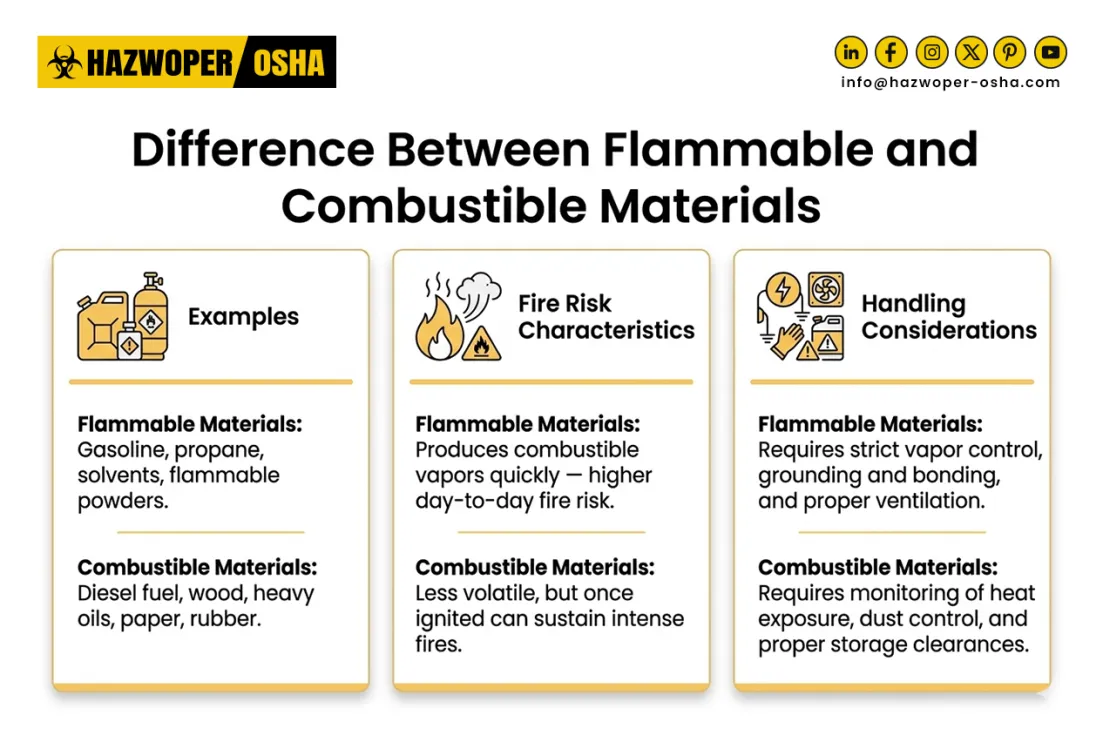
Because these materials can ignite easily, they present a higher fire risk and require proper storage, handling, and training. Every day, flammable materials include gasoline, solvents, propane, and combustible powders.
What Does “Combustible” Mean?
A combustible material is any substance liquid, solid, or gas that can burn but requires more heat to ignite than a flammable material.
- Combustible liquids produce enough vapor to ignite only at higher temperatures. Their flash point is generally above 37.8 °C (100 °F) and up to 93.3 °C (200 °F).
- Combustible solids burn when exposed to sufficient heat or ignition sources. Materials like wood, paper, rubber, and some plastics can sustain combustion once ignited.
- Combustible gases are less easily ignited than flammable gases but can still burn when mixed with air and exposed to adequate heat or an ignition source.
Although combustible materials are less volatile under normal conditions, they still pose serious fire hazards, especially during prolonged exposure to heat or poor storage practices. Common examples include diesel fuel, wood products, heavy oils, and certain industrial gases.
Both flammable and combustible materials can burn, leading many people to use the terms interchangeably. Clear understanding reduces risk and supports better planning for storage, handling, and employee training.
Why Understanding the Difference Between Flammable and Combustible Materials Matters for Workplace Safety?
Knowing the difference helps employers manage fire risks more effectively. This matters in everyday decisions about storage, handling, and hazard awareness. Flammable substances can form vapor‑air mixtures that ignite even under normal work conditions, making them a higher day‑to‑day fire risk. Combustible materials are less volatile but can still fuel fires if exposed to prolonged heat or open flames.
Understanding these differences enables you to prioritize training, control ignition sources, and plan storage layouts that match the real hazard level of materials on site. It also helps employees recognize risks during routine tasks and respond appropriately if ignition occurs. Clear knowledge of these behaviors reduces fire incidents, protects people and property, and supports a safer workplace overall.
Key Differences Between Flammable and Combustible Materials
In workplace safety, both flammable and combustible materials can ignite and burn, but under very different conditions. Understanding these differences helps you assess risk, plan storage, and prioritize hazard controls effectively.
Ignition Temperature Differences
The main technical distinction between flammable and combustible materials is the ignition temperature at which they produce enough vapor to ignite.
The danger of flammable and combustible materials isn’t just their ignition temperature; it’s how they behave when conditions change.
- Flammable materials become especially hazardous with small environmental shifts. A rise in ambient temperature, poor ventilation, confined spaces, or vapor accumulation can quickly create ignitable atmospheres. Weather conditions, such as heat waves or exposure to sunlight in enclosed storage, can significantly increase the risk, even without active ignition sources.
- Combustible materials are typically stable under normal conditions but become dangerous when subjected to prolonged or unexpected heat exposure. Equipment overheating, friction, hot work, seasonal temperature increases, or fires nearby can raise temperatures enough to trigger ignition. Dust accumulation from combustible solids can also create explosive conditions when disturbed.
Understanding how environmental factors, weather, ventilation, and operational changes affect these materials is critical when evaluating risks from machinery, furnaces, electrical equipment, or outdoor storage areas. Effective hazard control depends on anticipating these conditions, not just knowing flash point values.
Rate of Fire Spread
Once ignition occurs, the speed and intensity of fire growth depend on the material’s form, surface area, and heat release rate, not just whether it is classified as flammable or combustible.
- Flammable materials, especially liquids and gases, can cause fires to grow extremely fast because vapors ignite instantly and spread flame rapidly across surfaces and into the surrounding air. This can lead to near-immediate fire involvement of nearby materials and structures.
- Combustible materials can be just as dangerous or more so once they are burning.
- Combustible solids like cardboard, paper, wood, or dust can produce rapid flame spread and early flashover, particularly in warehouses or confined spaces.
- Combustible liquids, while harder to ignite, often release large amounts of heat once burning, sustaining intense fires that are difficult to control.
- Combustible mists or dust clouds can ignite instantly and behave explosively, leaving no time for reaction.
The key risk factor is heat release rate. Many combustible materials burn hotter and longer than flammables, increasing structural damage and complicating firefighting efforts.
For employers, the takeaway is clear: once ignition occurs, flammable and combustible fires demand the same response, immediate evacuation and emergency action. Risk management must focus on preventing ignition, controlling heat sources, and limiting fuel accumulation before a fire ever starts.
Vapor Production and Fire Risk
Fire risk isn’t just about the material; it’s about how vapors are generated, where they travel, and how easily they find an ignition source.
- Flammable substances produce vapors at low temperatures, and most of these vapors are heavier than air. Instead of rising and dispersing, they sink, spread along floors, and can travel long distances to hidden ignition sources such as pilot lights, electrical equipment, or hot surfaces in adjacent areas. This creates a serious flashback risk, where ignition occurs far from the original spill or container.
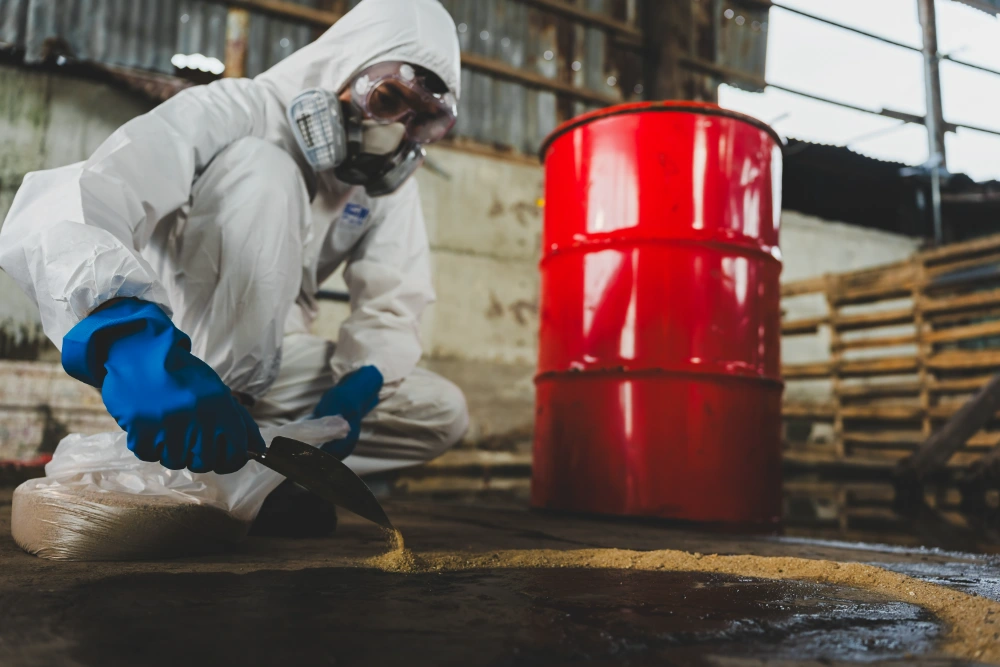
- Combustible substances typically require more heat to generate vapors, but this changes dramatically with increased surface area. When combustible liquids soak into rags, cardboard, insulation, or absorbent materials, the “wicking effect” accelerates vapor release. In some cases, such as oil-soaked rags, this can lead to ignition or even spontaneous combustion at normal room temperatures.
- Additionally, pressurized leaks (such as hydraulic fluid failures) can create fine mists that ignite instantly, even without external heating.
- Static electricity is a common ignition source during pouring, pumping, or transfer operations. Risk control requires more than “avoiding sparks.” Containers must be bonded and grounded so that static charge cannot accumulate during liquid movement.
- Ventilation controls must match vapor behavior. Because many flammable vapors settle low, standard ceiling ventilation or air conditioning may leave an explosive vapor layer at floor level. Effective controls include low-level exhaust ventilation, especially in pits, enclosed rooms, and confined spaces.
Managing vapor risk means anticipating vapor movement, accumulation, and ignition pathways, not assuming safety based on temperature alone. Controls must address grounding and bonding, spill absorption, pressurized systems, and ventilation design wherever flammable or combustible materials are present.
Hidden Flammable & Combustible Hazards You Might Overlook
Even experienced safety professionals can miss less obvious fire risks. These hidden hazards increase danger unexpectedly and require special attention:
The "Wick Effect" in Rags and Absorbents
High-flashpoint combustible liquids like linseed oil, varnishes, and some heavy oils seem safe in sealed cans. But when soaked into rags, cardboard, insulation, or other porous materials, their surface area expands dramatically. This allows oxygen to rapidly oxidize the material, generating heat internally. Without proper handling and disposal, these “wicked” materials can self-heat and spontaneously combust, no spark needed.
High-Pressure Mist Hazards
Bulk combustible liquids like hydraulic fluids or heavy oils don’t ignite easily as puddles. However, if a pressurized line or fitting ruptures, the fluid atomizes into a fine mist with vastly increased surface area. This mist behaves like a flammable gas cloud and can ignite instantly near hot equipment, sparks, or motors, causing rapid and intense fires.
The “Summer Effect” – Temperature Surprises
Many combustible liquids considered safe at standard room temperature (~70°F) can become dangerously volatile when warehouse temperatures rise during summer. Ambient heat can exceed the liquid’s flash point (often 100°F or higher), turning a “low-risk” combustible into a volatile, flammable vapor source often without anyone realizing the change in hazard level.
"Ghost" Vapors in “Empty” Containers
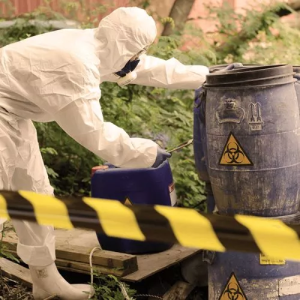
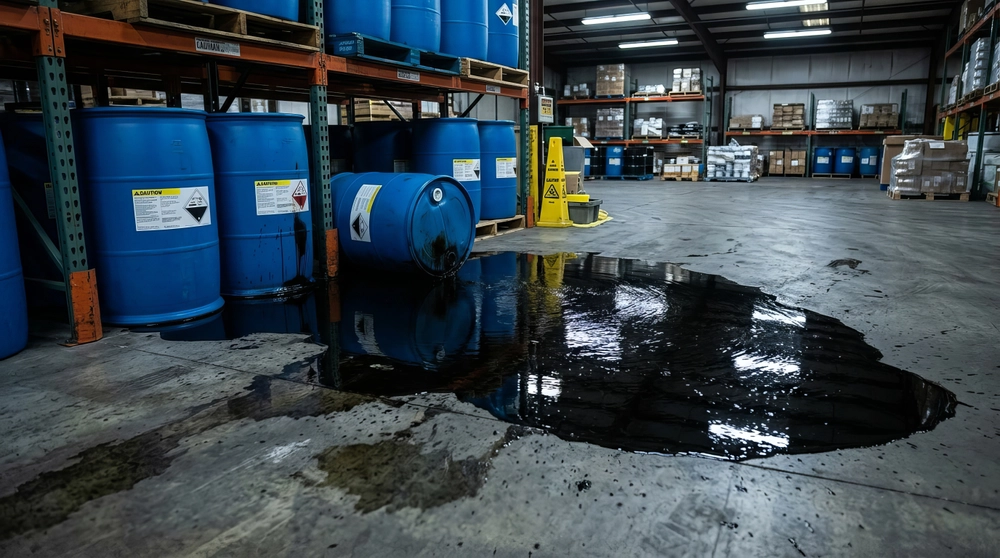
Drums or containers marked “empty” are often more hazardous than full ones. Residual liquid inside evaporates into the airspace, creating a highly explosive vapor-air mixture. Cutting, welding, or grinding on these drums is a common cause of workplace fires and fatalities. Treat empty containers with the same caution as full ones.
Unlabeled Secondary Containers
For convenience, workers sometimes transfer flammable solvents into unmarked plastic bottles or spray flasks. Without original hazard labels, these containers are mistaken for harmless liquids like water or cleaners. This leads to improper storage near heat sources, accidental ingestion, or misuse, exponentially increasing risk.
Beyond understanding flash points and ignition, you must identify and control these hidden hazards through training, proper storage, labeling, ventilation, and waste management. Awareness and vigilance save lives.
Flammable & Combustible Materials Storage & Handling
Workplace fires often stem from poor storage and handling of flammable and combustible materials. Proper controls are essential to prevent vapor buildup, ignition, and rapid fire spread.
Flammable Materials
- Ventilate at floor level: Flammable vapors are heavier than air and collect low. Ceiling fans aren’t enough use low-level exhaust to remove vapors.
- Use safety cabinets correctly: Cabinets provide fire protection, not vapor containment. Vent cabinets outdoors if vapor buildup is a concern.
- Ground and bond containers: Static sparks during liquid transfer are a major ignition source; always ground and bond drums and equipment.
- Separate from heat and incompatible chemicals: Keep flammables away from flames, hot surfaces, electrical panels, and oxidizers like bleach or peroxide.
- Maintain container integrity: Use self-closing lids; never leave drums open or damaged.
Combustible Materials
- Follow the 18-inch sprinkler clearance: Keep stacked combustibles 18 inches below sprinkler heads to ensure fire suppression works.
- Control dust and waste: Prevent combustible dust accumulation and dispose of waste properly to avoid sudden fire spread.
- Monitor heat exposure: Avoid prolonged heat sources; high warehouse temperatures can increase fire risk.
Common Mistakes to Avoid
- Ventilating only at the ceiling level
- Skipping grounding and bonding during transfers
- Using unvented cabinets as vapor traps
- Blocking sprinklers with stacked materials
- Storing flammables near oxidizers
Prioritize vapor control and grounding first, then stacking and chemical separation, followed by container care and housekeeping for best results.
Training Employees to Recognize Fire Hazards
Build specific competencies to prevent fires and ensure safety:
- HazCom & GHS: Train on SDS, labeling, and recognizing flammable/combustible materials.
- Bonding & Grounding: Teach proper procedures to prevent static sparks during transfers.
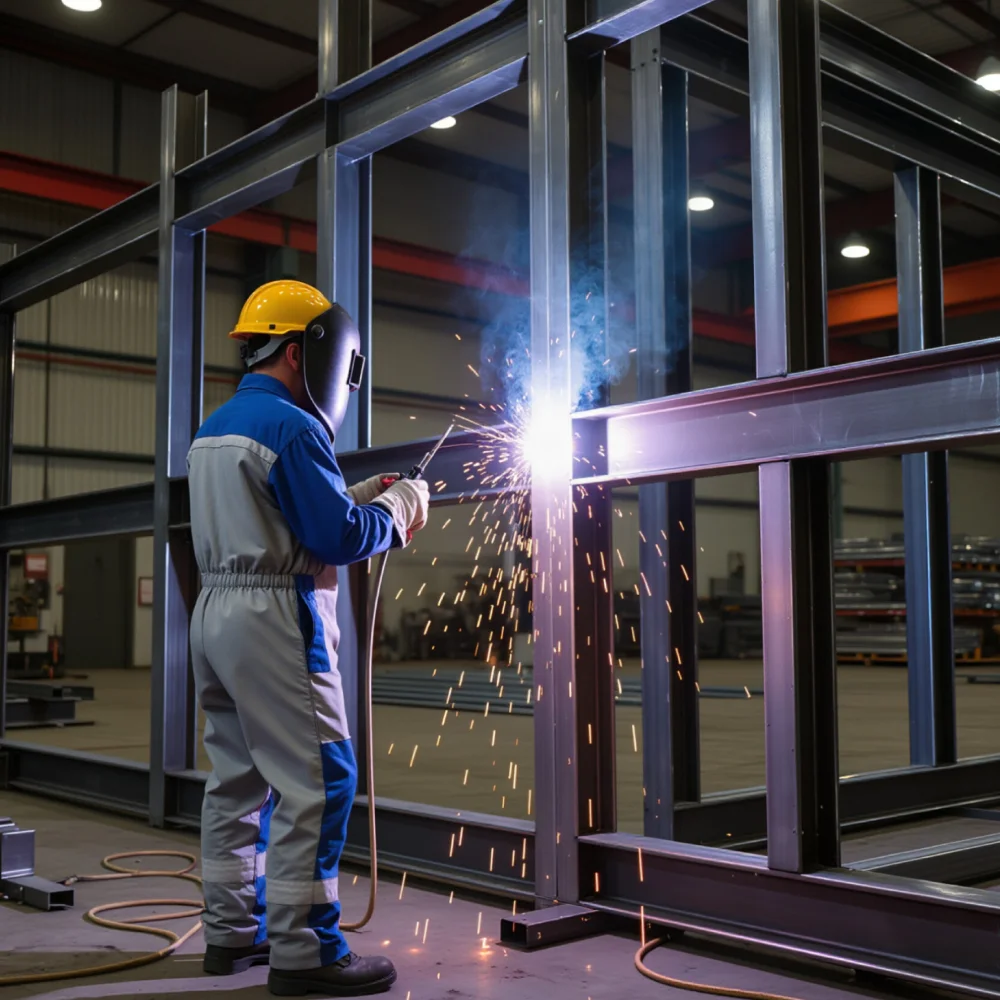
- Hot Work Awareness: Cover risks and permits for welding, cutting, and grinding near hazardous materials.
- Inspection Skills: Train to detect leaks, container damage, and vapor buildup.
- Safe Work Practices: Focus on controlling ignition sources during high-risk tasks.
- New Hire & Refresher Training: Provide full training at onboarding and regular updates.
- Toolbox Talks: Use brief, targeted talks before tasks involving flammables or combustibles.
Conclusion:
Effective fire safety starts with a clear understanding, especially around how flammable and combustible materials behave and how they interact with ignition sources in your facility. When teams recognize hazards early and make informed decisions about storage, handling, and work practices, the likelihood of fire incidents drops significantly, protecting both people and property.
Training that deepens this understanding is a practical way to reinforce safe behavior and improve risk management. The OSHA Flammable and Combustible Liquids Awareness Training course equips learners with the knowledge to identify vapor hazards, distinguish material classifications, and apply safe storage and handling techniques that reduce ignition risks and fire potential on site.
Complementary to hands-on fire hazard competencies, GHS & Hazard Communication (HazCom) Training is essential for workplace safety. This training ensures employees understand chemical hazards, interpret Safety Data Sheets (SDS), and correctly read labels for flammable and combustible materials.
Investing in this kind of practical training supports safer operations, reinforces hazard awareness, and helps teams respond confidently in the event of a fire, ultimately contributing to a safer, more resilient workplace.
Frequently Asked Questions
Under OSHA’s Hazard Communication Standard, flammable liquids are those with a flash point below 100 °F (37.8 °C), while combustible liquids have a flash point at or above 100 °F but below 200 °F (93.3 °C). Flash point is the lowest temperature at which a liquid gives off enough vapor to form an ignitable mixture with air.
Yes. Flammable gases (like propane or butane) have separate hazard classes under OSHA and the Globally Harmonized System (GHS). They can ignite when mixed with air at certain concentrations without requiring a liquid vaporization process, so their classification and labeling differ from flammable liquids.
Absolutely. Solids can be flammable solids or combustible solids based on their ability to catch fire. For example, fine dust from wood or metal can be combustible dust and pose serious fire or explosion hazards when suspended in the air.
Flash point is a key indicator, but fire risk also depends on vapor concentration limits. A material may have a low flash point but will only burn if its vapors are between the Lower Explosive Limit (LEL) and Upper Explosive Limit (UEL) in air. Materials outside this range won’t sustain combustion.
Yes, OSHA’s fire protection standard (1910.106) includes provisions for the storage and handling of flammable liquids, including container limits, separation distances, ventilation, and fire extinguisher placement to reduce ignition risk and support emergency response.