English and
 Español. After purchase, use the language toggle in your course Player to switch between English and Spanish at any time.

 EN
EN ES
ES













































































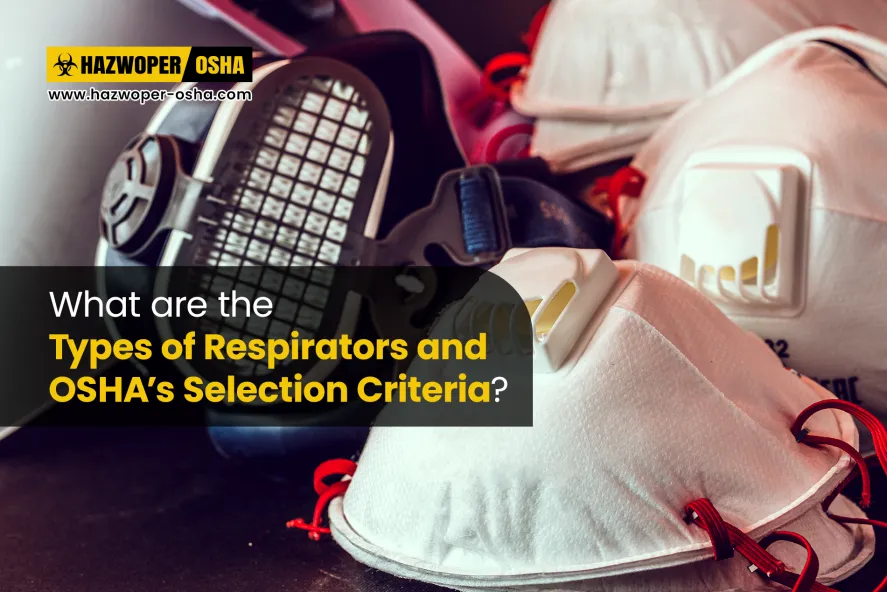
What are the Types of Respirators and OSHA’s Selection Criteria?
Introduction:
Respiratory hazards remain a serious threat in many workplaces, affecting both short‑term health and long‑term lung function. An estimated 5 million U.S. workers across 1.3 million workplaces need respiratory protection to guard against harmful dusts, vapors, gases, and oxygen‑deficient environments. Proper respirator use helps prevent hundreds of lung‑related deaths each year and thousands of work‑related respiratory illnesses such as asthma, chronic bronchitis, and COPD, all of which can reduce productivity and increase medical costs.
Despite these risks, respiratory illness remains a significant occupational concern. In the latest employer‑reported data, respiratory illness cases accounted for over 54 000 illnesses in 2024, even though numbers have declined in recent years.
For employers, understanding the types of respirators and how to match them to specific hazards is not just a matter of policy; it’s essential to protecting workers’ health and maintaining operational continuity. This guide explains the main respirator types, how to choose the right one for your workplace hazards, and common selection mistakes that can undermine respiratory protection programs.
What Does OSHA Require for Respiratory Protection?
OSHA requires employers to protect workers from airborne hazards under 29 CFR 1910.134, which outlines when and how respiratory protection must be used. Respirators are required when exposure cannot be adequately controlled through engineering or administrative measures and may exceed safe levels.
OSHA requires the use of NIOSH-approved respirators to ensure equipment meets tested performance standards. In addition, respirator use must be part of your written Respiratory Protection program that includes hazard assessment, medical evaluations, fit testing, training, and ongoing maintenance. A critical component of compliance is having a written Respiratory Protection Program. This document outlines procedures for hazard assessment, medical evaluations, fit testing, training, and equipment maintenance. It is not optional; failure to develop and implement this program can result in non-compliance and potential OSHA citations.
What are the Types of Respirators You Should Know About?
Respirators are classified into two main types based on how they protect workers: air-purifying respirators and atmosphere-supplying respirators. The correct choice depends on the type of hazard, its concentration, and the oxygen level in the work environment. Each respirator provides a specific level of protection, measured by its assigned protection factor (APF).
What Are Air-Purifying Respirators (APRs)?
Air-purifying respirators filter contaminants from the surrounding air before they are inhaled. They are used only when oxygen levels are adequate and exposure levels are within the respirator’s approved limits. These respirators must not be used in oxygen-deficient or immediately dangerous environments. Depending on the type, APRs typically offer APFs ranging from 10 to 1,000. However, their effectiveness depends heavily on proper fit, correct filter selection, and consistent maintenance; misuse or poor fit can significantly reduce protection.
Filtering Facepiece Respirators (N95, etc.)
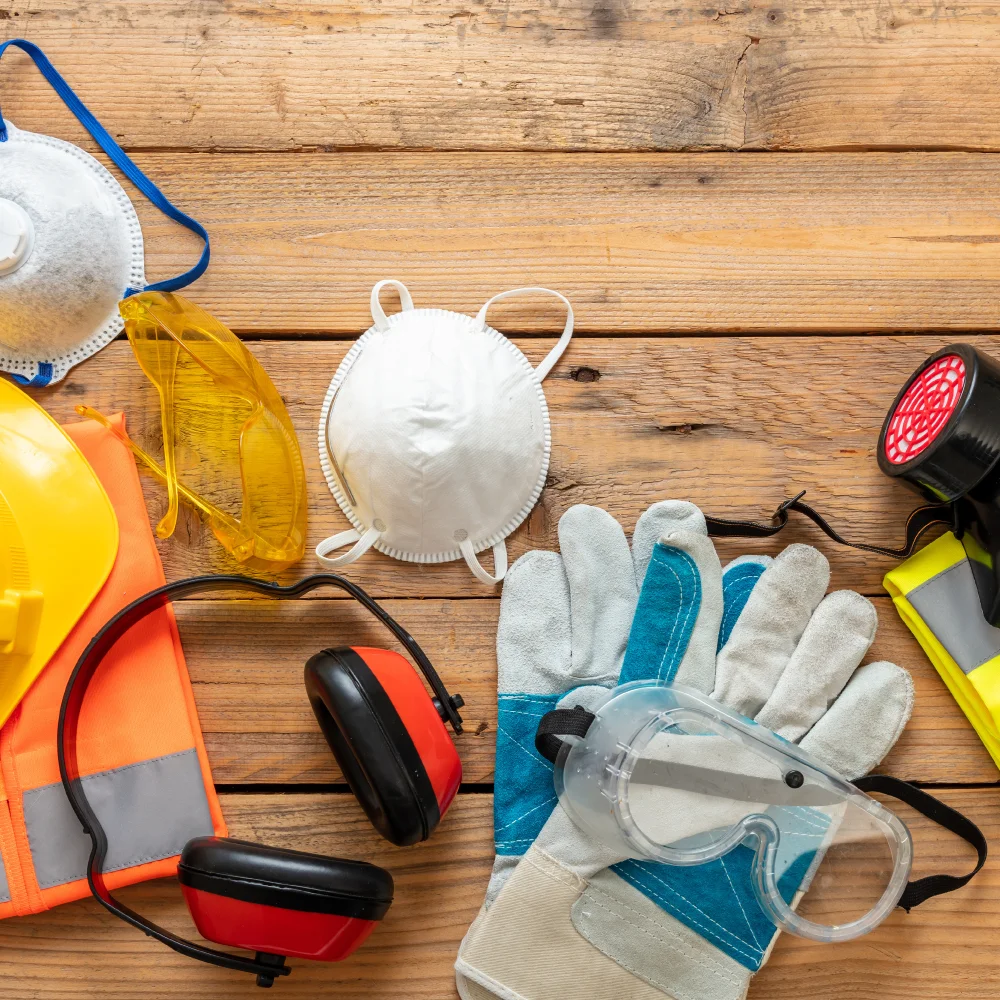
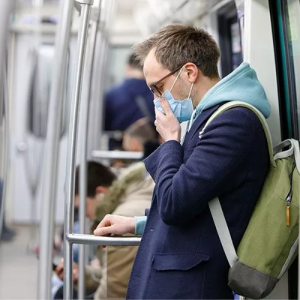
These disposable respirators filter airborne particles such as dust, mists, and fumes. They are commonly used in construction and healthcare. They do not protect against gases or vapors and are suitable only when exposure levels are within their approved limits. With an APF of 10, they offer a basic level of protection. Operationally, they rely on a tight facial seal, which can be compromised by facial hair, improper sizing, or extended wear. They also increase breathing resistance over time and must be discarded after use or when damaged or contaminated.
Elastomeric Respirators (Half & Full Face)
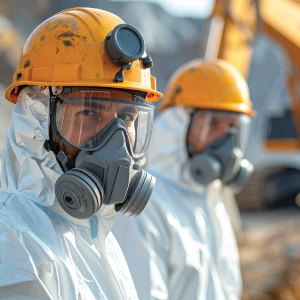
These reusable respirators use replaceable filters or cartridges. Half-face models protect the nose and mouth (APF 10), while full-face models also protect the eyes (APF 50). They can protect against particulates, gases, or vapors, but only when the correct cartridge is selected for the specific contaminant. Cartridges have limited service life and must be replaced based on use and exposure. Operational challenges include the need for regular cleaning and maintenance, proper storage, and potential communication difficulties while wearing the mask. Full-face models may also cause heat buildup and reduced visibility in certain work conditions.
Powered Air-Purifying Respirators (PAPR)
PAPRs use a battery-powered blower to pull air through filters and deliver it to the user. They reduce breathing resistance and can provide higher levels of protection, with APFs ranging from 25 for loose-fitting hoods to up to 1,000 for tight-fitting full-face configurations. They are used in environments with higher exposure levels or when extended wear is required. However, they come with operational considerations such as battery dependence, increased bulk, limited mobility in confined spaces, and the need for regular maintenance and airflow checks to ensure proper functioning.
What Are Atmosphere-Supplying Respirators (ASRs)?
Atmosphere-supplying respirators provide clean breathing air from an independent source. They are used when air-purifying respirators cannot provide adequate protection, especially in oxygen-deficient or immediately dangerous to life or health (IDLH) environments. These respirators offer higher levels of protection, typically with APFs ranging from 10 to 10,000, depending on the configuration. However, they require a more complex setup, continuous air supply management, and strict maintenance, making them more resource-intensive than air-purifying options.
Supplied-Air Respirators (SAR)
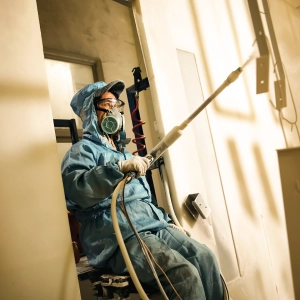
These respirators deliver air through a hose connected to a stationary air source. They are used in controlled environments such as painting, chemical handling, or confined space work where a continuous air supply can be maintained. SARs typically provide an APF of 10 for loose-fitting hoods/helmets and up to 1,000 for tight-fitting full-facepiece configurations when used in pressure-demand mode. Operational limitations include restricted mobility due to the air hose, the risk of hose damage or disconnection, and the need to ensure a continuous, uncontaminated air supply. They are not suitable for situations where workers must move freely over large distances.
Self-Contained Breathing Apparatus (SCBA)
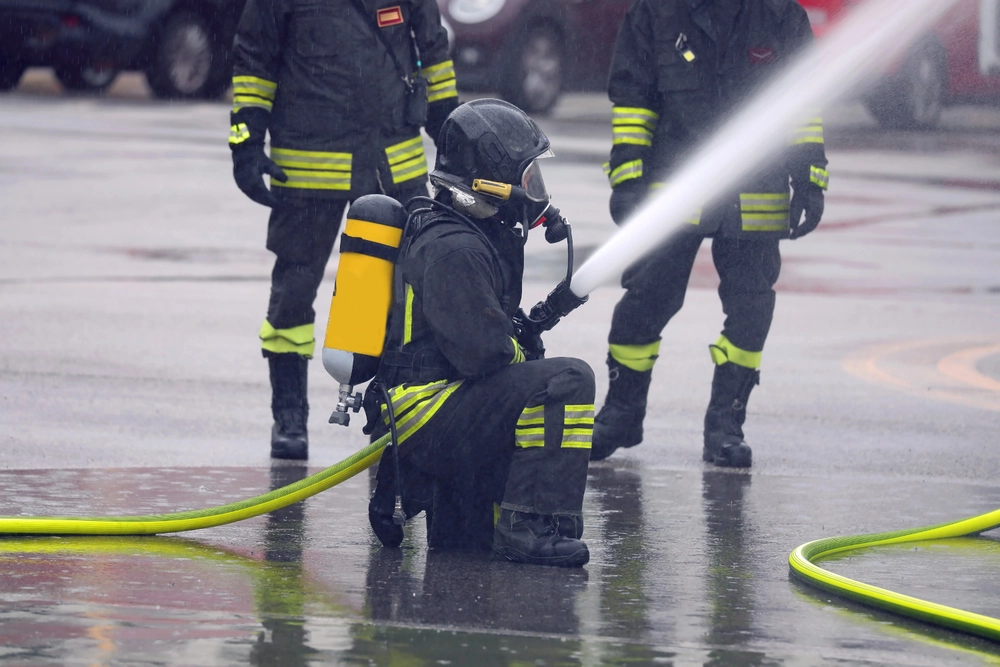
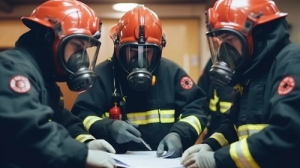
SCBAs supply air from a tank carried by the user and provide the highest level of respiratory protection, with an APF of up to 10,000 when used in pressure-demand mode. They are used in emergency response, firefighting, and high-risk operations where the air may be immediately dangerous to life or health. Despite their effectiveness, SCBAs are heavy and bulky, which can limit mobility and increase fatigue. Their air supply is also limited by tank capacity, requiring careful time management, and they demand extensive training, regular inspection, and maintenance to ensure reliability.
Combination Respirators
These systems combine a supplied-air source with a backup air supply, typically offering APFs up to 1,000 or higher, depending on the configuration. If the primary air source fails, the user can switch to the backup supply, making them suitable for high-risk environments where loss of air would create immediate danger. However, they involve more complex operations, require rigorous maintenance of both primary and secondary systems, and can be cumbersome due to additional components, which may impact mobility and ease of use.
No respirator works for all hazards. Selection must be based on the contaminant type, exposure level, and oxygen conditions. Using the wrong respirator, incorrect filters, or expired cartridges can leave workers unprotected even when the equipment is worn.
How to Select the Correct Respirator?
Respirator selection is not about preference; it is about proving, with data and documentation, that your decision would withstand scrutiny from the Occupational Safety and Health Administration (OSHA). If an inspector walks onto your site, the expectation is simple: you must demonstrate why this respirator was selected, what data supports it, and why other controls were not sufficient.
Start with Exposure Data, Not Equipment
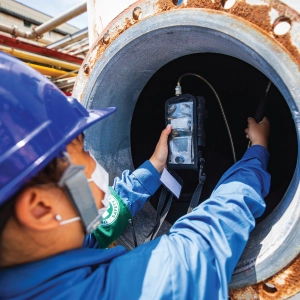
The foundation of any defensible decision is exposure data. Air monitoring results, workplace sampling, and critically, Section 8 of the Safety Data Sheet (SDS) must guide your approach. Section 8 outlines exposure limits, recommended controls, and respiratory protection guidance specific to the chemical. Without referencing this data, respirator selection becomes difficult to justify and may appear arbitrary during an inspection.
Use MUC
The Maximum Use Concentration (MUC) is the core calculation that connects hazard data to respirator choice. It is determined by multiplying the respirator’s Assigned Protection Factor (APF) by the applicable exposure limit.
If actual workplace concentrations exceed the MUC, the respirator is not compliant regardless of convenience or availability. This calculation must be documented and supported by real exposure measurements, not assumptions. This is often one of the first things OSHA will evaluate when assessing whether your selection is defensible.
Identify and Document IDLH Conditions
You must clearly determine whether the environment qualifies as IDLH (Immediately Dangerous to Life or Health). Both OSHA and the National Institute for Occupational Safety and Health (NIOSH) define these thresholds, for example, oxygen levels below 19.5% or high concentrations of toxic gases.
Once conditions are classified as IDLH, the decision pathway is no longer flexible. Air-purifying respirators are eliminated, and only atmosphere-supplying respirators (such as SCBA or supplied-air systems) are acceptable. Failing to recognize or document this transition is a major compliance risk.
Support Your Selection with a Fit Testing Strategy
Fit testing is not just a requirement; it is part of your legal defense. A respirator’s APF is only valid if a proper seal is achieved. OSHA requires documented annual fit testing for tight-fitting respirators, but a strong program goes further.
You should be able to show why a specific respirator model was selected, how fit test results were evaluated across your workforce, and how known limitations (such as facial hair or movement during tasks) were addressed. Referencing internal procedures or linking to a detailed fit testing guide/blog can strengthen this part of your compliance narrative.
Document Everything in the Respiratory Protection Program
All decisions must be captured in your written Respiratory Protection Program, the primary document that OSHA will review during an inspection. This is not a formality; it is your record of compliance and justification.
Your program should clearly document:
- Hazard assessments and exposure data
- SDS references (especially Section 8)
- MUC calculations and respirator selection logic
- Identification of IDLH conditions
- Fit testing procedures and records
- Cartridge/filter selection and change-out schedules
Gaps in this documentation can lead directly to non-compliance and citations, even if the correct respirator is being used in practice.
Conclusion:
Understanding respirator selection is only part of the process. Consistent, practical training is what ensures these decisions are applied correctly in real work environments.
For employers looking to strengthen their respiratory protection programs, structured learning can help bridge the gap between requirements and real-world application. Resources like the OSHA Respiratory Protection Safety Training are designed to walk through hazard assessment, respirator selection, fit considerations, and program implementation in a clear, practical way.
When teams understand not just what to use, but why it matters and how to apply it, respiratory protection becomes more than a requirement; it becomes a reliable part of everyday safety.
Frequently Asked Questions
Respiratory protection is required when employees are exposed to airborne hazards that cannot be controlled through engineering or administrative controls. This includes exposure to dust, fumes, gases, vapors, or oxygen-deficient environments with a concentration below 19.5%.
Air-Purifying Respirators (APRs) filter contaminants from the air and can only be used when oxygen levels are safe. Supplied-Air Respirators (SARs) provide clean air from an external source and are required in oxygen-deficient or high-risk environments.
The respirator must match the specific chemical hazard and its concentration. Employers must select cartridges designed for that contaminant and ensure the respirator’s Assigned Protection Factor (APF) is sufficient for the exposure level.
Fit testing is required before initial use and at least once every 12 months. It must also be repeated whenever a different respirator model is used or if changes in the user’s facial structure affect the seal.
Facial hair that interferes with the sealing surface of a tight-fitting respirator is not allowed. It can prevent a proper seal and significantly reduce protection. Alternative options, such as loose-fitting PAPRs, may be required.
Learn how to choose respirators, understand types, APF levels, and industry use cases to ensure proper workplace respiratory protection.