English and
 Español. After purchase, use the language toggle in your course Player to switch between English and Spanish at any time.

 EN
EN ES
ES






























































































































































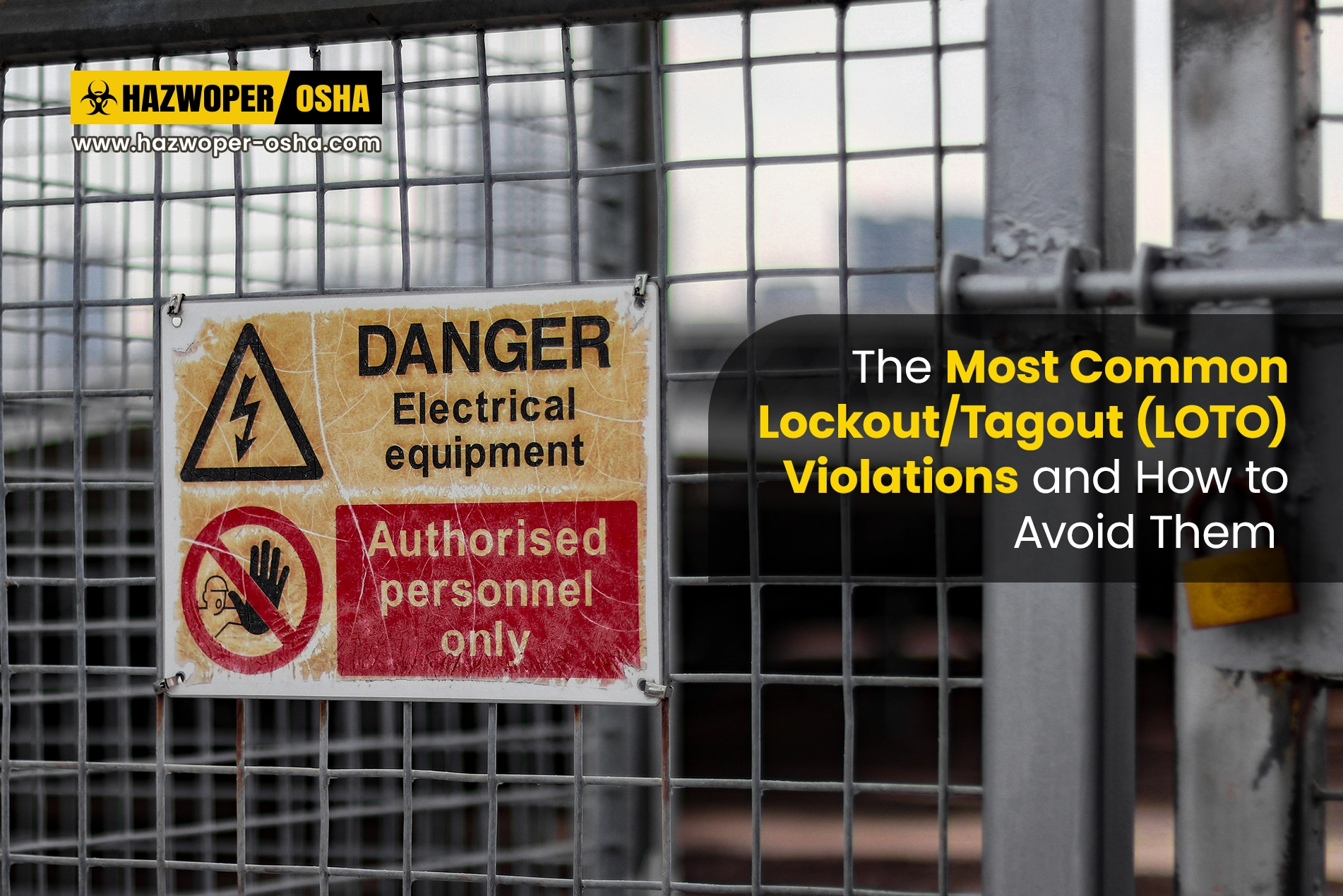
The Most Common Lockout/Tagout (LOTO) Violations and How to Avoid Them?
Introduction:
Picture a technician preparing to service a machine that appears completely shut down. The control panel is dark, the motors are silent, and everything seems safe. Then, without warning, the equipment suddenly powers back on. Within seconds, what began as routine maintenance can turn into a life-changing or even fatal incident.
This isn't a rare workplace accident. It's one of the most common ways hazardous energy, injures workers.
Every day, nearly 3 million U.S. workers perform maintenance on equipment that can unexpectedly release electrical, mechanical, hydraulic, pneumatic, or other forms of stored energy. OSHA estimates that compliance with its Lockout/Tagout (LOTO) standard prevents approximately 120 fatalities and 50,000 injuries each year, making it one of the most effective workplace safety programs.
Understanding the most common Lockout/Tagout violations isn't just about avoiding OSHA citations; it's about preventing serious injuries before they happen. The sections below explain the violations OSHA cites most often and the practical steps employers can take to prevent them.
Why Lockout/Tagout Violations Continue to Rank Among OSHA's Most-Cited Safety Violations?
Lockout/Tagout (LOTO) violations consistently rank among OSHA’s Top 10 most-cited safety standards primarily because energy control applies to virtually every industrial facility, and failure to comply carries a high risk of catastrophic injury or death. Because hazardous energy incidents are largely preventable, OSHA inspectors heavily scrutinize LOTO compliance during facility walkthroughs.
To reduce these risks, OSHA's Control of Hazardous Energy (Lockout/Tagout) Standard (29 CFR 1910.147) requires employers to establish machine-specific energy control procedures, train authorized and affected employees, verify that hazardous energy is isolated before work begins, and conduct periodic inspections of their LOTO program.
Despite these requirements, violations continue to occur due to systemic operational hurdles; including outdated machine documentation, production pressure to rush maintenance, lack of annual audits, and incomplete employee training Understanding these compliance gaps is the first step toward strengthening your hazardous energy control program and preventing serious workplace incidents.
The Most Common Lockout/Tagout (LOTO) Violations and How to Prevent Them
Unexpected equipment startup and the release of hazardous energy rarely result from a single mistake. More often, they stem from failures in planning, training, communication, or procedural compliance. Below are eight of the most common Lockout/Tagout (LOTO) violations cited by OSHA, along with practical ways to prevent them.
1. Missing or Incomplete Energy Control Procedures
Written energy control procedures are the foundation of an effective LOTO program. OSHA requires machine- or equipment-specific procedures that explain how hazardous energy will be isolated, locked out, verified, and safely restored before maintenance begins.
Generic or outdated procedures can leave employees uncertain about which energy sources must be isolated, increasing the risk of unexpected startup or the release of stored energy.
How to Prevent It
- Develop machine-specific written LOTO procedures.
- Identify all hazardous energy sources, including stored energy.
- Review and update procedures whenever equipment or processes change.
- Ensure procedures are readily available to authorized employees.
2. Failure to Verify Energy Isolation Before Work Begins
Applying locks and tags alone does not guarantee equipment is safe to service. OSHA requires employees to verify that all hazardous energy has been effectively isolated before work begins.
Verification may include attempting a normal startup, testing electrical circuits, checking pressure gauges, or confirming moving parts cannot operate. Skipping this step leaves workers exposed to hidden energy sources.
How to Prevent It
- Make zero-energy verification a mandatory step.
- Use appropriate testing equipment to confirm de-energization.
- Include verification requirements in written procedures.
- Train employees to never assume equipment is safe without testing.
3. Inadequate Employee Training and Retraining
Even a well-designed LOTO program can fail if employees do not understand their responsibilities. OSHA requires different levels of training for authorized, affected, and other employees who may work near locked-out equipment.
Training gaps often occur when employees change roles, new equipment is introduced, or refresher training is overlooked.
How to Prevent It
- Provide role-specific LOTO training.
- Retrain employees whenever procedures, equipment, or job assignments change.
- Periodically assess employee competency.
- Maintain accurate training records.
4. Failure to Control Stored or Residual Energy
Locking out the primary energy source is only part of the process. Residual energy stored in hydraulic systems, pneumatic lines, springs, capacitors, elevated components, or pressurized vessels can remain hazardous after isolation.
If stored energy is not released, restrained, or otherwise controlled, workers may still be seriously injured during maintenance.
How to Prevent It
- Identify all forms of stored energy.
- Safely dissipate, bleed, block, or restrain residual energy.
- Include steps for controlling stored energy in written procedures.
- Verify the equipment has reached a zero-energy state.
5. Skipping Required Periodic LOTO Inspections
OSHA requires employers to inspect their Lockout/Tagout procedures at least annually to verify employees are following established energy control practices.
Without regular inspections, outdated procedures and recurring compliance issues may go unnoticed until an incident or OSHA inspection occurs.
How to Prevent It
- Perform documented annual inspections.
- Observe employees performing actual lockout procedures.
- Correct deficiencies promptly.
- Update procedures based on inspection findings.
6. Improper Use of Tagout Devices Instead of Lockout
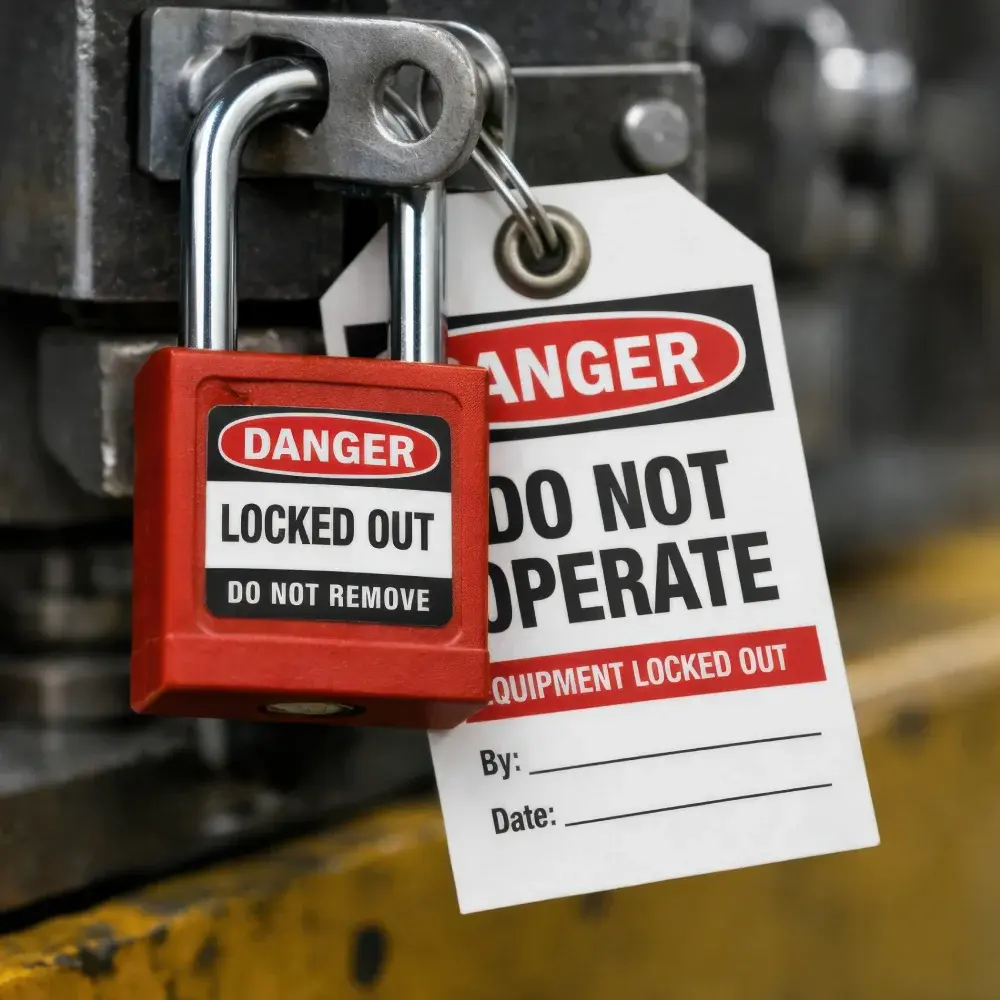
When equipment can be physically locked out, OSHA requires lockout devices instead of relying solely on tags. Unlike locks, tags only provide a warning and do not physically prevent equipment from being energized.
How to Prevent It
- Use lockout devices whenever equipment can be locked out.
- Use tagout-only systems when lockout is not feasible and apply additional protective measures.
- Keep tags durable, legible, and securely attached.
- Train employees on the limitations of tagout devices.
7. Contractor and Multi-Employer Communication Failures
When contractors and host employers use different LOTO procedures or fail to communicate responsibilities, hazardous energy control can break down.
OSHA requires employers to coordinate energy control procedures and communicate responsibilities before work begins.
How to Prevent It
- Clearly communicate LOTO responsibilities before work starts.
- Review each party's procedures during pre-job planning.
- Establish a coordinated lockout strategy for shared equipment.
- Verify compliance throughout the project.
While these violations are among OSHA's most frequently cited, they are also preventable. Addressing these common compliance gaps can significantly reduce hazardous energy risks and strengthen your organization's overall Lockout/Tagout program.
Hidden Causes Behind Repeated LOTO Violations in the Workplace
Repeated Lockout/Tagout (LOTO) violations rarely stem from a single employee's mistake. More often, they reflect broader organizational weaknesses in a facility’s hazardous energy control program. Correcting individual procedural errors is necessary, but eliminating repeat citations requires addressing the underlying systemic drivers that allow unsafe practices to persist:
- Production Pressure & Shortcut Normalization: Tight production schedules and small maintenance windows often create unspoken pressure to minimize downtime. When supervisors prioritize speed over safety, employees begin taking shortcuts such as skipping zero-energy verification or leaving primary isolation un-locked. Employers must make LOTO compliance a non-negotiable operational standard, empower workers with absolute stop-work authority, and evaluate supervisors on safety performance alongside production targets.
- Supervisory Accountability & Leadership Gaps: Even a well-written energy control program will fail without consistent oversight. When supervisors overlook minor infractions or fail to enforce proper lock placement, non-compliance becomes normalized across shifts. Management must hold frontline supervisors accountable for routine enforcement, conduct regular floor-level observations, and foster an environment where workers can report hazards without fear of retaliation.
- Program Decay & Administrative Drift: Over time, machinery is modified, new equipment is installed, and employee turnover occurs. When annual program reviews, refresher training, and documentation updates are neglected, workers are left relying on outdated instructions that no longer reflect actual site conditions. Employers can prevent this drift by embedding LOTO updates directly into management-of-change (MOC) processes, conducting documented annual audits, and using real-world near-miss data to continuously refresh employee training.
Lockout/Tagout Self-Audit Checklist to Reduce Compliance Risks
A strong Lockout/Tagout (LOTO) program requires regular reviews to remain effective. Use the checklist below to identify gaps in your hazardous energy control program and assess whether you're meeting the core requirements of OSHA's Control of Hazardous Energy Standard (29 CFR 1910.147).
|
Lockout/Tagout Self-Audit Checklist |
Status |
|
Machine-specific energy control procedures are documented and readily accessible for all applicable equipment. |
☐ |
|
Authorized employees have received role-specific Lockout/Tagout training and demonstrated competency. |
☐ |
|
Affected employees understand the purpose of Lockout/Tagout procedures and know not to operate locked or tagged equipment. |
☐ |
|
Annual periodic inspections of energy control procedures have been completed and documented. |
☐ |
|
Stored or residual energy is identified, controlled, and verified before maintenance begins. |
☐ |
|
Lockout and tagout devices are durable, standardized, clearly labeled, and used appropriately. |
☐ |
|
Written procedures are in place for group Lockout/Tagout activities and shift changes. |
☐ |
|
Host employers and contractors communicate and coordinate hazardous energy control procedures before work begins. |
☐ |
|
Employee training, retraining, inspections, and corrective actions are accurately documented and maintained. |
☐ |
|
Energy control procedures are reviewed and updated whenever equipment, processes, or energy sources change. |
☐ |
If you checked "No" for any item, use it as an opportunity to strengthen your Lockout/Tagout program. Updating procedures, reinforcing employee training, and conducting regular inspections can help improve OSHA compliance and reduce the risk of hazardous energy incidents.
Conclusion:
Lockout/Tagout (LOTO) compliance is more than a regulatory requirement; it's a critical safeguard against hazardous energy incidents during equipment servicing and maintenance. While OSHA citations often identify gaps in procedures, training, or inspections, addressing the underlying causes of these violations is essential for preventing repeat incidents and protecting workers.
A strong LOTO program combines clear energy control procedures, effective employee training, regular program reviews, and a workplace culture that prioritizes safety over shortcuts. Organizations that take a proactive approach are better positioned to improve OSHA compliance, reduce workplace risks, and maintain safer operations.
For organizations looking to strengthen their hazardous energy control program, comprehensive OSHA Lockout/Tagout (LOTO) training and OSHA-ANSI Lockout/Tagout (LOTO) Certificate Training can help employees understand their responsibilities, improve procedural compliance, and work safely around hazardous energy sources.
Frequently Asked Questions