English and
 Español. After purchase, use the language toggle in your course Player to switch between English and Spanish at any time.

 EN
EN ES
ES
























































































































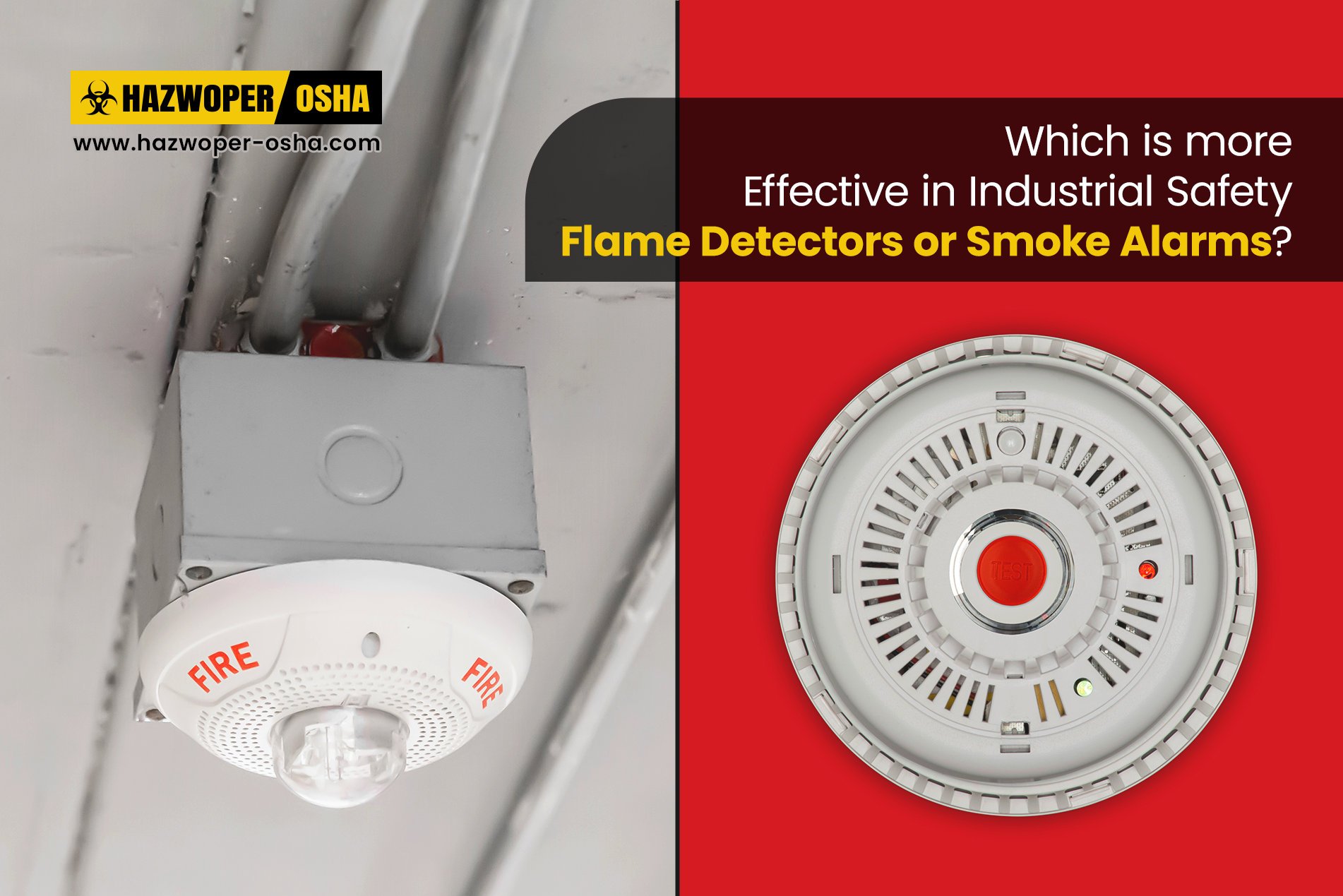
Which is more effective in industrial safety — flame detectors or smoke alarms?
Introduction:
Industrial facilities face a wide range of fire hazards. Flammable liquids, combustible dust, pressurized gases, and high-temperature equipment can all trigger ignition under the right conditions. When a fire starts in these environments, it can spread quickly, disrupt operations, damage equipment, and threaten worker safety. For employers, early and reliable fire detection is therefore a critical part of any safety strategy.
One of the key decisions in fire protection planning is selecting the right detection systems for the facility. Two technologies are widely used in industrial environments: flame detectors and smoke detectors. Both aim to identify fires at an early stage, but they rely on different signals produced during combustion and perform differently as a fire develops.
Industrial fires do not always follow the same pattern. Some begin as slow-smoldering events that release smoke before visible flames appear. Others ignite rapidly and produce open flames almost immediately, especially when flammable gases or liquids are involved. Because these fire behaviors differ, detection systems must be chosen based on the type of hazard present in the facility.
Flame detectors monitor ultraviolet or infrared radiation emitted by flames and can identify visible fires quickly when they have a clear line of sight to the hazard area. Smoke detectors, in contrast, sense airborne combustion particles that accumulate as materials burn. Many facilities rely on a combination of these technologies to detect different fire scenarios.
Read the rest of this blog to learn how flame detectors and smoke detectors work, where each technology performs best, and how employers can choose the right solution for their industrial environment.
Why Early Fire Detection Matters in Industrial Facilities
Early fire detection is the first line of defense in protecting industrial facilities. Recognizing a fire at its earliest stage can prevent small incidents from becoming catastrophic events. For employers, understanding the risks and the right detection strategies is critical to safeguarding both personnel and assets.
Industrial facilities face hazards that differ from typical commercial or residential settings. Flammable liquids, combustible dust, pressurized gases, and high-temperature machinery can all ignite under the right conditions. Fires may start in open areas, confined spaces, or even inside equipment, making detection more challenging.
The cost of a delayed detection is quite severe. As unchecked fire can spread through ventilation systems or along combustible materials before alarms sound, increasing both financial and safety impacts.
How Flame Detectors Work in Industrial Settings?
Flame detectors provide early warning by sensing the presence of a fire before it spreads. Unlike smoke detectors, which rely on airborne particles, flame detectors monitor the electromagnetic radiation emitted directly by flames. In industrial environments where fires can ignite and escalate rapidly, understanding how these systems work is essential for protecting personnel, equipment, and operations.
The Detection Principle
Flame detectors sense ultraviolet (UV) and infrared (IR) radiation emitted by flames. Some advanced models combine both UV and IR sensors to improve accuracy and reduce false alarms. When flames emit radiation within a detector’s sensitivity range and the sensor has a clear line of sight, the system triggers an alert.
It’s important to note that detection speed and reliability depend on several factors: the distance to the fire, flame size, angle, and any obstructions such as walls or equipment. Environmental conditions including presence of dust, steam, sunlight, or reflections can also affect performance. Proper installation, alignment, and regular maintenance are critical to ensure effective detection.
Types of Flame Detectors Used in Industry
Ultraviolet (UV) Flame Detectors
UV detectors respond to the ultraviolet radiation generated by flames. They are highly sensitive and can detect sudden, high-intensity fires quickly. However, they may be triggered by electrical arcs, welding, or sparks if not properly calibrated, so placement and shielding are important.
Infrared (IR) Flame Detectors
IR detectors sense the infrared radiation emitted by hot flames. They are generally less prone to false alarms from sparks or sunlight and are effective at monitoring long distances. IR detectors are commonly used in large open spaces or areas where hydrocarbon-based fires are likely.
UV/IR and Multi-Spectrum Detectors
These detectors combine UV and IR sensing to confirm the presence of a fire only when both signals are detected. This significantly reduces false alarms while maintaining fast response times. Multi-spectrum detectors are often used in high-risk areas, such as chemical plants, fuel storage facilities, or industrial burners, where both rapid detection and accuracy are critical.
How Smoke Alarms Detect Fire?
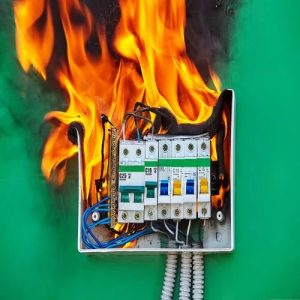
Smoke detectors play a critical role in detecting slow-burning or hidden fires. Unlike flame detectors, which respond to visible flames, smoke detectors sense airborne particles produced during combustion. In industrial settings, where fires can smolder inside equipment, storage areas, or electrical panels, smoke detection provides an early warning that might not be triggered by flames alone.
Ionization Smoke Detectors
Ionization detectors use a small radioactive source to create an ionized air stream inside the sensing chamber. When combustion particles enter the chamber, they disrupt the ion flow, triggering an alarm. These detectors respond quickly to fast-flaming fires that produce small, invisible combustion particles, making them suitable for areas with rapid ignition hazards.
Photoelectric Smoke Detectors
Photoelectric detectors work by projecting a light beam across the sensing chamber. When visible smoke particles scatter the light, the sensor activates the alarm. This technology is particularly effective at detecting slow-smoldering fires that generate dense smoke before flames appear. Photoelectric detectors are commonly used in storage rooms, control rooms, and enclosed industrial spaces.
What are the Key Differences Between Flame Detectors and Smoke Alarms?
Employers must understand the differences between flame detectors and smoke detectors to design an effective fire detection system. Each responds to different fire signals, performs better under specific conditions, and has unique limitations.
Key Differences Between Flame Detectors and Smoke Alarms
|
Factor |
Flame Detectors |
Smoke Alarms |
|
Detection Speed |
Detect visible flames and can trigger alarms within seconds when there is a clear line of sight. |
Detect airborne combustion particles; alarms may take longer if smoke production is slow. |
|
Coverage Area |
Suitable for large, open spaces such as warehouses, hangars, or fuel storage yards. |
Best for enclosed or semi‑enclosed areas like offices, hallways, or control rooms. |
|
Environmental Sensitivity |
Require unobstructed line of sight; may be affected by sunlight, reflections, or radiation sources. |
Can be affected by dust, steam, airflow, or high ceilings that dilute smoke concentration. |
|
False Alarm Potential |
Possible triggers include welding arcs or bright reflections; |
Dust, fog, or steam may trigger false alarms . |
How to Build an Effective Fire Detection Strategy?
An effective fire detection strategy combines risk assessment, proper detector selection, strategic placement, and routine maintenance. Employers who plan carefully can protect workers, reduce property damage, and ensure timely fire response.
Assess Fire Risks
Designing a reliable fire detection system starts with a structured fire risk assessment. Employers must evaluate how a fire could start, how quickly it may grow, and how the facility environment could affect detection.
Several key factors influence fire behavior and detection performance. Ignition speed and fire growth rate determine whether a fire produces visible flames quickly or develops slowly as a smoldering event. For example, flammable liquid vapors can ignite instantly, while overheating electrical components may generate smoke long before flames appear.
Fuel load is another critical factor. Facilities storing packaging materials, chemicals, fuels, or wooden pallets contain large quantities of combustible material that can accelerate fire growth.
Ventilation and airflow patterns also play a major role. Industrial HVAC systems, exhaust fans, and open loading docks can disperse smoke before it reaches detectors, delaying alarm activation.
Ceiling height and facility layout must also be considered. High ceilings, dense storage racks, and complex equipment layouts can alter how smoke and heat move within a building.
One of the most common mistakes employers make is assuming standard detector placement guidelines will work in every environment.
Choosing the Right Fire Detection Technology
Once risks are identified, the next step is selecting detection technologies that match both the fire hazards and environmental conditions present in each area.
Flame detectors are typically installed in environments where fires ignite rapidly and produce visible flames almost immediately. This includes fuel storage facilities, chemical processing areas, aircraft hangars, and outdoor industrial sites. These detectors monitor radiation emitted by flames and can trigger alarms within seconds. However, they require a clear line of sight and may be affected by strong light sources, such as welding arcs, or reflective surfaces if not properly configured.
Smoke detectors are designed to identify airborne combustion particles generated during the early stages of a fire. They work well in enclosed or semi-enclosed environments such as offices, control rooms, and server rooms where smoke can accumulate. Smoke detection is particularly effective for identifying smoldering fires, such as overheating electrical wiring. However, heavy dust, high airflow, or very large open spaces can reduce their reliability.
Heat detectors are commonly used in environments where smoke detection may produce frequent false alarms. They activate when the temperature rises rapidly or exceeds a preset threshold, making them suitable for mechanical rooms, kitchens, and dusty industrial areas. The trade-off is that heat detectors typically respond later in the fire development process than smoke or flame detectors.
Selecting the right technology requires balancing detection speed, environmental compatibility, and operational limitations.
Plan Coverage and Placement
Detector placement is just as important as detector selection. Poor positioning can delay detection even when the correct technology is used.
Flame detectors must maintain a clear line of sight to the hazard area. Equipment, storage racks, structural columns, or machinery can block the detector’s field of view, preventing it from detecting a fire quickly.
Smoke detectors are usually mounted near ceilings because hot smoke rises during the early stages of a fire. However, large industrial spaces introduce additional challenges. One key phenomenon is smoke stratification, where rising smoke cools before reaching the ceiling and forms a stable layer lower in the building. When this occurs, ceiling-mounted detectors may never encounter the smoke.
Because of these factors, large warehouses or manufacturing facilities may require multiple detectors, specialized layouts, or advanced detection technologies to eliminate coverage gaps.
Implement Maintenance and Testing
Fire detection systems must be regularly inspected and maintained to ensure reliable operation. In the United States, maintenance programs are commonly guided by NFPA 72, which outlines inspection, testing, and servicing requirements for fire alarm systems.
Routine maintenance typically includes visual inspections, functional testing, and sensitivity testing. Functional tests confirm that detectors activate alarms when exposed to simulated fire conditions, while sensitivity tests verify that smoke detectors still respond within their designed detection range.
Real-world operating conditions can gradually degrade detector performance. Dust accumulation may contaminate sensors and reduce sensitivity. Insects sometimes enter detector housings and interfere with internal components.
Regular cleaning, recalibration, and scheduled testing help prevent these issues.
Use a Layered Detection Approach
Strategically combine flame, smoke, and heat detectors. This layered system improves early detection, reduces false alarms, and addresses multiple fire types without unnecessary device duplication. For example: flame detectors cover fuel yards, smoke detectors monitor enclosed control rooms, and heat detectors protect dusty processing areas.
By assessing risks, choosing appropriate detectors, planning placement, maintaining equipment, and using a layered approach, employers can create a fire detection strategy that ensures timely alerts, protects personnel, and minimizes property damage.
Conclusion:
Industrial fire safety depends on more than alarms, it requires a deep understanding of hazards, rapid detection, and a strategic approach to protect both people and property. Addressing fire risks effectively also means equipping your team with the right knowledge. Programs like OSHA Fire Safety Training for Workplace Safety focus on practical strategies for identifying hazards, implementing detection systems, and responding to emergencies efficiently. By understanding how different detection technologies work together and applying best practices, employers can create safer work environments and reduce the potential for costly fire incidents.
Frequently Asked Questions
In industrial fire detection, technologies extend beyond flame and smoke. Heat detectors respond to changes in temperature, making them useful where smoke detectors may falsely alarm (such as in dusty or steamy environments). Aspirating smoke detectors actively draw air samples for early detection, even when normal detectors might struggle. Other specialized sensors include gas detectors for combustible vapors and linear heat cables for long-run areas, such as conveyors. The right mix depends on the facility’s hazards and layout.
Not all flame detectors are the same. There are UV/IR combined detectors, multi‑spectrum IR detectors (IR3/IR4), and even video‑based flame detectors that integrate optical imaging for more reliable detection. Combined and multi‑spectrum detectors analyze multiple wavelength signals to reduce false alarms while maintaining early detection across different flame types. These variations help tailor system performance to specific industrial needs.
Yes when properly designed. Effective fire detection systems integrate a backup power source such as batteries or UPS (Uninterruptible Power Supply). This ensures that detectors continue to monitor and alarm even during power outages, which is crucial for facilities where power loss may occur due to a fire incident or unrelated electrical issues.
False alarms occur when a detector is triggered without an actual fire event. In industrial settings, common causes include dust, construction debris, steam, and humidity, all of which can enter smoke sensors and trigger alarms incorrectly. Frequent false alarms can lead to alarm fatigue, where personnel start ignoring alerts, or costly unplanned shutdowns and emergency responses. Proper detector selection, environmental shielding, and routine maintenance help reduce these issues.
Routine testing and maintenance are essential for reliability. Best practices include regular functional tests (at least weekly or monthly depending on system size), quarterly professional inspections, and annual comprehensive servicing by certified technicians. Routine cleaning prevents dust and debris from impairing sensor function, and documented maintenance helps ensure early detection performance remains intact.