English and
 Español. After purchase, use the language toggle in your course Player to switch between English and Spanish at any time.

 EN
EN ES
ES










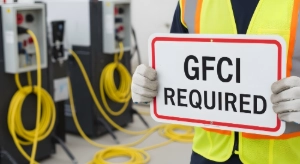























































































































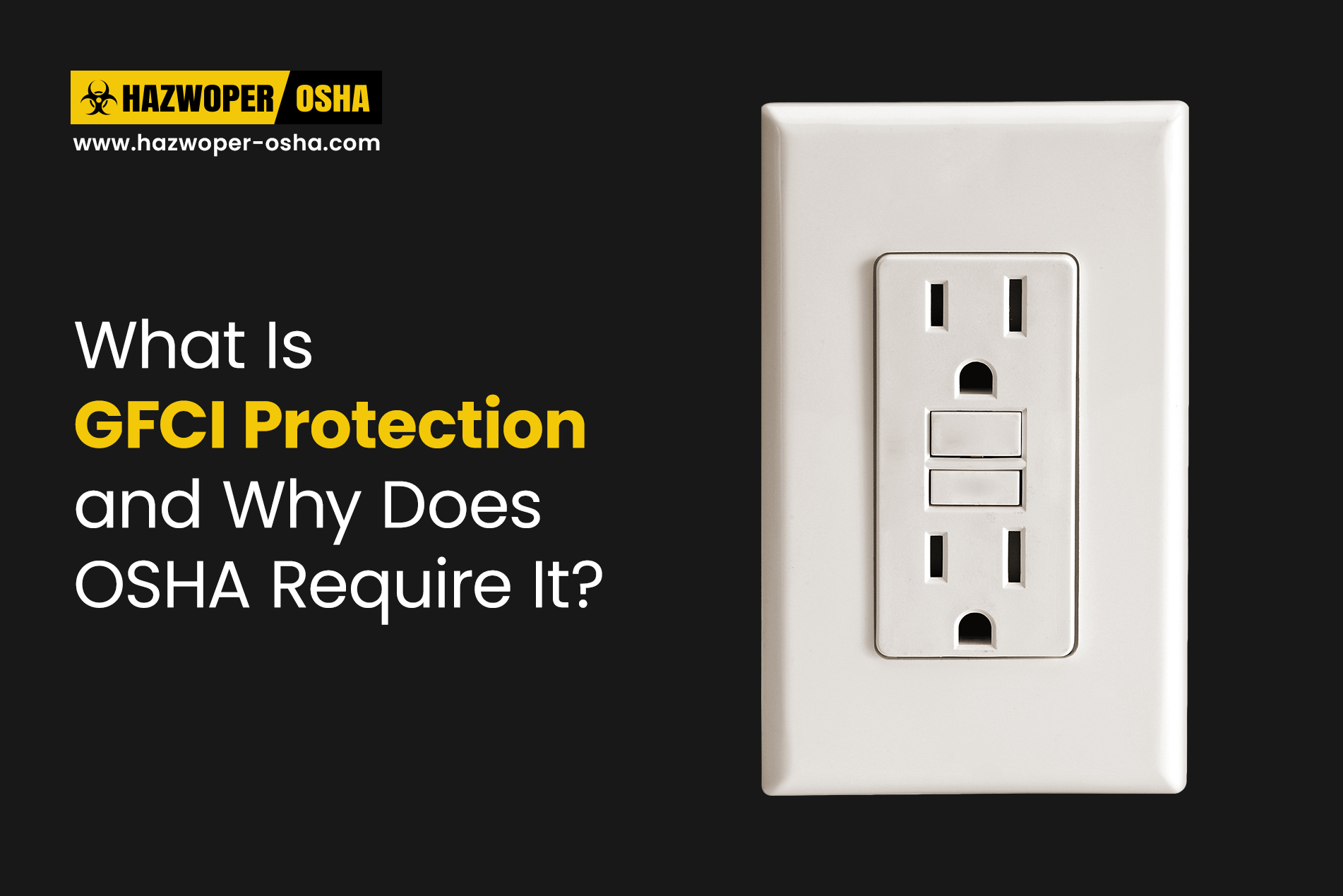
What Is GFCI Protection and Why OSHA Requires It?
Introduction:
Electrical shock hazards, especially those caused by ground faults, remain one of the most preventable risks on job sites. They continue to contribute to a measurable share of workplace fatalities each year, with many incidents occurring in environments that rely on temporary wiring, extension cords, and portable equipment. Reported data also shows thousands of non-fatal electrical injuries annually, though underreporting remains a concern.
A ground fault occurs when electrical current escapes its intended path and travels through an unintended conductor, often a person. Ground Fault Circuit Interrupters (GFCIs) are designed to detect this imbalance and shut off power in as little as 1/40th of a second. In ground-fault scenarios, this rapid interruption can significantly reduce the severity of electric shock incidents.
However, the presence of GFCIs alone does not eliminate risk. These devices only protect against specific types of electrical faults and need to be properly selected, tested, and maintained to function as intended. Electrical incidents still occur when GFCIs are bypassed, improperly installed, or not routinely checked.
For employers, this is not just a safety concern; it is an operational one. Electrical incidents often lead to work stoppages, equipment damage, and increased liability exposure. Managing GFCI protection requires more than installation; it requires a structured approach that ensures consistent performance in real working conditions.
This blog breaks down how GFCI protection works, why it is required in certain environments, and how employers can manage it effectively to reduce exposure and maintain safe operations.
What GFCI Protection Is and How It Works?
Ground Fault Circuit Interrupter (GFCI) protection is a critical layer of electrical safety, designed to reduce the risk of shock from ground faults. While fast-acting, GFCIs are not a substitute for comprehensive electrical safety practices, and understanding their limits is essential for effective site management.
How GFCIs Work in Practice
GFCIs measure the difference in current between the hot and neutral conductors. Under normal conditions, the outgoing and returning currents are equal. When a ground fault occurs current leaks to ground the imbalance triggers the device, shutting off power in a fraction of a second. Modern devices incorporate UL 943 Auto-Self-Test, which continuously checks the GFCI’s internal circuitry and alerts users when replacement is needed via an end-of-life indicator (usually a red light).
Key point: A tripped GFCI does not guarantee the hazard is resolved and you need to investigate the source of the fault before resetting.
Selecting the Right GFCI: A Tactical Approach
Safety Managers, Project Leads, and Site Supervisors must select devices based on environmental factors, mobility, and potential hazards, rather than convenience alone.
1. Circuit Breaker GFCIs
- Installed in electrical panels to protect an entire circuit.
- Prevent workers from bypassing protection by resetting individual outlets (“worker tampering”).
- Ideal for facilities with multiple outlets or permanently installed equipment.
2. Receptacle (Outlet-Type) GFCIs
- Installed directly in outlets.
- Suitable for fixed locations where tools or equipment are frequently plugged in.
- Must be tested monthly for functionality.
3. Portable GFCIs
- Used with temporary setups: construction, maintenance, or events.
- Must include Open-Neutral Protection to prevent tools from becoming energized if the neutral wire is broken, which is a major hazard on US job sites.
- Ideal for short-term deployments where permanent GFCIs are unavailable.
4. Cord-Connected GFCIs
- Integrated inline or built into tool cords.
- Provides mobility while maintaining protection for the device itself.
What GFCIs Protect Against?
GFCIs provide protection against:
- Ground faults when current leaks from its intended path.
- Shock hazards from contact with energized parts in conductive or wet environments.
- Temporary faults caused by damaged cords, moisture, or improper wiring.
What GFCIs Do NOT Protect Against?
Understanding GFCI limitations is critical to maintaining real-world safety:
- Line-to-line contact: Touching two energized conductors bypasses the GFCI.
- High-voltage exposures: Voltages above the device’s rating can still cause injury.
- Overloads and short circuits: Standard circuit breakers or fuses are required.
- Internal tool/equipment faults: GFCIs cannot prevent damage from internal failures.
- Arc faults or lightning strikes: Specialized protection is needed for these risks.
- Bypassed or tampered devices: Resetting tripped devices without correcting the hazard.
- Environmental degradation: Dust, vibration, temperature extremes, or water intrusion may compromise GFCI performance.
What are the OSHA’s Requirements for GFCI Use?
OSHA requires GFCI protection in workplaces where employees face an elevated risk of electrical shock, particularly from ground faults.
In construction (29 CFR 1926.404(b)(1)), GFCIs are required for 120-volt, single-phase, 15- and 20-amp outlets that are not part of permanent wiring and are used for tools, temporary power, or outdoor work. Employers can comply by installing GFCIs or implementing an Assured Equipment Grounding Conductor Program (AEGCP).
In the general industry (29 CFR 1910), GFCI protection is required for temporary wiring, maintenance tasks, or work in wet or damp locations, whereas permanent indoor outlets in dry areas typically do not require GFCI protection.
Why OSHA Mandates GFCI Protection?
OSHA requires Ground Fault Circuit Interrupter (GFCI) protection not to punish businesses, but to prevent serious electrical injuries and deaths by addressing the most common and severe shock hazards encountered in workplace environments such as construction sites, temporary wiring situations, and other high‑risk conditions.
1. OSHA’s Primary Concern: Preventing Ground‑Fault Electrocutions
- Construction and other temporary work conditions often feature wet surfaces, exposed wiring, and damaged cords, which dramatically increase the likelihood of ground faults. OSHA’s standards specifically apply GFCI protection to temporary receptacles, extension cords, and portable power equipment because these are common sources of ground faults in construction and maintenance work. GFCIs trip at 4mA to 6mA. This is the specific threshold where a human can still "let go" of a wire before their muscles seize. Without GFCIs, a circuit is "safe" for the building but lethal for the person.
2. Reducing Fatalities and Severe Injuries from Electrical Hazards
OSHA considers electrocution one of the leading causes of death in construction and industrial settings. The agency’s regulatory intent is to reduce these fatalities by requiring safeguards where the risk is highest.Since the GFCI requirement was introduced, OSHA estimates that hundreds of lives have been saved.
3. Engineering Control That Eliminates Reliance on Human Behavior
OSHA mandates GFCIs because they function as an engineering control, not a behavioral or administrative safeguard. Unlike training, signage, or procedural compliance, GFCIs do not rely on workers to recognize danger or supervisors to enforce rules in real time.
Instead, the device operates autonomously, continuously monitoring current flow and interrupting power instantly when a fault is detected. This design effectively removes “human error” from the critical failure pathway, which is especially important in dynamic jobsite environments where attention, supervision, and compliance can vary.
4. Proactive Protection in a Reactive Hazard Environment
OSHA also requires GFCIs because they are among the few practical tools capable of detecting insulation failure before it escalates into a visible hazard, such as arcing, shock, or fire.
Most electrical hazards are reactive; they become apparent only after damage has occurred. GFCIs, however, provide a proactive layer of protection, identifying abnormal leakage currents at the earliest stage of failure and disconnecting power before the condition can develop into a hazardous event.
This makes them a critical preventive safeguard in environments where equipment wear, moisture intrusion, and physical damage are constant risks.
What are the Employer Best Practices for GFCI Compliance?
In the field, maintaining GFCI protection is rarely as simple as pressing a test button. Daily testing is often skipped, testers get misplaced or cannibalized, and subcontractors sometimes bring damaged or noncompliant cords and equipment. These operational frictions create gaps in protection, even on sites where GFCIs are installed correctly. Addressing these challenges proactively is essential to keep workers safe and maintain OSHA compliance.
1. Daily and Monthly Testing Making It Practical
On high-stakes job sites, "daily testing" is often a victim of operational tempo; when crews are pushing for a deadline, safety buttons are the first thing forgotten. The challenge for a Safety Director isn't just ensuring the test happens, but establishing a system where compliance is visible at a glance. A structured Assured Equipment Grounding Conductor Program (AEGCP) uses visual markers to prove equipment has been vetted, allowing managers to audit the site without stopping production.
Strategic Audit Actions:
- Use the industry-standard tape colors (White, Green, Red, Orange) to mark cords and GFCIs once they pass their quarterly deep-test.
- Require supervisors to use an external GFCI tester to verify the actual ground-fault path and wiring integrity under load.
- Prevent kit cannibalization by securing dedicated testing "go-bags" for each zone or supervisor, ensuring that the lack of a tool never becomes a valid excuse for skipped compliance.
- Mandate an immediate swap-out policy rather than allowing "temporary" tape fixes that will trigger an OSHA citation for damaged equipment.
2. Inspections and Documentation From Reactive to Proactive
The friction: Subcontractors often bring their own cords, tools, and portable GFCIs, and these may be worn, damaged, or outdated. Visual inspections can be skipped during busy operations.
To protect the organization, you must move toward Mobilization Gatekeeping, a system that stops faulty hardware before it ever crosses the site threshold.
- Implement a "Green Tag" protocol requiring all subcontractor cords and tools to be vetted and tagged at the gate before work begins.
- Update Master Service Agreements (MSAs) to require digital submission of AEGCP inspection logs as a prerequisite for progress payments.
- Deploy GC-owned, UL-listed "Spider Boxes" at fixed intervals to maintain centralized control over the primary power distribution.
- Conduct unannounced 15-minute "Zero-Tolerance" sweeps to identify and remove any un-tagged or damaged equipment immediately.
- Mandate the use of industrial-grade portable GFCIs with Open-Neutral Protection to prevent shocks from upstream cord failure.
3. Integrating GFCI Safety into Worker Training
The friction: Workers may assume GFCIs make equipment “shock-proof,” overlook testing procedures, or misunderstand limitations (e.g., line-to-line faults or overloads).
Solutions:
- Conduct hands-on training showing proper testing, inspection, and reset procedures.
- Explain GFCI limitations clearly: they protect against ground faults, but not line-to-line contact, overloads, or tool malfunctions.
- Include scenarios that highlight real-life risks, such as wet conditions, damaged cords, or open neutrals.
Incorporate GFCI safety into onboarding, toolbox talks, and subcontractor orientations to standardize knowledge across all crews.
Effective GFCI compliance isn’t just about installing devices it’s about overcoming operational realities.
Conclusion:
Even the best-installed devices cannot guarantee safety if they are not properly maintained or if employees are unaware of their limitations. Employers who adopt a structured approach to GFCI management not only meet OSHA requirements but also foster a culture of safety that minimizes risk, downtime, and potential liability.
For employers and safety managers seeking a deeper understanding of electrical hazards and practical strategies to prevent ground-fault incidents, OSHA Ground Fault Protection/GFCI Safety Training (NFPA 70E 2024) provides comprehensive guidance on proper installation, testing, and compliance practices. Complementing this, the Electrical Safety Training (NFPA 70E 2024) course provides a broader foundation in electrical safety principles, ensuring that your workforce is prepared to recognize hazards and act safely in any environment. Together, these programs equip organizations with the knowledge and skills needed to maintain safer workplaces and strengthen overall electrical safety practices.
Frequently Asked Questions
A GFCI receptacle provides ground‑fault protection only at that outlet and any downstream outlets, while a GFCI circuit breaker protects the entire branch circuit it is installed on. Both detect current imbalances and trip quickly, but a breaker offers broader coverage for multiple outlets on the same circuit.
No. GFCIs are designed to protect people from shock by detecting leakage current; they do not serve as overload protection for equipment or wiring. Devices like circuit breakers or fuses are still needed to protect against overloads and short circuits.
Portable GFCIs are intended for temporary applications, such as job-site tools or extension cords. They should not replace permanent GFCI protection where fixed wiring is required, both for safety and compliance with electrical codes.
While building codes and OSHA focus on wet or damp areas, GFCIs may still be appropriate in dry indoor locations if tasks involve temporary equipment, maintenance work, or environments where moisture or conductive surfaces may be present. Employers should assess tasks and conditions not just the location to determine protection needs.
No. GFCIs can provide shock protection on circuits without an equipment grounding conductor (e.g., older two‑wire systems). However, the grounding conductor is still important for equipment fault protection and code compliance in grounded systems. GFCIs do not create a true equipment ground.