English and
 Español. After purchase, use the language toggle in your course Player to switch between English and Spanish at any time.

 EN
 ES









.webp)

























































.webp)


















.webp)











































What the 2027 NFPA 70E Updates Mean for Electrical Safety
Introduction:
An outdated electrical safety program can leave a facility exposed to more than workplace hazards. When energized work procedures, hazard assessments, and employee protection measures no longer reflect current safety requirements, employers risk preventable incidents, OSHA compliance issues, and gaps in their electrical safety responsibilities.
For safety directors and facility managers still relying on procedures developed around the 2024 edition of NFPA 70E, the question is whether those practices remain adequate for today's workplace risks. Electrical safety requires more than having written policies in place. Employers must ensure that work authorization, hazard controls, emergency response arrangements, and employee training reflect the applicable requirements.
The 2027 NFPA 70E edition makes reviewing these procedures particularly important. Understanding its implications can help employers identify outdated practices, strengthen electrical risk management, and maintain alignment with applicable OSHA requirements under 29 CFR 1910 Subpart S and 29 CFR 1926 Subpart K.
What are the major changes in the 2027 NFPA 70E edition?
The 2027 edition of NFPA 70E introduces revisions to energized electrical work, battery risk assessments, stored-energy hazards, and personal protective equipment (PPE).
Understanding the changes helps safety managers identify where existing electrical safety procedures, PPE specifications, and employee training may need update.
A. Additional Personnel During Certain Energized Electrical Work
What Has Changed?
The 2027 edition introduces an additional-person requirement under Section 130.2(A)(2) for certain energized electrical work. When an energized electrical work permit is required and specifies the use of electric shock PPE or arc flash PPE, at least one additional person who meets the emergency response training requirements of Section 110.4(C)(1) must be present.
This person must remain outside the limited approach boundary or arc flash boundary, whichever is greater. Their role is to provide emergency response support if an electrical incident occurs while the authorized employee performs the task.
This is not a general requirement to assign another employee to every electrical maintenance activity. It applies to the specific energized work covered by the provision.
Where Will This Update Have the Greatest Impact?
This requirement is particularly relevant to:
- Industrial manufacturing: Electrical troubleshooting and maintenance involving energized machinery, control panels, and distribution equipment.
- Construction: Energized electrical work during installation, testing, and commissioning.
- Utilities and power distribution: Maintenance and troubleshooting involving energized electrical systems.
- Commercial facilities: Electrical maintenance in buildings with complex distribution systems and critical equipment.
What Does This Mean for Employers?
Consider an electrician troubleshooting energized equipment near exposed electrical conductors. If the task requires an energized electrical work permit that specifies shock or arc flash PPE, the employer must arrange for the additional trained person before work begins.
What employers need to implement:
- Revise energized electrical work permit forms to include a check for the additional-person requirement.
- Establish a staffing procedure that identifies who can fulfill this role and how their availability will be confirmed before work begins.
- Verify and document the designated person's emergency response training.
- Include the required boundary distances and positioning instructions in pre-job briefings.
- Establish a clear emergency communication and response procedure, including how work will be stopped and assistance summoned.
- Prevent work from proceeding when the required personnel or emergency response arrangements are unavailable.
B. Expanded DC and Battery Safety Requirements
What Has Changed?
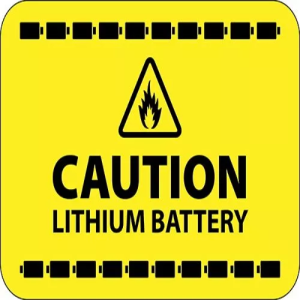
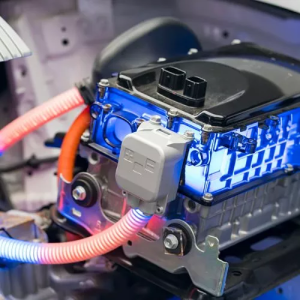
The 2027 edition expands battery safety provisions through Article 360, including specific requirements for assessing contact thermal hazards.
These hazards are important because battery systems can deliver substantial short-circuit power when conductive objects unintentionally connect exposed terminals or conductors. The resulting heat can cause serious contact thermal injuries, even when the task does not present the same exposure conditions as a conventional arc flash incident.
Understanding the Different Battery Hazards
Battery-related work can expose employees to several distinct hazards:
- Electric shock: Current can pass through the body when an employee contacts energized battery terminals or conductors.
- Arc flash: An electrical fault can release intense thermal energy through an arc.
- Contact thermal injury: A short circuit or unintended electrical contact can generate heat capable of burning skin or damaging equipment.
- Chemical exposure: Battery electrolyte and other battery chemicals can cause harmful contact or exposure, depending on the battery type.
The revised risk assessment considers factors such as available short-circuit power, the work task and tools, spacing between exposed conductors, equipment design, and equipment condition. It also addresses the selection of additional protective measures according to the hierarchy of risk controls.
Where Will This Update Have the Greatest Impact?
The expanded requirements are particularly relevant to:
- Battery energy storage facilities: Maintenance and inspection of large-scale energy storage systems.
- Data centers and telecommunications: Maintenance of backup battery banks and uninterruptible power supply (UPS) systems.
- Electric vehicle manufacturing and charging infrastructure: Battery assembly, testing, servicing, and maintenance.
- Industrial facilities: Work involving DC power systems, battery rooms, and backup electrical supplies.
- Renewable energy installations: Maintenance of battery storage systems connected to solar and other renewable energy infrastructure.
What Does This Mean for Employers?
Consider an employee assembling a battery string or reconnecting a battery during maintenance. A misplaced wire, conductive tool, or other object could bridge two electrical points and create a short circuit. The resulting heat can cause serious contact thermal injuries.
Protective measures may include properly rated insulated tools, hand protection selected for the task and available short-circuit power, and appropriate eye protection. Employees must also prevent battery terminals and conductors from coming into unintended contact with tools, test equipment, liquid containers, and other foreign objects.
What employers need to implement:
- Conduct task-specific battery hazard assessments covering assembly, reconnection, inspection, testing, and maintenance.
- Document available short-circuit power and identify potential contact thermal exposure during each relevant task.
- Establish procedures for selecting insulated tools, hand protection, and eye protection based on identified hazards.
- Introduce pre-use inspections of insulated tools and protective equipment to identify damage or defects.
- Review battery isolation and sectionalizing procedures and establish how employees will verify the required lower-risk condition before work begins.
- Train employees to recognize short-circuit hazards and prevent conductive objects from bridging exposed terminals.
- Include battery-specific emergency response and chemical exposure procedures in employee training.
C. New Requirements for Capacitors and Emerging Electrical Systems
What Has Changed?
The 2027 edition introduces Article 370, which addresses electrical double-layer capacitors (EDLCs), commonly known as supercapacitors.
These devices store electrical energy and can release it rapidly. Their stored-energy characteristics create hazards that must be considered during inspection, maintenance, and servicing.
A critical point is that disconnecting a capacitor from its power supply does not necessarily eliminate the electrical hazard. The capacitor may retain an electrical charge after the supply has been isolated. If an employee contacts its terminals before the stored energy has been addressed, an electrical shock or other injury may occur.
Why Stored Energy Requires Special Attention
Consider maintenance on capacitor equipment. An employee opens the supply disconnect and assumes the equipment is safe to handle. However, the remaining stored charge must still be addressed through the applicable discharge and verification procedures.
The equipment's electrical condition must be established before employees proceed with hands-on work.
This distinction is important when developing procedures for conventional capacitor installations and newer technologies such as EDLCs. Employers must account for equipment design and stored-energy characteristics rather than treating disconnection from the power supply as sufficient.
Where Will This Update Have the Greatest Impact?
This update is particularly relevant to:
- Data centers: Electrical systems incorporating capacitors and power conditioning equipment.
- Renewable energy facilities: Power conversion and energy storage installations.
- Manufacturing: Industrial equipment using capacitor banks and electrical energy storage systems.
- Utilities: Electrical infrastructure involving capacitor installations and power quality equipment.
- Telecommunications: Specialized power systems and equipment incorporating energy storage components.
What Does This Mean for Employers?
What employers need to implement:
- Identify conventional capacitor installations and EDLC equipment within the facility through an updated electrical equipment inventory.
- Develop equipment-specific isolation and stored-energy discharge procedures.
- Establish verification steps to confirm that stored electrical energy has been addressed before employees begin hands-on work.
- Identify the appropriate test equipment and verification methods for the installed systems.
- Update lockout/tagout and job safety procedures to address residual stored energy rather than relying solely on supply disconnection.
- Train maintenance personnel to distinguish between isolating a power source and establishing an electrically safe work condition.
- Include capacitor-specific hazards in maintenance planning, job hazard analyses, and employee safety briefings.
D. Changes to Electrical PPE and Safety Procedures
What Has Changed?
The 2027 edition introduces important changes to PPE selection and conformity assessment.
One addition addresses thermal hand protection when employees may be exposed to contact thermal hazards. This is particularly relevant to battery-related tasks where an unintended short circuit can generate intense heat.
Electrical insulating gloves and thermal hand protection serve different protective purposes. Insulating gloves help protect against electric shock when selected and used according to applicable voltage requirements. Thermal hand protection addresses heat exposure.
Employers must assess the hazards associated with each task rather than assume that one type of glove automatically provides both forms of protection.
Revised Arc-Rated PPE Conformity Assessment
The edition also revises how employers can verify conformity of arc-rated PPE. The previous option of relying solely on a supplier's Declaration of Conformity has been removed.
Two conformity assessment methods remain:
- Self-declaration under a registered quality management system: Product testing must be conducted by an accredited laboratory.
- Independent third-party certification: Certification must be provided by an accredited independent third-party organization.
The standard also adds the conformity assessment method used to the PPE marking information, helping purchasers evaluate equipment conformity documentation.
An exception permits PPE marked under the previous supplier or manufacturer self-declaration provision before the 2027 edition's effective date.
Where Will This Update Have the Greatest Impact?
These changes are particularly relevant to:
- Electrical utilities: Personnel working on energized distribution systems and electrical infrastructure.
- Industrial manufacturing: Maintenance teams exposed to arc flash and electrical contact hazards.
- Battery manufacturing and energy storage: Employees performing battery assembly, inspection, and maintenance.
- Construction and electrical contracting: Employers purchasing and issuing arc-rated PPE for electrical installation and maintenance work.
- Commercial and institutional facilities: Electrical maintenance teams responsible for equipment inspections and distribution systems.
What Does This Mean for Employers?
Employers must ensure that PPE selection reflects actual workplace hazards and that purchased equipment meets the applicable conformity requirements.
What employers need to implement:
- Update PPE purchasing specifications to reflect the revised conformity assessment methods.
- Require suppliers to provide relevant product testing, certification, and conformity documentation before approving new arc-rated PPE.
- Introduce a procurement verification process to check PPE markings and identify the conformity assessment method used.
- Review existing PPE inventories and distinguish between equipment covered by the previous marking provisions and newly purchased equipment.
- Assess task-specific hand protection requirements, particularly for battery work involving contact thermal hazards.
- Train employees and purchasing personnel on the differences between electrical insulating gloves and thermal hand protection.
- Establish periodic PPE inspections and replacement procedures to identify damaged, unsuitable, or nonconforming equipment.
Existing PPE should be evaluated against the applicable provisions rather than automatically replaced solely because the standard has been revised.
E. Revised Organization and Terminology
What Has Changed?
The 2027 edition reorganizes Chapter 3 to group electrical hazards more systematically.
The revised structure distinguishes general hazards, direct-current (DC) hazards, and alternating-current (AC) hazards. AC hazards are further organized into sub-radio frequency, radio frequency, and mixed-frequency categories.
This reorganization reflects the different characteristics of electrical hazards across equipment and operating conditions. It also affects how safety procedures and training materials reference the standard.
Article 130 has also been reorganized. For example, the energized electrical work permit requirements previously found in Section 130.2 are now addressed in Section 130.3.
This is important when supervisors, electricians, and safety managers use written permits or procedures to plan and authorize electrical work.
Where Will This Update Have the Greatest Impact?
Unlike some of the equipment-specific revisions, the organizational changes can affect electrical safety documentation across virtually every industry that uses NFPA 70E, including:
- Manufacturing and industrial processing.
- Construction and electrical contracting.
- Utilities and power generation.
- Commercial buildings and institutional facilities.
- Data centers and telecommunications.
Organizations with extensive electrical safety documentation may need to review a larger number of procedures, training resources, and internal references.
What Does This Mean for Employers?
A procedure developed around an earlier edition may contain section numbers, terminology, or technical references that no longer correspond to the revised structure.
Simply changing section numbers does not establish that a procedure reflects the revised safety requirements.
What employers need to implement:
- Conduct a documented gap assessment comparing existing electrical safety policies and procedures with the 2027 edition.
- Update energized electrical work permits, job safety procedures, inspection checklists, and training materials to reflect revised section references and terminology.
- Assign responsibility to a qualified electrical safety professional or designated safety manager to coordinate document reviews.
- Maintain a revision register identifying outdated documents, required changes, responsible personnel, and completion dates.
- Communicate revised procedures to supervisors, electricians, maintenance personnel, and other affected employees.
- Incorporate the revised requirements into employee training, refresher sessions, and pre-job safety briefings.
- Verify implementation through periodic workplace inspections, permit audits, and reviews of electrical maintenance activities.
These steps help ensure that the revised standard is reflected in actual work practices rather than existing only in updated policy documents.
How do the 2027 NFPA 70E changes affect OSHA electrical safety requirements?
The 2027 edition of NFPA 70E updates electrical safety work practices, but it does not automatically amend federal OSHA regulations. OSHA continues to enforce its electrical safety standards, including 29 CFR 1910 Subpart S for general industry and 29 CFR 1926 Subpart K for construction. NFPA 70E provides detailed guidance that employers can use to develop and evaluate procedures for controlling electrical hazards.
For employers, the revised edition provides an opportunity to identify gaps in existing electrical safety programs, particularly in energized work planning, battery risk assessments, stored-energy controls, and PPE selection.
Conclusion:
The 2027 NFPA 70E updates give employers an opportunity to reassess how electrical hazards are identified, controlled, and managed across workplace operations. From energized work authorization and battery risk assessments to stored-energy controls and PPE verification, each revision has practical implications for electrical safety programs.
Employers should review their existing procedures, address identified gaps, and ensure employees have the training and qualifications needed for their assigned tasks. A well-maintained electrical safety program should reflect both applicable OSHA requirements and current NFPA 70E guidance.
Frequently Asked Questions