English and
 Español. After purchase, use the language toggle in your course Player to switch between English and Spanish at any time.

 EN
 ES












.webp)






































































.webp)






















.webp)
























































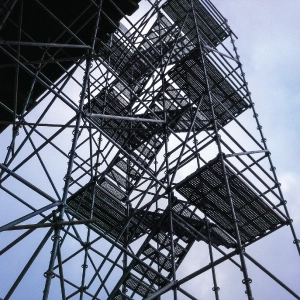
Scaffold Planking Failures: Why Platforms Give Way and How to Inspect Boards Properly

Introduction:
A scaffold plank gives way beneath a worker carrying tools and materials, causing them to lose their footing and fall onto a lower level. The failure may also send equipment or materials crashing down onto workers below. Depending on the scaffold height, fall conditions, and surrounding hazards, the incident could result in fractures, traumatic injuries, permanent disability, or a fatality. Beyond the immediate injuries, a plank failure can trigger work stoppages, OSHA investigations, costly repairs, and potential liability for the employer.
A sudden, obvious break does not always cause scaffold planking failures. Wooden planks can weaken through splits, notches, decay, or repeated physical damage. Manufactured scaffold planks can become unsuitable through damaged components, delamination, or use beyond their specified load and span limits. Excessive loading, inadequate support, and improper installation can also compromise a platform even when the planking appears intact.
For construction employers, EHS managers, and scaffold Competent Persons, preventing planking failures requires consistent controls from material procurement and jobsite acceptance through inspection, installation, and corrective action. This becomes particularly important when multiple crews, subcontractors, and rental providers supply scaffold components across different projects. This blog examines the structural and operational causes of scaffold plank failures, the applicable OSHA requirements, and the inspection and material-control measures employers can implement to prevent unsuitable planks from reaching working platforms.
Why Do Scaffold Planks Fail? Five Structural and Operational Causes
Scaffold plank failures can originate from the material itself, environmental exposure, improper installation, inadequate material controls, or the way planks are used during construction. These factors can weaken planks, compromise their load-bearing capacity, or create conditions in which platform components become displaced or fail under load. Understanding how these failure pathways develop helps employers identify unsuitable materials and address the conditions that contribute to scaffold incidents.
1. Natural Wood Characteristics and Structural Weaknesses
Solid-sawn scaffold planks are affected by natural variations in wood structure, including knots, grain slope, density differences, and shrinkage as the wood dries. These characteristics can affect the plank's ability to resist bending and withstand loading, even when the lumber appears generally sound.
Knots interrupt the continuity of wood fibers, while steep grain slope can reduce the effective strength of a plank along its length. Drying shrinkage can also produce checks and splits, particularly where stresses develop around knots or near plank ends. Depending on their severity and location, these weaknesses can contribute to excessive bending, splitting, or sudden fracture under load.
Potential failure cues: Large or loose knots, pronounced grain deviation, deep checks, end splits, and visible cracking. A severe internal weakness may not be apparent during a visual inspection.
2. Environment-Led Deterioration
Prolonged exposure to moisture, repeated wetting and drying, and inadequate protection during outdoor storage can deteriorate wooden scaffold planks. Persistent damp conditions can promote fungal decay, which gradually weakens wood fibers and reduces the plank's structural capacity. Weather exposure can also accelerate surface deterioration and contribute to cracking or splitting.
Manufactured planks may also deteriorate through environmental exposure, where their components, coatings, connections, or materials are affected by corrosion, moisture, or other conditions outside their intended operating environment.
Potential failure cues: Soft or crumbly wood, localized deterioration, deepened cracks, corrosion, damaged coatings, or deterioration around connections. Discoloration alone does not establish structural decay.
3. Installation-Led Failures: Excessive Span and Inadequate Support
Planks can fail when installed across spans that exceed their allowable limits or when their bearing and support arrangements are inadequate. Increasing the unsupported span increases bending demand and deflection. For a supported plank under a uniformly distributed load, the maximum bending moment increases with the square of the span.
Insufficient bearing, improperly positioned overlapping boards, unsecured ends, and unsupported sections can also cause planks to shift, tilt, or become displaced. A plank may have adequate structural capacity for its intended span but still become unsafe when installed incorrectly.
Potential failure cues: Excessive sagging, uneven platform surfaces, insufficient bearing, unsecured ends, misplaced overlaps, gaps, and plank movement under normal use.
4. Management-Led Failures: Improper Material Selection and Acceptance
Scaffold planking failures can originate from procurement and material acceptance decisions that do not account for the plank's structural requirements. Ordinary construction lumber cannot automatically be substituted for scaffold planking. Wood species, grade, dimensions, and strength characteristics influence its load-bearing capacity, while manufactured planks must be selected according to their rated capacity, allowable spans, installation requirements, and manufacturer restrictions.
Employers may also introduce unsuitable materials when specifications are inconsistent across jobsites, documentation is unavailable, or rental and subcontractor-supplied planks are accepted without adequate verification. Missing identification or uncertain material suitability can prevent employers from establishing whether a plank is appropriate for its intended application.
Potential failure cues: Unidentified planks, missing supporting documentation, mismatched dimensions, unsuitable lumber, damaged manufactured components, and materials that cannot be verified against applicable specifications.
5. Usage-Led Failures: Overloading, Damage, and Improper Reuse
Scaffold planks experience loading from workers, tools, equipment, and stored materials during construction. When loads exceed a plank's intended capacity, or are concentrated in a small area, localized bending stress can increase and contribute to excessive deflection, cracking, or fracture. A scaffold's overall load capacity does not automatically establish the capacity of each plank.
Planks can also sustain damage through dropping, dragging, impact, unauthorized cutting, drilling, or repeated handling. Previously used planks may have experienced excessive loading, modifications, or physical damage during earlier work. Boards used for other purposes, including mudsills, should not automatically be returned to scaffold service.
Potential failure cues: Excessive deflection, cracks under load, damaged ends, impact damage, unauthorized cuts or holes, bent components, and damaged plank fittings. Some load-related damage may not be immediately visible.
What Does OSHA Require for Scaffold Planking and Who Must Verify Compliance?
Under Federal OSHA, scaffold planks and components must support their own weight and at least four times the maximum intended load, subject to applicable exceptions. A Competent Person must inspect scaffolds and their components before each work shift and after any occurrence that could affect structural integrity. Employers must also ensure that scaffold platforms meet OSHA requirements for construction, width, gaps, bearing, overhang, and overlap.
Scaffold Capacity, Design, and Loading Requirements
Under 29 CFR 1926.451(a)(1), each scaffold and component must support its own weight and at least four times the maximum intended load applied or transmitted to it, subject to the exceptions specified in the standard.
This four-times requirement establishes a minimum structural capacity. It does not permit workers to load a scaffold to four times its rated working capacity. Under 1926.451(f)(1), scaffolds and components must not be loaded beyond their maximum intended loads or rated capacities, whichever is less.
Under 1926.451(a)(6), scaffolds must be designed by a Qualified Person and constructed and loaded according to that design. Employers must verify that the selected planking, support spacing, and installed arrangement are appropriate for the intended loads.
OSHA also limits platform deflection to 1/60 of the span when loaded, under 1926.451(f)(16). For example, a 10-foot span has a maximum permitted deflection of 2 inches.
Scaffold Platform Construction: OSHA Requirements and Exceptions
Under 29 CFR 1926.451(b), scaffold platforms must generally be fully planked or decked between the front uprights and guardrail supports. The following table summarizes important dimensional and installation requirements.
|
Item |
Federal OSHA requirement |
Named exception |
|
End bearing |
Each platform end must extend at least 6 inches over the centerline of its support. |
Not required where the end is cleated or otherwise restrained by hooks or equivalent means. |
|
Overhang |
Maximum overhang is 12 inches for platforms 10 feet or shorter and 18 inches for platforms longer than 10 feet. |
For platforms 10 feet or shorter, the cantilevered portion may support employees and/or materials without tipping, or guardrails may block access to the cantilevered end. For longer platforms, it must support employees without tipping, or guardrails must block access. |
|
Abutting planks |
Each abutted end must rest on a separate support surface. |
Common support members, such as T-sections, and hook-on platforms designed for common supports are permitted. |
|
Overlapping planks |
Overlaps must occur over supports and be at least 12 inches. |
A shorter overlap is permitted when platforms are nailed together or otherwise restrained against movement. |
|
Platform gaps |
Spaces between adjacent platform units and between the platform and uprights must generally not exceed 1 inch. |
A wider space is permitted where the employer demonstrates it is necessary. The platform must be planked as fully as possible, and the remaining opening between the platform and uprights must not exceed 9½ inches. |
|
Platform width |
Platforms and walkways must generally be at least 18 inches wide. |
Ladder jack, top plate bracket, roof bracket, and pump jack scaffolds must be at least 12 inches wide. Where the employer demonstrates that the work area is too narrow for an 18-inch platform, the platform must be as wide as feasible, with guardrails and/or personal fall arrest systems protecting employees. Boatswains' chairs have no minimum width requirement. |
|
Platform deflection |
Platforms must not deflect more than 1/60 of their span when loaded. |
No general exception is specified in 1926.451(f)(16). |
Employers must also consider scaffold design and manufacturer instructions when determining whether a platform arrangement is suitable. Meeting dimensional limits alone does not establish that a plank has adequate structural capacity or is properly installed.
Competent Person Inspection and Corrective Authority
Under 29 CFR 1926.451(f)(3), a Competent Person must inspect scaffolds and their components for visible defects before each work shift and after any occurrence that could affect structural integrity.
Where a component is damaged or weakened below the strength required by 1926.451(a), employers must ensure it is immediately repaired or replaced, adequately braced to meet the required strength, or removed from service until repaired, as specified under 1926.451(f)(4).
OSHA defines a Competent Person under 1926.450(b) as someone capable of identifying existing and predictable hazards and authorized to take prompt corrective measures.
Employer, Qualified Person, and Competent Person Responsibilities
Responsibility for scaffold compliance involves several roles:
- Employer: Must provide scaffolds and components that meet applicable requirements, ensure appropriate design and inspection arrangements, control loading, and correct deficiencies before unsafe equipment remains in service.
- Qualified Person: Under 1926.451(a)(6), designs scaffolds and establishes the design requirements that govern their construction and loading.
- Competent Person: Inspects scaffolds, identifies existing and predictable hazards, and has authority to initiate prompt corrective measures.
Different individuals may hold these roles or, where qualifications and authority permit, the same individual. Employers must ensure that each assigned person has the necessary competence and authority for their responsibilities.
Worker Training and Defect Reporting
Under 29 CFR 1926.454(a), employees who work on scaffolds must receive training from a person qualified in the subject matter. Training must cover applicable hazards, proper scaffold use, material handling, and the scaffold's maximum intended load and load-carrying capacity.
Employees involved in erecting, dismantling, moving, operating, repairing, maintaining, or inspecting scaffolds must receive training from a Competent Person under 1926.454(b). Employers must provide retraining under 1926.454(c) when changes in worksite conditions, equipment, or demonstrated skill deficiencies indicate that additional instruction is necessary.
Employers should also establish procedures for reporting damaged, displaced, or deteriorated planks. Workers should not continue using platforms they recognize as unsafe or attempt unauthorized repairs. Reported defects must be assessed promptly, with affected components kept out of service until their suitability is confirmed.
Federal OSHA Guidance and State Requirements
This section describes scaffold requirements under Federal OSHA's 29 CFR 1926, Subpart L. State Plans may adopt standards that are at least as effective as Federal OSHA requirements and may impose additional or more stringent provisions. Employers must verify the requirements applicable to the state and jurisdiction where the work is performed.
OSHA's scaffold standard is largely performance-based: it establishes required safety outcomes without prescribing one universal plank specification or allowable span for every scaffold configuration. Non-mandatory Appendix A provides example criteria and span guidance that employers may use to demonstrate compliance with the capacity requirements. It should be treated as guidance, not as a substitute for the applicable scaffold design, manufacturer specifications, or required structural evaluation.
How to Inspect Scaffold Planks Before Allowing Workers on the Platform
Under 29 CFR 1926.451(f)(3), a Competent Person must inspect scaffolds and their components for visible defects before each work shift and after any occurrence that could affect structural integrity. Events such as high winds, impact, overloading, scaffold relocation, or modification may require an additional inspection before the affected scaffold section is used again.
Scaffold plank inspection should take place at three distinct points: when materials are received or issued, when planks are installed and before each shift, and after an event that could compromise structural integrity. Each inspection serves a different purpose. Material checks establish whether a plank is suitable for use, installed-platform checks verify its condition and support arrangement, and post-event checks determine whether it remains safe following an incident or change in conditions.
1. At Material Issue: Verify Plank Condition and Suitability
Before a plank enters scaffold service, the Competent Person or designated material inspector should verify its identity, condition, and suitability for the intended application.
Check material identification and supporting information:
- For solid-sawn planks, verify the wood species, grade, dimensions, and allowable span using reliable grading information, applicable span tables, or other appropriate structural documentation.
- For manufactured scaffold planks, check the manufacturer's identification, rated capacity, allowable span, installation requirements, and restrictions.
- Hold unidentified planks or materials with missing or uncertain specifications until their suitability can be established.
Examine the entire plank for defects:
Inspect the top, underside, edges, and ends for:
- Large, loose, or strategically located knots and pronounced grain slope that may affect structural strength.
- Splits, deep checks, cracks, notches, unauthorized cuts, drilled holes, and damaged ends.
- Rot, soft spots, decay, insect damage, or other deterioration.
- Excessive warp, twist, or uneven thickness that could create an unstable platform when planks are placed alongside one another.
- Burn damage, chemical damage, or deterioration caused by exposure to incompatible substances.
- Coatings, paint, mud, grease, or other residue that could conceal defects or create a slippery surface.
- Protruding nails, screws, bolts, or other fasteners that could create trip, puncture, or installation hazards.
For manufactured planks, also check for delamination, damaged connections, cracked welds, bent sections, corrosion, and damaged fittings.
Use a three-way acceptance decision:
- Accept: The plank is identifiable, its specifications are suitable for the intended application, and no visible condition compromises its strength or safe use.
- Hold for evaluation: Its identity, structural condition, or suitability is uncertain. Keep it out of service until a Qualified Person, manufacturer or supplier, or appropriate lumber grading agency provides an adequate basis for acceptance.
- Reject: The plank has damage or deterioration that compromises its required strength or cannot be established as suitable for scaffold use. Remove it from service.
Practical inspection technique: Examine plank ends first, check the underside as well as the top and edges, and probe suspected soft or deteriorated areas where appropriate. These are recommended inspection practices, not additional inspection methods prescribed by OSHA.
Step 2. Inspect the Entire Plank for Visible Damage
A plank that passes material acceptance can still become unsafe through improper installation, inadequate support, or changing loading conditions. Before each work shift, the Competent Person should inspect the assembled platform and verify that the planks remain suitable for their installed arrangement.
Check plank placement and support conditions:
- Confirm that planks are seated properly on their intended supports and that the supporting bearers are straight, correctly positioned, and not rotated.
- Check that plank ends rest on stable support surfaces. Look for crushed, loose, deteriorated, or unstable materials beneath supports, and ensure nothing can roll or shift under a plank end.
- Verify that scaffold bases and supporting ground or foundation conditions remain stable, without settlement, erosion, undermining, or other movement that could affect platform support.
- Check that planks cannot shift, lift, or become displaced during use. Verify that any required restraint against wind uplift is installed in accordance with the scaffold design and manufacturer instructions.
- At cantilevered or overhanging ends, check for movement or tipping. Confirm that the platform remains stable under its intended loading and that access to any unsafe cantilevered section is prevented.
- Examine the installed arrangement for uneven plank thickness, gaps, loose ends, damaged connections, and other conditions that could create instability or trip hazards.
Check platform overlaps, abutting ends, overhangs, bearing, and gaps against the dimensional requirements in the OSHA platform construction table in the preceding section, together with the applicable scaffold design and manufacturer specifications.
Verify loading and observe deflection:
The maximum intended load must be established through the Qualified Person's scaffold design. The Competent Person verifies that actual loading, including workers, tools, equipment, and stored materials, remains within that limit. For manufactured planks, check the manufacturer's rated capacity and allowable span. For solid-sawn planks, verify the applicable span-table requirements for the wood species, grade, dimensions, and loading conditions.
|
Platform span |
Maximum permitted deflection |
|
10 feet |
2 inches |
|
7 feet |
1.4 inches (approximately 1⅜ inches) |
|
5 feet |
1 inch |
Observe the platform under its actual intended load and compare the measured deflection with the applicable limit. If deflection exceeds 1/60 of the span, workers must not remain on or continue using the affected platform section. Have the condition evaluated and corrected before allowing access again. Do not conduct improvised load tests or add weight simply to test a plank.
3. After an Event: Reassess Structural Integrity
An inspection is also necessary after an occurrence that could affect the scaffold's structural integrity. The Competent Person should assess the affected section before workers return to it.
Events warranting reassessment may include:
- High winds or severe weather: Check for uplift, displaced planks, loosened restraints, shifted supports, and changes to the scaffold's stability.
- Impact: Inspect for cracks, splits, damaged ends, displaced planks, and damage to supporting members after contact with vehicles, equipment, falling objects, or other structures.
- Overloading: Check for excessive deflection, cracking, damaged supports, and evidence that planks or scaffold components have been subjected to loads beyond their intended limits.
- Relocation or modification: Recheck plank placement, support spacing, bearing, restraint, and the overall platform arrangement after scaffold components have been moved, replaced, or reconfigured.
Workers must be removed from the affected section while the condition is assessed and corrected. Where a plank is damaged or weakened below the strength required by OSHA, it must be repaired, replaced, adequately braced, or removed from service under 29 CFR 1926.451(f)(4). In practical terms, a damaged plank should be replaced or removed rather than relying on an attempt to brace the board itself.
4. Remove Rejected Planks and Document Corrective Actions
Planks that fail inspection or cannot be verified as suitable must be removed from scaffold service. Identify and segregate rejected materials so they cannot be mistaken for approved inventory. As a best practice, mark rejected planks clearly and make them unusable before disposal or permanent removal from the inventory. A tag alone is not sufficient if the plank can still be returned to service inadvertently.
Maintain an inspection and corrective-action record that allows employers to identify recurring defects and trace material problems across jobsites. Although OSHA does not generally require written records of routine scaffold inspections, documentation supports consistent material control and follow-up.
A useful inspection record should include:
- Inspection date, time, and jobsite or scaffold identification.
- Name of the Competent Person conducting the inspection.
- Plank identification, material type, and location on the scaffold.
- Observed defects, loading concerns, and support or installation problems.
- Decision: accepted, held for evaluation, or rejected.
- Corrective action taken, responsible person, and date the affected section was cleared for use.
- Suspected origin: Natural, environmental, usage, installation, management, or age-related deterioration.
A visual inspection has limitations. It cannot reliably identify every instance of internal fatigue, hidden decay, or damage concealed within a plank. Employers should therefore consider service history, previous loading, exposure, handling, and repair records when determining whether a plank should remain in service or be retired. A plank that looks acceptable is not automatically suitable if its history or structural condition cannot be established.
How Employers Can Prevent Scaffold Plank Failures Across Multiple Jobsites
A scaffold plank's history does not necessarily travel with it. Planks move between supplier yards, rental companies, subcontractors, storage areas, and jobsites. Each site's Competent Person may inspect a plank without knowing it was previously damaged, overloaded, or rejected.
Illustrative scenario: A Competent Person rejects a damaged plank at one site. Its rejection tag is lost when it returns to the yard, and another project unknowingly issues it to a crew. The second site's inspection may not reveal the plank's full service history.
Preventing this requires consistent material controls. The Safety Manager owns the written plank standard, each site's Competent Person applies it, and procurement or the rental coordinator verifies materials at intake. Inspection identifies defects at one site and point in time; employer-wide controls prevent unsuitable planks from circulating between projects.
A. Apply One Plank Standard to Every Source
Establish one written specification for purchased, rented, and subcontractor-supplied planks. For solid-sawn planks, define the required wood grade, dimensions, and applicable span-table reference. For manufactured planks, specify rated capacity, allowable spans, and manufacturer limitations.
Supporting documentation may include grade stamps where present, lumber grading information, supplier or purchase records, and manufacturer data. Apply the same site-entry checks to every source. Verify identification, condition, and specifications before materials reach a scaffold, and require deficiencies to be resolved before approval. Supplier assurances or rental status alone do not establish suitability for the scaffold configuration and intended loading.
General contractors should also include subcontractor-supplied scaffold materials in their oversight procedures. Under OSHA's multi-employer citation policy, a controlling employer may be cited when it has general supervisory authority and the applicable citation criteria are met.
B. Keep a Plank's History with It
Use a consistent identification system that stays attached to each plank or links it to a traceable inventory record. Do not rely on removable rejection tags as the only record of a plank's status.
As a storage practice, keep planks off the ground, spaced for airflow, and protected from chemicals, excessive moisture, and hot-work exposure. Before transferring or reissuing a plank, reassess its condition and confirm its identification and status. Hold materials with missing identification or uncertain rejection history out of service until their suitability is established.
C. Use Inspection Findings to Fix Causes
The Safety Manager or designated scaffold program owner should investigate recurring defects, identify their likely causes, and assign corrective actions. The responsible site manager or Competent Person should verify that corrective actions are completed.
Maintain one central plank-control log covering all jobsites. Record:
- Plank identification, material type, and supplier or subcontractor source.
- Jobsite and storage or transfer history, where available.
- Inspection date, findings, and acceptance, hold, or rejection decision.
- Suspected origin: Natural, environmental, usage, installation, management, or age-related deterioration.
- Corrective action, responsible person, completion date, and verification status.
Review the log for recurring defects, supplier issues, rejected planks returning to inventory, and inconsistent site practices. Use these findings to improve procurement, storage, subcontractor controls, and inspection procedures.
Single-site employers face the same handoff risks between suppliers, storage yards, rental providers, and subcontractors. Regardless of the number of jobsites, plank identification and service history must remain traceable.
Conclusion:
Scaffold plank failures can result from structural deterioration, improper material selection, excessive loading, inadequate support, and poor handling practices. Preventing these failures requires employers to verify plank suitability, maintain consistent inspection procedures, and address defects before components are used or reused.
By standardizing material acceptance, inspection, storage, and corrective-action procedures across jobsites, employers can reduce the likelihood of plank-related incidents and maintain safer scaffold platforms throughout construction operations.
Frequently Asked Questions
Under 29 CFR 1926.451, scaffolds and their components must support their own weight and at least four times the maximum intended load, subject to applicable exceptions. Scaffold planks must also meet applicable platform construction, support, installation, and loading requirements.
A Competent Person must inspect scaffolds and their components for visible defects before each work shift and after any occurrence that could affect structural integrity, as required by 29 CFR 1926.451(f)(3).
Splits, significant notches, decay, damaged ends, delamination, cracks, and other structural damage may compromise a scaffold plank's strength. Planks must be evaluated against applicable material or manufacturer specifications and removed from service when their required strength or suitability cannot be established.
A scaffold plank's allowable load depends on its material, dimensions, grade or product rating, and unsupported span. Verify the plank's rated capacity and allowable span against manufacturer specifications or appropriate structural documentation. Thickness or appearance alone cannot establish its load capacity.
No. OSHA does not universally require solid-sawn scaffold planks to carry grade stamps. However, employers must establish that the planks meet the structural and loading requirements of their intended use through reliable documentation or appropriate technical evaluation.