English and
 Español. After purchase, use the language toggle in your course Player to switch between English and Spanish at any time.

 EN
EN ES
ES































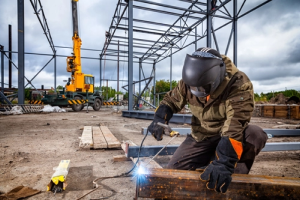

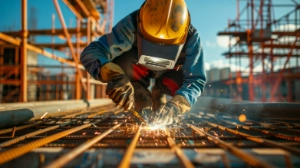































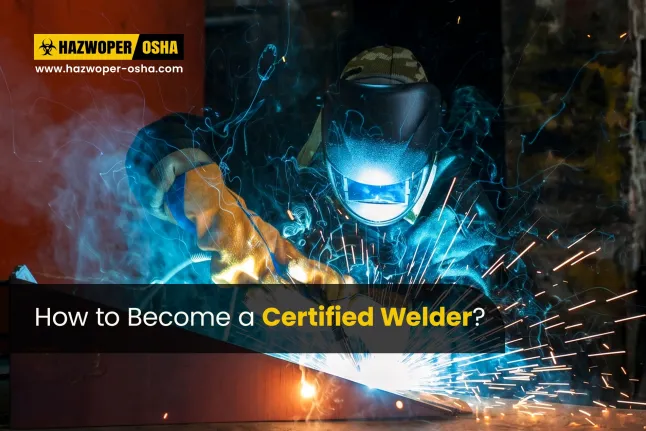
How to Become a Certified Welder (Step-by-Step Career Path)?
Introduction:
Welding remains a foundational skill across manufacturing, construction, energy, and heavy fabrication sectors. From structural steel assemblies in commercial projects to high-precision pipe welding in industrial systems, weld quality directly affects product integrity, operational safety, and long-term asset performance. For employers, welders are not just production workers; they are critical contributors to compliance-driven and inspection-heavy workflows.
Labor market data shows a steady demand for welding talent. In the United States, welders, cutters, solderers, and brazers earn a median annual wage of about $51,000, with variation driven by industry, certification type, and specialization level. Entry-level positions may start significantly lower, while experienced welders in specialized roles, such as pipe or structural welding, can exceed the median.
Despite this wage spread, employers across manufacturing and construction continue to report difficulty filling roles that require consistent test performance and hands-on fabrication capability. At the same time, workforce composition is shifting. A large portion of experienced welders is nearing retirement, while hiring demand is sustained by infrastructure maintenance, production cycles, and replacement needs rather than rapid job expansion. Even with relatively modest projected growth of around 2%, employers still face persistent recruitment gaps due to skill variability and uneven training outcomes across candidates.
For hiring teams, certification is often used as an initial screening benchmark, but it does not guarantee production readiness. Many certified welders still require job-specific validation through weld testing, material familiarity checks, and supervised field performance. In practice, certification signals baseline competency, while real-world capability is confirmed through task execution under operational conditions.
This article breaks down the step-by-step path to becoming a certified welder, focusing on how foundational training, skill development, and qualification testing translate into measurable capability that employers can confidently evaluate in hiring and deployment decisions.
What are the Steps to Become a Certified Welder?
The path to becoming a certified welder is not strictly linear. In practice, welders move back and forth between training, testing, and real-world exposure, depending on role requirements.
Learn Core Welding Processes Through Structured Training
Start by learning the primary welding processes used in industry, including MIG, TIG, Stick, and Flux-Cored welding. Most structured training programs introduce these processes gradually in controlled shop environments, rather than all at once at full depth.
Each process behaves differently depending on material type, thickness, and joint design. Early training focuses on building basic torch control, arc stability, proper body positioning, and safe work habits.
At this stage, the goal is not mastery but fundamental control and consistency learning how to maintain a stable arc, control heat input, and produce uniform weld beads.
Important safety foundation (must be learned early)
Before or alongside hands-on welding, you should understand:
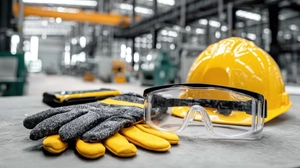
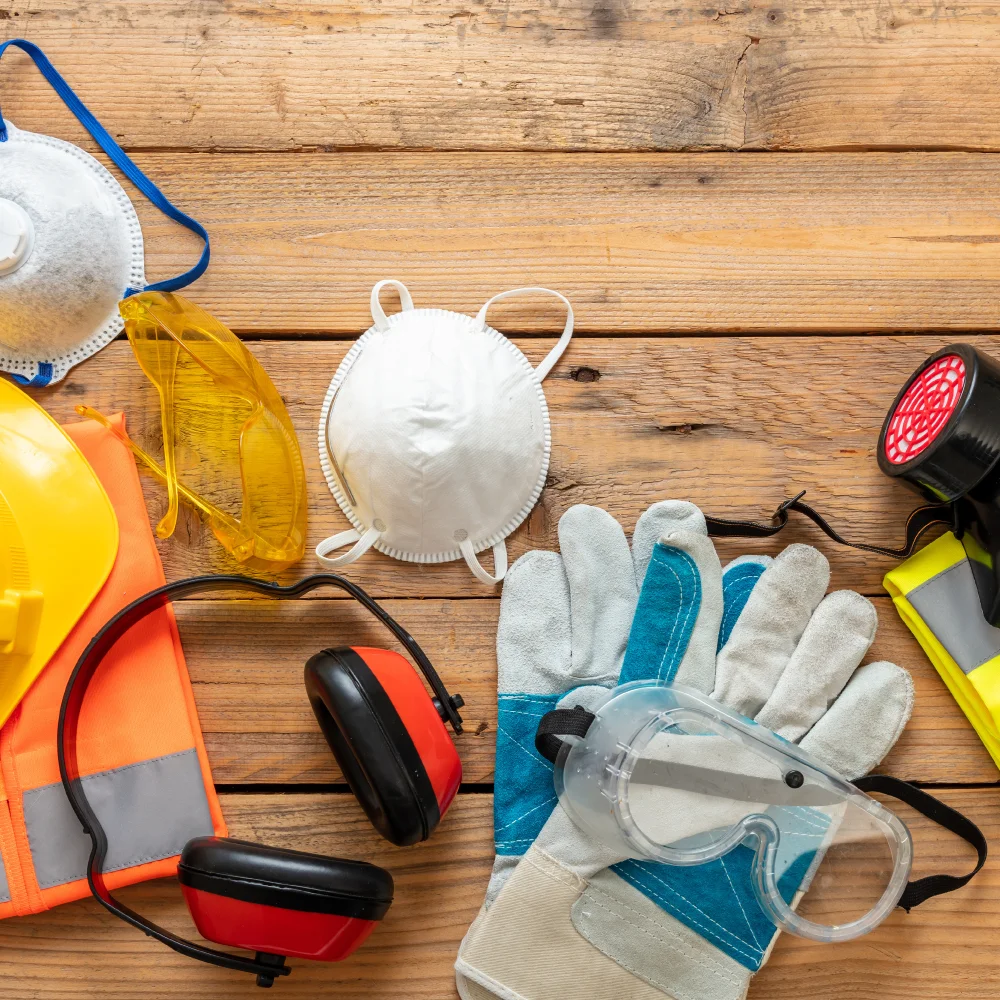
- Proper PPE (helmet, gloves, protective clothing)
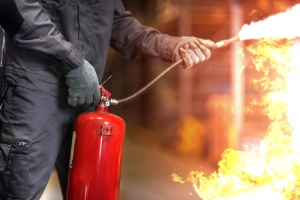
- Electrical and fire hazards
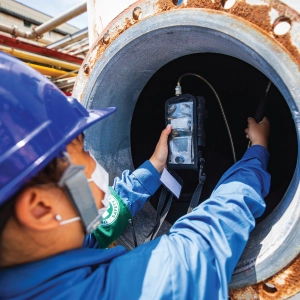
- Fume exposure risks and ventilation requirements
- Safe handling of hot materials and equipment
Welding skill development is inseparable from safety discipline.
Tip: Focus on clean, controlled weld beads before attempting speed or advanced techniques. Control always comes before efficiency.
Build Practical Welding Skills Through Structured Practice
Once you understand the basics, you develop skills through repeated, supervised practice in a shop or training environment.
This stage is where technique becomes consistent through repetition combined with correction and feedback.
You should focus on learning how to:
- Properly clean, align, and fit metal joints before welding
- Perform welds in flat, horizontal, vertical, and overhead positions
- Maintain correct travel speed, arc length, and electrode angle
- Identify common weld defects such as porosity, undercut, and lack of fusion
- Follow Welding Procedure Specifications (WPS) in a structured setting
- Understand how heat affects distortion and weld quality
A WPS is a structured guideline that defines how a weld should be performed, including material type, filler metal, amperage range, and welding position.
Most beginners improve fastest when they combine repetition with instructor correction. Repeating mistakes without feedback can reinforce poor technique.
Tip: Practice in difficult positions early (vertical and overhead), not just flat welds. Real-world welding rarely stays in easy positions.
Complete a Welding Qualification Test (Certification Stage)
A welding certification is a performance-based qualification test, not proof of general mastery.
To earn certification, you must complete welds under controlled conditions that follow specific rules for process, position, material, and joint type. These welds are then inspected to verify quality.
Inspection methods may include:
- Visual inspection (surface quality and bead shape)
- Bend testing (to check internal integrity)
- Radiographic testing (X-ray)
- Ultrasonic testing (sound wave inspection)
- Dye penetrant testing (surface flaw detection)
Certification demonstrates that you can produce acceptable welds under defined conditions, but it does not automatically transfer across all processes or job types.
Key reality for learners
- Certifications are often limited to specific processes (e.g., MIG or Stick)
- They may apply only to certain positions (flat, vertical, overhead)
- Different materials and thicknesses may require separate qualifications
Tip: Before testing, practice under conditions that closely match the test setup. Small changes in joint type or position can significantly affect results.
Develop Specialized Welding Skills Through Experience and Training
As you gain experience, you will gradually move toward areas of welding that match your strengths and training opportunities. Specialization is not a single step; it develops over time through exposure and practice.
Common areas of specialization include:
- Structural steel welding (buildings, frameworks, infrastructure)
- Pipe welding (industrial systems and pressure lines)
- Stainless steel and aluminum welding (corrosion-resistant applications)
- Pressure vessel and coded welding (high-standard industrial work)
- Precision fabrication and TIG welding (fine control applications)
Specialization often comes from repeated exposure to certain types of work, additional training, and certification upgrades rather than a fixed career decision made early on.
You continue to improve by learning from real-world conditions, adjusting your technique based on material behavior, and refining consistency across varying environments.
Tip: Pay attention to why welds behave differently across materials and positions. Understanding heat flow and metal behavior is what separates intermediate welders from advanced ones.
Welding is not a strictly linear path. Most welders:
- Learn multiple processes at different stages
- Revisit fundamentals repeatedly throughout their careers
- Improve through a combination of training, repetition, correction, and real-world exposure
Progress depends less on speed and more on consistency, supervision, and deliberate practice.
Core Skills Employers Expect in Certified Welders
Walking onto a shop floor with a fresh certification card is a solid milestone, but that piece of paper only buys you a ticket to the mandatory pre-hire hands-on test. To transition successfully from a classroom environment to a high-paying production role, you need to look beyond basic theory and master the five practical competencies that industry professionals actively screen for.
1. Arc Control and Process Mastery
You cannot just know what MIG or TIG stands for; you have to build repeatable muscle memory. Shops look for steady hand coordination and the ability to maintain a consistent arc gap, heat input, and travel speed across different metal thicknesses. If you cannot lay down a clean, defect-free bead in awkward vertical or overhead positions, a fresh certification card won't save you during the mandatory pre-hire hands-on test.
2. Decoding the Blueprint (The Industrial Language)
A welder who can only lay a bead but can’t read a drawing is an operational liability. You must learn to interpret standard fabrication blueprints, joint details, and welding symbols without a supervisor holding your hand. Misinterpreting a single symbol can lead to incorrect joint preparation, causing thousands of dollars in scrapped material and structural rework.
3. Machine Dial-In and Equipment Independence
A master welder doesn't wait for someone else to set up their rig. You need to confidently dial in your voltage, amperage, wire feed speed, and shielding gas flow rates based on the specific Welding Procedure Specification (WPS). Real-world environments expect you to troubleshoot minor machine issues and select the exact correct filler metal or consumable for the job on your own.
4. Fit-Up and Material Preparation
The actual welding is only half the job. The best welders spend a significant amount of time cutting, grinding, beveling, and cleaning their base metals. If your fit-up is sloppy, or if you leave mill scale, rust, or oil on the joint, you are guaranteed to end up with hidden defects like porosity or lack of fusion that will fail an X-ray inspection.
5. Defect Spotting and Quality Auditing
You have to become your own toughest inspector. True competency means recognizing an issue like undercut or slag inclusions while you are working, stopping the arc, and grinding out the mistake before finishing the weld. Developing this proactive eye keeps your rework rates low and proves to a foreman that your speed doesn't come at the cost of structural integrity.
Decoding Welding Certifications and Codes: Your Career Roadmap
When you enter the welding industry, you will quickly realize that there is no single, universal "welding license." Instead, your qualifications are divided into individual certifications and specific industry codes. The code you test under dictates the type of jobs you can legally work on.
1. The Baseline Ticket: AWS Certified Welder (CW)
This is your starting point. Issued by the American Welding Society, the CW is a purely performance-based test. It proves you can lay a sound bead using a specific process (like MIG or Stick) on a specific material and thickness. Think of this as your baseline driver's license; it proves you can handle the equipment under ideal conditions.
2. Specialized Industry Codes (Your Career Path)
Once you have your basics down, you will take qualification tests tied to specific industrial sectors. Passing a test under one of these codes instantly elevates your earning potential:
|
Governing Code |
Industry Focus |
Common Applications |
What It Proves to the Shop |
|
AWS D1.1 |
Structural Steel |
Buildings, bridges, cranes, and heavy equipment frames. |
You can safely weld load-bearing structures where public safety is on the line. |
|
ASME Section IX |
Pressure Systems |
Boilers, pressure vessels, power plant piping, and nuclear components. |
You maintain absolute arc consistency under strict X-ray testing standards. |
|
API 1104 |
Cross-Country Pipelines |
Oil and gas pipelines, field pumping stations, and high-stress transmission lines. |
You can lay flawless welds rapidly in harsh outdoor environments and rough terrain. |
3. Going Global: ISO 9606
If you plan to work for an international fabrication company or relocate abroad, you will likely encounter ISO 9606. This is the international standard for welder qualifications. It groups metals and positions globally, ensuring your skills are recognized by international engineering firms without requiring a complete re-test from scratch.
Conclusion:
Certified welding is only part of what makes a welder job-ready. Employers ultimately rely on hands-on weld performance, process control, and safety discipline when making hiring decisions. Certification helps demonstrate baseline competence, but it is not a guarantee of real-world production capability.
For a stronger foundation in real jobsite safety and compliance-driven welding practices, structured training can make a measurable difference.
The OSHA Welding, Cutting, and Brazing for Construction Training is designed to help workers understand hazard recognition, safe hot-work practices, and the proper use of equipment in compliance-driven environments.
This training helps reinforce essential hot-work safety practices and prepares workers for real construction environments where risk control and procedure compliance are critical.
Frequently Asked Questions
Most welding certifications are not permanently valid. They often require periodic renewal or continuity records to confirm that a welder is still actively working in the certified process.
Yes. In many cases, experienced welders can take a qualification test without attending a formal training program, provided they can demonstrate the required skills during the evaluation.
Not always. Many employers require welders to retest in-house, even if they already hold valid external certifications, to match specific job procedures and standards.
Failure is usually due to inconsistent weld quality under pressure, such as poor control of heat input, improper joint preparation, or an inability to maintain required weld-position standards.
Employers typically verify certification through:
- Certification numbers or registry databases
- Testing agency records
- Direct confirmation with issuing bodies or inspectors